
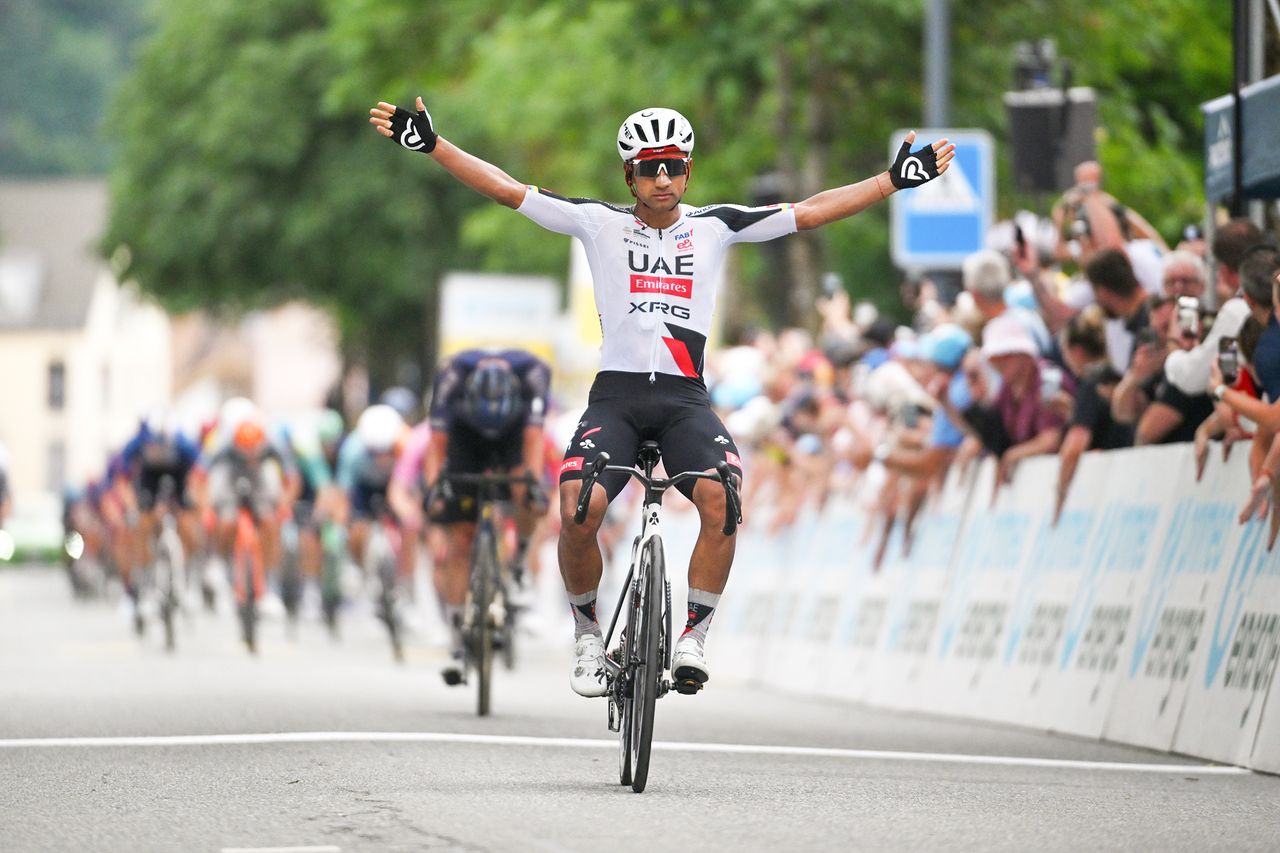
The beautiful, glorious error in the code
The modern peloton is a supercomputer designed to kill breakaways. A recent stage win from the break is a vital reminder that sometimes, the human heart can out-bluff the machine.
There is a grim calculus to the modern bike race. It’s a game played with power meters and radio earpieces, a rolling algorithm designed to produce the most predictable outcome.
The breakaway goes, the peloton gives it a leash, and then, with the cold efficiency of a tide turning, it reels the escapees back in. It is, for the most part, a solved problem.
And then, a day like a recent stage at a major tour happens. A day when two riders decide to rip up the spreadsheet.
Their victory, after a long day off the front, wasn't just a win; it was a glorious, improbable bug in the system.
It was proof that in an era of suffocating control, the art of the escape artist—a messy, human combination of intuition, grit, and outright gambling—remains the most compelling theatre this sport has to offer.
To understand why this argument is the right one, and not just the romantic one, you have to appreciate the sheer audacity of the thing.
How to Disappear Completely
A successful breakaway is a heist, and every heist has three acts. The first is The Pledge: the initial, violent effort to get clear.
This isn't a gentle drift off the front. It’s a series of brutal, leg-snapping attacks until the elastic finally breaks. Most fail; the bunch is an anchor, and it does not want to let you go.
The second act is The Turn: the long, middle portion where the escapees must become a single organism. For the two escapees, this was a long exercise in game theory – two men against a hundred.
Their only chance of survival was perfect, selfless cooperation. They had to trust the rider in front, to pull as hard for him as they would for themselves, knowing that any shirking would doom them both.
It is a temporary alliance, a prisoner’s dilemma where the only winning move is total collaboration.
The final act is The Prestige: the moment the magic happens. It’s the point where the peloton’s chase stalls, where the leash they thought they were holding turns out to be attached to nothing.
This is the art. It’s about managing the gap not just with watts, but with psychology; letting it shrink to tempt the chasers into complacency, then driving it back out to sow panic.
The two escapees played this game to perfection. They made the chase believe they were dead, right up until the moment it was the bunch that had run out of road.
The Anatomy of a Miscalculation
The conventional wisdom will say the peloton simply got it wrong. It will blame a single team for not pulling, a moment of hesitation in the chase, a miscalculation of the final kilometres.
And, on some level, it will be correct. For a breakaway to succeed, the peloton must, by definition, fail.
But to leave it there is to rob the escapees of their agency, to see their victory as a passive consequence of others’ mistakes. The truth is that a rider in the break forces the error.
They created the conditions for the peloton's failure. They rode with such commitment for so long that they turned a mathematical certainty into a wager.
They put a question to the sprinters' teams: how much are you willing to burn to catch us? Are you sure? Are you really sure?
On that day, the answer, for once, was no. The collective blinked. The two riders out front held a stare that a hundred behind them couldn't match.
The Theatre of Two
And then comes the cruelest, most beautiful part of the whole affair. After hours as allies, their fates lashed together, the partnership dissolves.
Suddenly, they are no longer a team. They are rivals. The man who was your engine is now the only obstacle between you and victory.
This is where the algorithm truly breaks down. There is no formula for this moment; it’s about reading the flicker of exhaustion in another man’s eyes, about timing, nerve, and that one last, desperate kick.
The eventual winner played it perfectly. He let his companion lead it out, sheltering in his slipstream for a final, precious moment before launching his sprint.
It was a move born of instinct, not data. It was the human element, raw and decisive.
In an age where riders stare at stems, where races are won and lost in team cars with predictive software, this is what we risk losing: the glorious, unquantifiable art of the breakaway.
It’s a throwback, an anachronism. It’s inefficient and it rarely works.
But we don't watch cycling for efficiency. We watch it for the moments when the script is torn up.
We watch for the beautiful, glorious, improbable error in the code.
It was proof that in an era of suffocating control, the art of the escape artist remains the most compelling theatre this sport has to offer.
They made the chase believe they were dead, right up until the moment it was the bunch that had run out of road.
We don't watch cycling for efficiency. We watch it for the moments when the script is torn up.