
The right win, the wrong war
Tom Pidcock’s performance in Andorra was a perfect reminder of his explosive talent. So why does he insist on taking a knife to a three-week gunfight?
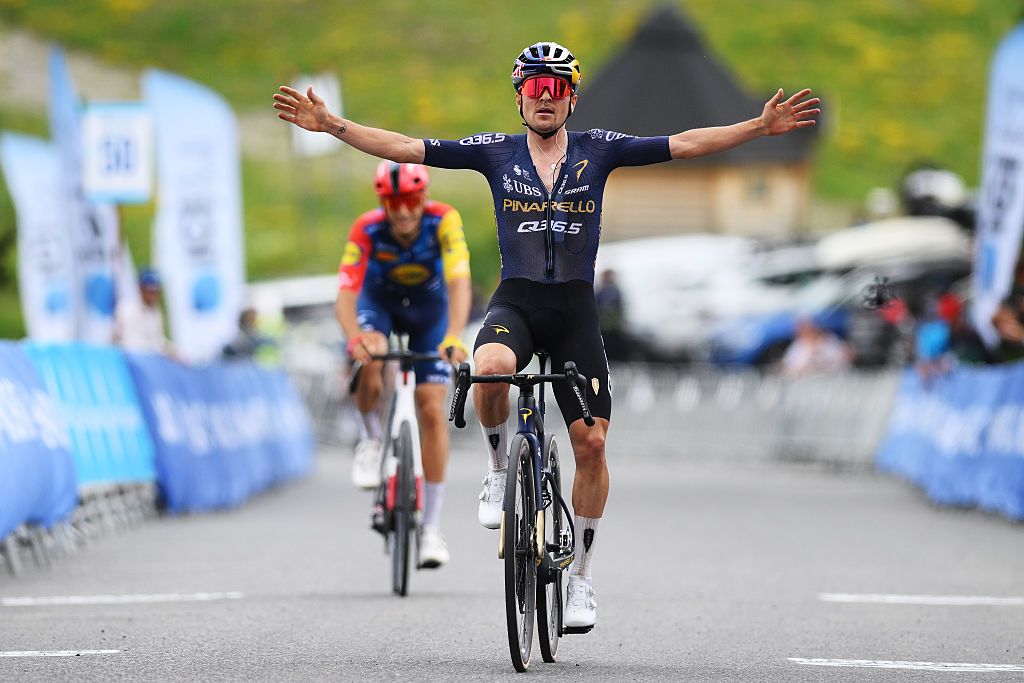
There are performances that confirm a rider’s trajectory, and then there are performances that ask a difficult question. Tom Pidcock’s ride at the 2026 Andorra MoraBanc Clàssica was firmly in the second category.
On the final climb, he showed what he does best: he waited, matched pure climbers like Sepp Kuss (Team Visma | Lease a Bike), and then uncorked a sharp finish. It was brilliant. It was decisive.
And it was another piece of evidence for a case I’ve been building for years: Tom Pidcock (Pinarello-Q36.5 Pro Cycling Team) is a phenomenal bike racer who is tragically, stubbornly convinced he should be a different kind of phenomenal bike racer.
The performance in Andorra, a punchy one-day race in the high mountains, is being framed as the perfect tune-up for his General Classification ambitions at the Tour de France. To understand why this is precisely the wrong argument, we need to talk about the difference between a hit single and a triple-album prog-rock opera.
Tom Pidcock is a master of the hit single. He has the explosive power, bike-handling artistry, and tactical cunning to win on almost any terrain, provided the race is decided in a compressed, chaotic window. These are three-minute punk songs, and he is a virtuoso.
A Grand Tour, however, is the prog-rock opera. It is three weeks of sprawling, attritional warfare. It doesn’t reward the flashiest guitar solo; it rewards the most durable rhythm section. The winner of the Tour de France is often not the strongest rider, but the one the road breaks the least. It is a contest of attrition, of metronomic consistency, of carefully managed decline. And everything about Pidcock’s innate talent screams against this reality.
The allure of the wrong crown
The conventional wisdom will push back. It will say, 'Look, he just excelled in the high mountains of Andorra against a pure climber like Kuss. Isn't that proof?'
It will point to his immense physiological gifts and argue that with a little more focus, a little more diesel in the engine, he can smooth out his explosive peaks into the high plateau required for GC contention.
This is the siren song that has lured so many brilliant riders onto the rocks of mediocrity. The yellow jersey is cycling’s ultimate prize, and the temptation to chase it is immense. Why be a mere stage hunter when you could be a god of July?
The problem is the price of admission. To become a GC contender, Pidcock would have to fundamentally change the type of rider he is. He would have to blunt his greatest weapon – that vicious, race-winning kick – in the service of saving energy, follow wheels, and turn himself from an agent of chaos into a manager of risk.
He would have to stop writing hit singles in the hope of one day, maybe, finishing that triple album. The likely outcome? He becomes a less-explosive version of himself, finishing seventh on GC and leaving us all to wonder what might have been if he’d been let off the leash to hunt for stages.
The Andorra blueprint
Let’s go back to the 2026 Andorra MoraBanc Clàssica. The race was a perfect microcosm of his genius: a hard day, a select group, and a finale that required both legs and wits.
He didn't ride by grinding everyone off his wheel 10 km from the line. He rode with a sharp kick. He rode it like a one-day specialist, using the very skills that a GC contender is encouraged to suppress.
This isn't a criticism of his ambition. It's a plea for him to embrace his own savage brilliance.
The sport has enough metronomes, enough riders who can churn out 350 watts for six hours until everyone else falls away. What it needs more of are swashbucklers, artists, and riders who see a race as a canvas, not a spreadsheet.
To watch Pidcock is to see a rider who feels the race on an instinctive level. The tragedy of his GC quest is that it forces him to fight that instinct, to subordinate the explosive masterpiece to the long, slow grind. He is being asked to trade his poetry for prose.
He may yet prove us all wrong. His talent is so vast that it feels foolish to place any limits on it.
But as he heads to the Tour de France 2026, the question remains. Is he a GC rider in waiting, or is he the best one-day racer of his generation, stuck chasing a dream that costs him his identity?
His performance in Andorra was a beautiful song. Let’s hope he doesn’t spend the next three weeks in France forgetting how to play it.
He is a phenomenal bike racer who is tragically, stubbornly convinced he should be a different kind of phenomenal bike racer.
He would have to stop writing hit singles in the hope of one day, maybe, finishing that triple album.
What the sport needs more of are swashbucklers. Artists. Riders who see a race as a canvas, not a spreadsheet.