
The All-Seeing Power Meter
In its search for perfect transparency, pro cycling is building a prison of data. The riders will be the inmates, and the wardens won't even know what they're looking for.
A training ride is a quiet conversation between athlete and machine, written in the language of watts and heartbeats. This data is a diary, a map of an athlete’s private territory of suffering and ambition.
And now, the authorities would like a copy.
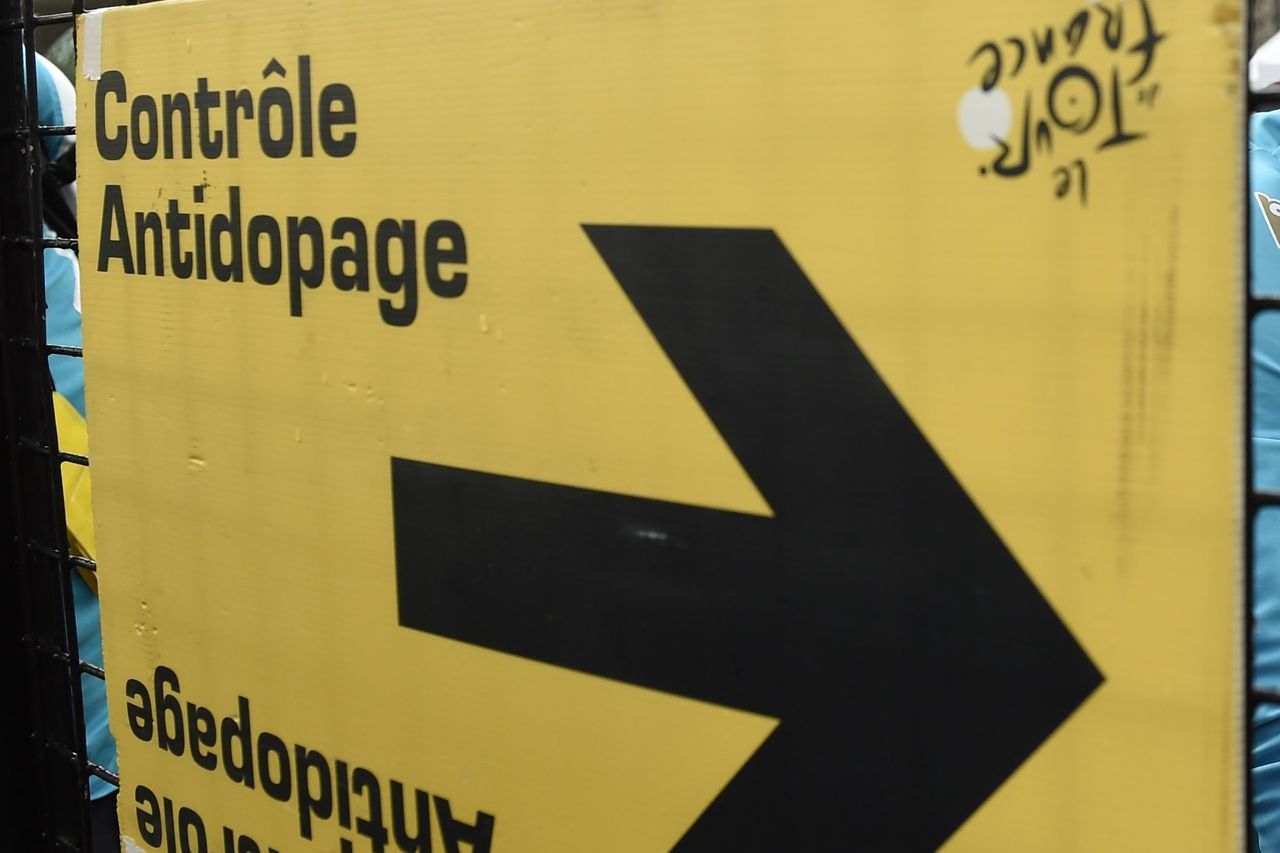
The International Testing Agency (ITA) is exploring a new frontier in the war on doping. The agency is reportedly exploring a study with several top-tier teams to analyse riders’ power data, looking for suspicious peaks and unnatural progressions.
The goal is to create a new kind of passport, not of blood, but of performance. The implicit promise is one of objective truth – of numbers that cannot lie.
This is a seductive idea, but also a dangerous one. In the quest for a clean sport, we are on the verge of constructing a digital panopticon: a surveillance state on two wheels.
This system trades privacy for a false sense of security, chills genuine innovation, and fails to address the core of the problem. It is a technological solution to a human failing, and it will create more problems than it solves.
The Case for the Glass Peloton
Conventional wisdom will push back. For a sport so haunted by its past, radical transparency can seem like the only way forward.
If doping is a biological crime fought with a Biological Passport, why not fight its expression – unnatural performance – with a Performance Passport? It feels like the next logical step.
Imagine the scenario: a rider’s threshold power jumps by 30 watts in a single winter. An algorithm flags it. An investigation begins. It is clean, simple, and objective.
This approach moves the anti-doping fight from the messy world of targeted testing and human intelligence into the sterile realm of data. For fans, sponsors, and clean riders, the appeal is undeniable.
It promises a world where cheaters have nowhere left to hide. What could be wrong with that?
A Map Without a Legend
The problem is that a power file is a story told without context; a map without a legend. A sudden spike in performance can be a red flag for doping, but it can also be the signature of a dozen other, legitimate things.
It could be a 21-year-old neo-pro adapting to the WorldTour, or a veteran recovering from injury. It might be a breakthrough from a new coach, a new position, or simply the confidence from a happy life off the bike.
An algorithm cannot tell the difference between a syringe and a well-timed block of altitude training. It sees only the output, not the input. To the machine, a miracle looks an awful lot like a crime.
Who will be the arbiter? A panel poring over data, trying to define the absolute limit of human potential? This is not science; it is statistical fortune-telling.
This creates an immediate and chilling effect. If every training file is potential evidence for a future prosecution, behaviour will change.
Coaches will become conservative, hesitant to try unorthodox methods that might yield a result deemed “too good to be true.” Riders will learn to sandbag in training to ensure their growth appears acceptably linear.
Do you tell a star climber to hold back on a final interval, just in case his numbers look too spicy for the algorithm? The outliers, the athletes who redefine what’s possible, will be the first to be suspected.
The Prison of Self-Policing
This is the panopticon made real: a system of control where the watched become their own wardens. The 18th-century philosopher Jeremy Bentham designed a prison where a single guard could observe any inmate at any time, without the inmates knowing if they were being watched. The mere possibility of surveillance was enough to enforce discipline.
Replace the central guard tower with an ITA server farm, and the prisoners with the professional peloton. The result is the same: a culture of constant, low-grade paranoia.
The enemy is no longer a rival sprinter or the gradient of the final climb. The enemy is the abstraction of your own data, the fear that your best day could become the worst day of your career.
This data is not just a measure of performance; it is a rider’s most valuable trade secret. It is the blueprint of their physiology, the key to their strengths and weaknesses. Handing it over to a central authority, with the inevitable risks of leaks and hacks, is competitive suicide.
Ultimately, this is a distraction. Doping has always been about exploiting the edges of detection, and the cheats will simply adapt.
They will learn to manipulate their training to feed the algorithm a diet of plausible data. They will do the bulk of their work on race days, where the chaotic nature of competition makes any single performance harder to isolate.
The arms race will continue, only now it will be fought in spreadsheets as well as laboratories.
We cannot outsource the sport's conscience to a piece of software. The fight for clean cycling is a human one, rooted in culture, education, and enforcement that targets the criminal networks that facilitate doping, not riders whose wattage is inconveniently high.
That quiet conversation between a rider and their power meter should remain just that. Making it a public testimony risks silencing it altogether. A peloton under constant surveillance is not a clean peloton; it is simply a cage.