
The lonely war for a patch of green
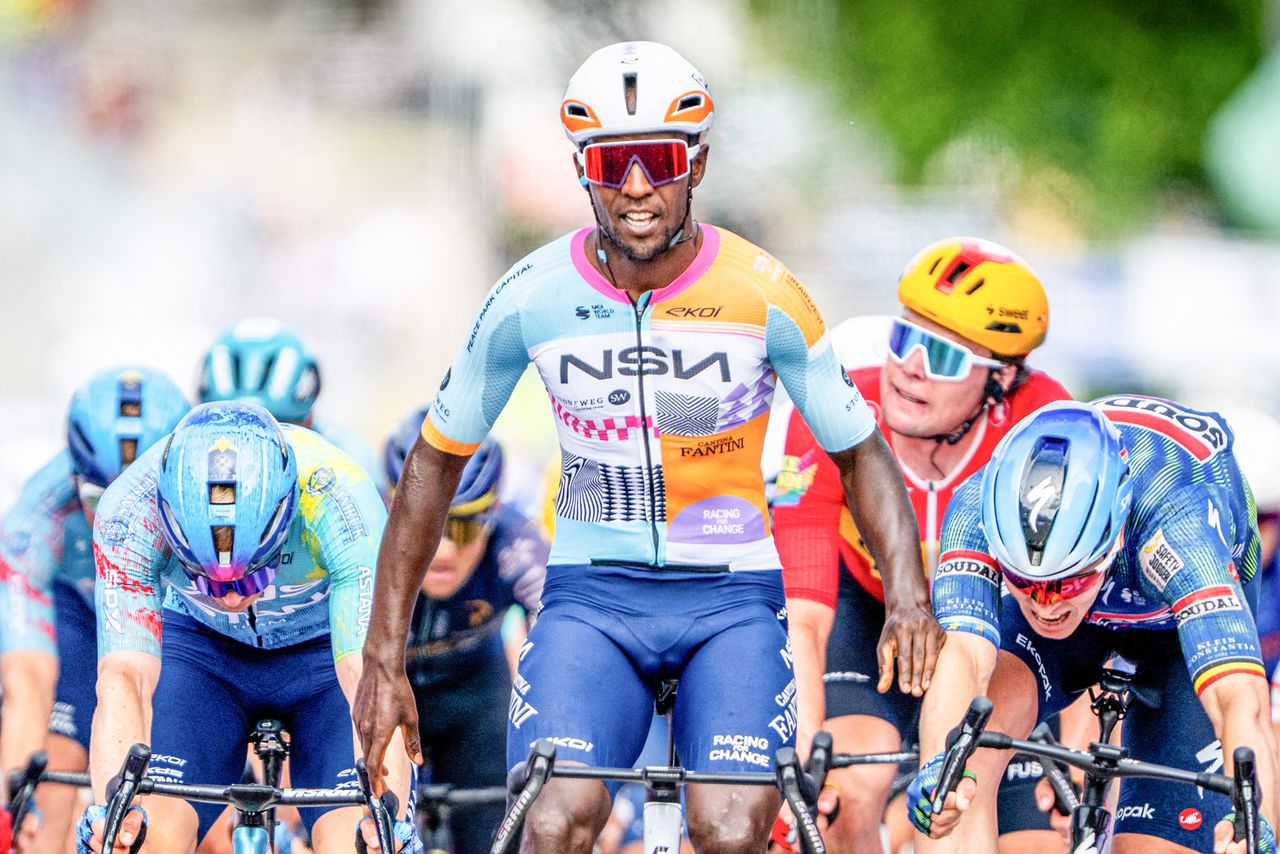
Biniam Girmay is chasing the Tour de France's green jersey. To win it, a rider must fight a different, more brutal war than the one for yellow—a war fought not just for victory, but for survival.
There are two Tours de France. There is the one you see, fought in the sky on mythic mountains for the yellow jersey. It is a war of attrition, measured in minutes and laid bare on open slopes.
And then there is the other one. This second Tour is a chaotic, close-quarters affair, a rolling brawl for a handful of points and the simple right to stay in the race. It is the sprinter’s Tour. It is Biniam Girmay’s Tour.
As NSN Cycling lines up for the Tour de France 2026, it does so with a terrifying clarity of purpose. The team is not here for a top 10 on GC or to animate the breakaway. It is here to shepherd one man, Biniam Girmay (NSN Cycling), through three weeks of hell in pursuit of stage wins and the points jersey.
To understand this quest is to understand the brutal paradox of the modern sprinter: to be the fastest man in the world for 200 metres, you must spend the other 3,400 kilometres engaged in a lonely, defensive war. The conventional wisdom that sprinters are coddled passengers is wrong. It misses the thousand daily cuts of the green jersey campaign.
The Battle Before the War
The sprinter’s race begins long before the red kite. It starts at the intermediate sprint, a manufactured flashpoint where Girmay’s team must claw its way to the front, burn matches, and fight for a handful of points that may be decisive three weeks later.
Do this every day, on roads designed to exhaust you, and the fatigue accumulates. It is a death by a thousand paper cuts.
Then there is the finish. The final 10 kilometres of a flat stage are not bike racing so much as a blood sport: a maelstrom of muscle and carbon where one wrong move means hitting the deck at 70 km/h. Girmay must be a master of chaos, navigating the swirling eddies of rival lead-out trains.
He trusts his own men to carve a path through the storm. This is not a lone-wolf effort; it is the tip of a spear forged from the collective sacrifice of his teammates.
The Mountain Question
But the true measure of a green jersey contender is not how they win on the flats, but how they survive the mountains. When the road tilts up, Girmay’s war becomes a private, desperate one. The cameras follow the yellow jersey, but the real drama for the maillot vert is happening 20 minutes behind, in the purgatory of the gruppetto.
Here, the goal is not to win, but simply to finish. The only calculation is the time cut—that unforgiving guillotine—and how to beat it by a single, precious minute.
This is where a team sheet tells a story. For a team to dedicate climbers to nursing a sprinter through the Alps is the ultimate act of tactical fealty. Their job will be to pace Girmay, to talk to him, to be a sherpa in the death zone, ensuring their leader lives to fight another day.
This is the sprinter’s lonely bargain. For every day of potential glory, there are two days of pure, unadulterated suffering. There is no hiding, only the grim mathematics of survival.
Biniam Girmay knows this bargain. He knows he must be able to win the furious bunch sprints and endure the high mountains.
Now, in 2026, he arrives as a marked man, the benchmark against whom all other fastmen will be measured. His entire team is a testament to that pressure, a unit stripped of all other ambitions. Every rider is a bullet in Girmay’s gun.
They will sacrifice their own chances, day after day, for the possibility that he can deliver. It is a beautiful, brutal strategy. And for it to work, their leader cannot have a single bad day. He must be a fighter, a tactician, a survivor, and, when the moment comes, a stone-cold killer.
To be the fastest man in the world for 200 metres, you must spend the other 3,400 kilometres engaged in a lonely, defensive war.
The final 10 kilometres of a flat stage are not bike racing so much as a blood sport.
For every day of potential glory, there are two days of pure, unadulterated suffering.