
Know thyself: Jayco's winning Tour strategy isn't winning the Tour
In a sport obsessed with the yellow jersey, the smartest move is often admitting you can't win it. For Jayco AlUla, clarity is the first step toward a different kind of victory.
There is a particular madness that grips cycling teams in the springtime: the fever dream of the general classification, the all-consuming pursuit of the yellow jersey at the Tour de France.
It’s a dream that reshapes rosters, dictates tactics for months, and funnels millions toward protecting a single rider. For a handful of teams, this is a righteous quest. For most, it is a slow march into strategic oblivion, ending in a respectable seventh place nobody remembers by August.
And then there is Team Jayco AlUla.
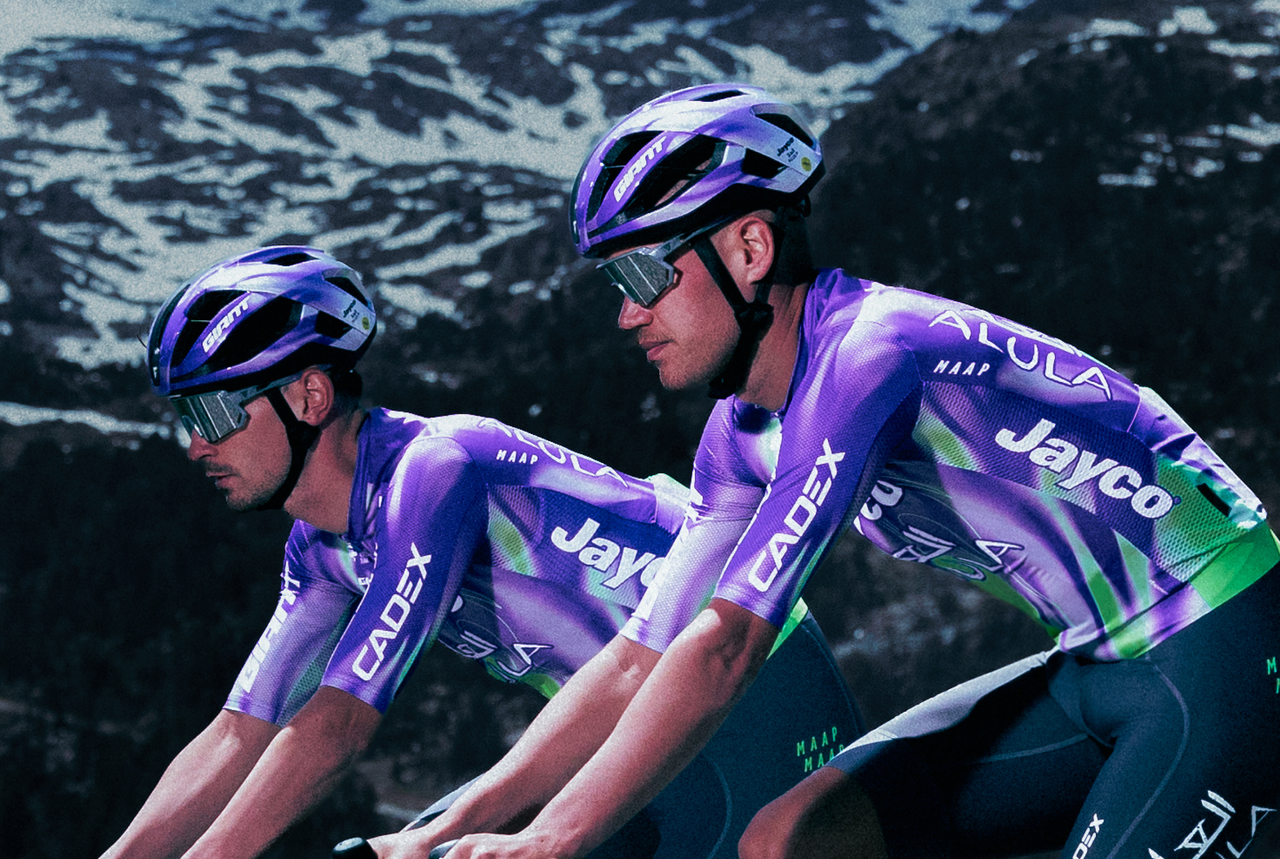
Their squad announcement for the Tour de France 2026, with its explicit focus on stage wins, is a breath of fresh, pragmatic air. In naming a versatile band of opportunists led by Michael Matthews, Ben O’Connor, and Luke Plapp, the Australian outfit isn't conceding defeat; it is making a profound statement of identity.
It is an act of liberation from the tyranny of the GC, and it is, without question, the smartest play they have.
The Folly of the Top Ten
Conventional wisdom will push back. It will see a rider like Ben O’Connor and ask why a team isn't built around him, arguing that abandoning the overall classification before the race begins is a failure of ambition.
This is the romantic’s view of cycling. It’s a beautiful one, but it’s also strategically bankrupt for a team in Jayco’s position.
A full-throated GC campaign is a hungry beast that demands total sacrifice. Every other rider becomes a minder, a wind-break, a bottle-carrier; their individual chances sublimated for the leader.
The team must ride at the front, controlling the pace and burning matches day after day to keep their man sheltered. Every tactical decision is filtered through a single question: how does this affect our guy’s time?
The result is often three weeks of defensive, risk-averse racing for a result that, unless your name is Vingegaard or Pogačar, is ultimately just a number.
Jayco has looked at that landscape and chosen a different path. They’ve chosen freedom.
A Roster Built for Raiding
Look at the construction of this team. This isn't a fortress built to defend a king; it's a raiding party sent to pillage the countryside.
By freeing O’Connor from the minute-by-minute stress of the GC battle, they have unleashed him. He can afford to lose 15 minutes on a windy transitional stage, rendering him non-threatening to the overall contenders.
The next day, in the high mountains where he might thrive, that time loss becomes his greatest weapon. It’s his ticket into the breakaway, the pass that allows the yellow jersey group to let him go up the road while they stare each other down.
Then there is Michael Matthews, a hunter of messy, attritional days.
Add Luke Plapp, a wildcard for any number of scenarios, and Pascal Ackermann for the flatter stages, and the picture becomes clear. Jayco is bringing a multi-tool to a race where most teams bring a single, finely-calibrated instrument.
They have an option for almost every type of terrain, a strategy for every day, not a single strategy for the whole three weeks. Their success will be measured not in seconds saved, but in victory salutes captured.
The Stage Hunter's Game
A GC team plays a long, defensive game of chess. A stage-hunting team plays poker. They can bluff, go all-in on a single hand, and fold a dozen times without losing the tournament. They thrive on the predictable stalemate of the GC battle.
Think of the familiar mountain stage script. The breakaway is 10 minutes up the road, but the yellow jersey group is content to let them hang there. The big teams look at each other, nobody willing to sacrifice a rider to pull back an escape for a stage win their own leader can’t contest.
This impasse, this tactical prisoner's dilemma, is the ecosystem in which the Jayco AlUla squad is built to flourish. They are the beneficiaries of others’ caution.
This isn't a lack of ambition; it’s a different, more honest kind. A single stage win at the Tour de France can make a rider’s career and pays the sponsors back in global exposure.
It gives the entire team, from riders to mechanics, a moment of pure, uncomplicated joy. Chasing those moments is a far more tangible and rewarding goal than bleeding for a ninth place overall.
Jayco AlUla has done the calculus. They have looked at their riders, their budget, and the monolithic power of the sport’s super-teams, and they have chosen their battleground wisely. They have chosen to hunt for glory in moments, not in spreadsheets.
They won’t win the Tour de France 2026. And by knowing that, they have already won.
This isn't a fortress built to defend a king; it's a raiding party sent to pillage the countryside.
Their success will be measured not in seconds saved, but in victory salutes captured.
They won’t win the Tour de France 2026. And by knowing that, they have already won.