
Sometimes, a slap in the face is a gift
Giulio Pellizzari’s honest assessment of his own Giro disappointment is the kind of raw humility that precedes greatness. This isn't an excuse; it's a beginning.
Professional athletes, particularly young ones, are taught to speak a certain language. It’s a dialect of polished deflection, of thank-yous to the team and promises to learn lessons.
The vocabulary is relentlessly positive, even in defeat. A bad day is ‘not the legs I’d hoped for.’ A crushing disappointment is ‘part of the process.’
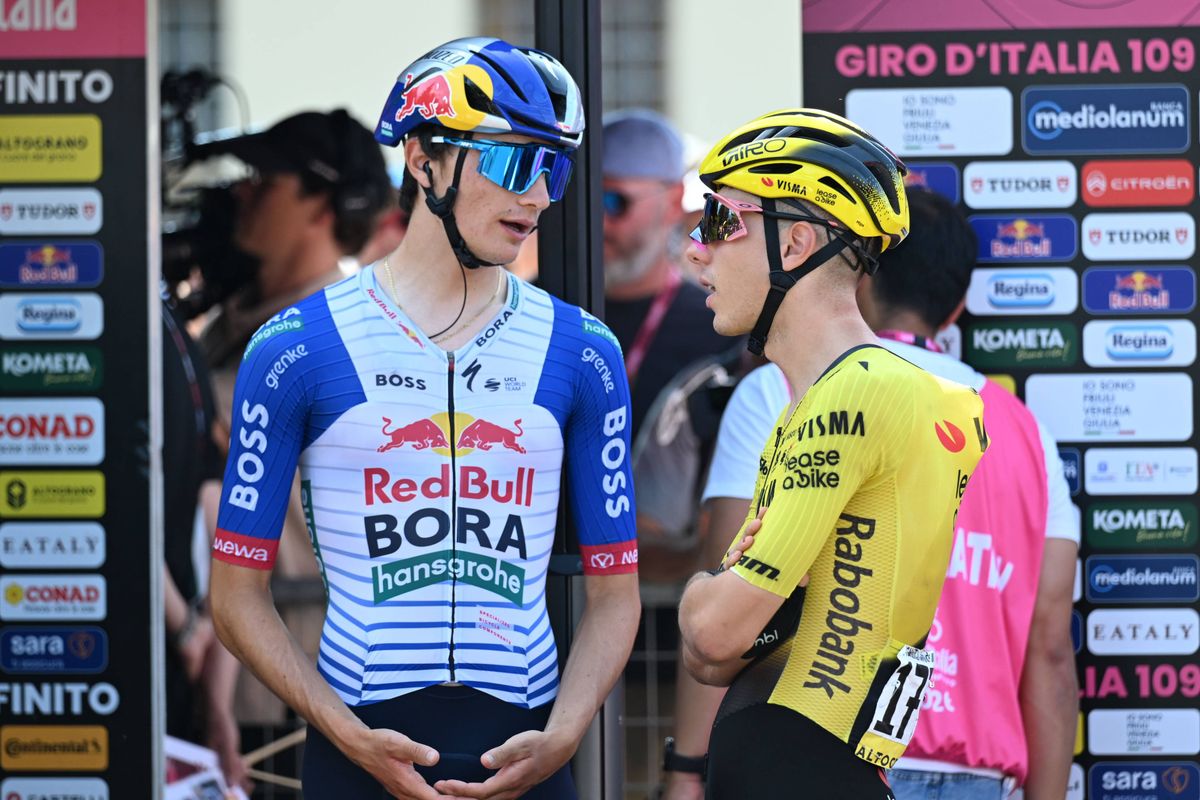
Then you get a quote like the one from Giulio Pellizzari. After a frustrating three weeks at the Giro d'Italia 2026, the young Red Bull-BORA-hansgrohe rider didn't reach for the PR-approved phrasebook. He called it what it was: “a good slap in the face.”
There’s a beautiful, bracing honesty to that. It’s not a ‘learning experience’; it’s a slap. It’s sharp, stinging, and impossible to ignore.
That slap, and Pellizzari's willingness to name it, is more predictive of future success than any junior result. His renewed form at the Tour of Slovenia 2026 is the first echo of that impact, the first sign that the lesson wasn't just heard, but felt. This is how a good bike rider starts the journey to becoming a great one.
The Anatomy of the Slap
A Grand Tour is a three-week-long travelling beatdown for a young rider. It finds every weakness—physical, tactical, mental—and exploits it for 21 days in front of the entire world.
The climbs are longer, the pace is higher, and the sheer accumulated fatigue is a weight that bears down until something, somewhere, cracks.
For a rider like Pellizzari, expectation is an invisible enemy. You arrive with dreams, a team’s belief, and the quiet, burning hope that this will be your arrival. And then the race happens.
The slap isn’t one moment; it’s a thousand tiny cuts. It’s the acceleration you can’t follow early in the race, the grim realisation a week in that you’re already deep in the red, the lonely battle with the gruppetto in the final week when your ambitions have been ground down to the simple, desperate need to just finish.
The Giro d'Italia is a particularly cruel teacher. It’s a race that romanticises suffering, but living that romance is a far grittier affair.
The slap is the shock of cold reality hitting the warm skin of ambition. It’s the race saying, in no uncertain terms: Not yet, kid. You’re not ready.
The Humility Gambit
The cynic will say this is just another young rider making an excuse, framing failure as a noble part of a larger story. It’s easy to be humble after you’ve been humbled.
Every rider who gets dropped says they’ll come back stronger. Most don’t.
But the language here matters. Pellizzari didn’t say he was unlucky or that things didn't go his way; he owned the experience with a phrase that implies personal shock and accountability.
A “slap in the face” isn’t something that just happens; it’s a correction, a visceral wake-up call. It suggests he wasn't just beaten by the race, but surprised by his own limitations—and he's not afraid to admit it.
This is the crucial difference, the opposite of the bravado that often accompanies young talent. It’s the quiet, raw acknowledgement that the gap between where you are and where you want to be is vast.
No amount of talent can bridge that gap without a brutal education. The road is the only professor that matters, and its lessons are rarely gentle. Pellizzari seems to understand that the tuition is paid in pain.
His ride in the Tour of Slovenia 2026, then, becomes more than just a bounce-back. It’s the application of the lesson, proof that the sting is already fading, replaced by focus.
He didn't retreat to lick his wounds; he went back to work, armed with a newfound respect for what the highest level demands.
This is the path. You show up, you think you’re ready, and the sport puts you back in your place. Some riders break, and some get defensive.
But the special ones say thank you for the slap and learn the lesson. They learn that respect for the race—for the distance, the mountains, the rivals—is the first step toward conquering it.
Giulio Pellizzari got his first real lesson from a Grand Tour. It hurt. But in naming it so plainly, he’s signalled that he’s the kind of student who might just end up at the head of the class.
The road is the only professor that matters, and its lessons are rarely gentle.