
The UCI’s War on Greatness
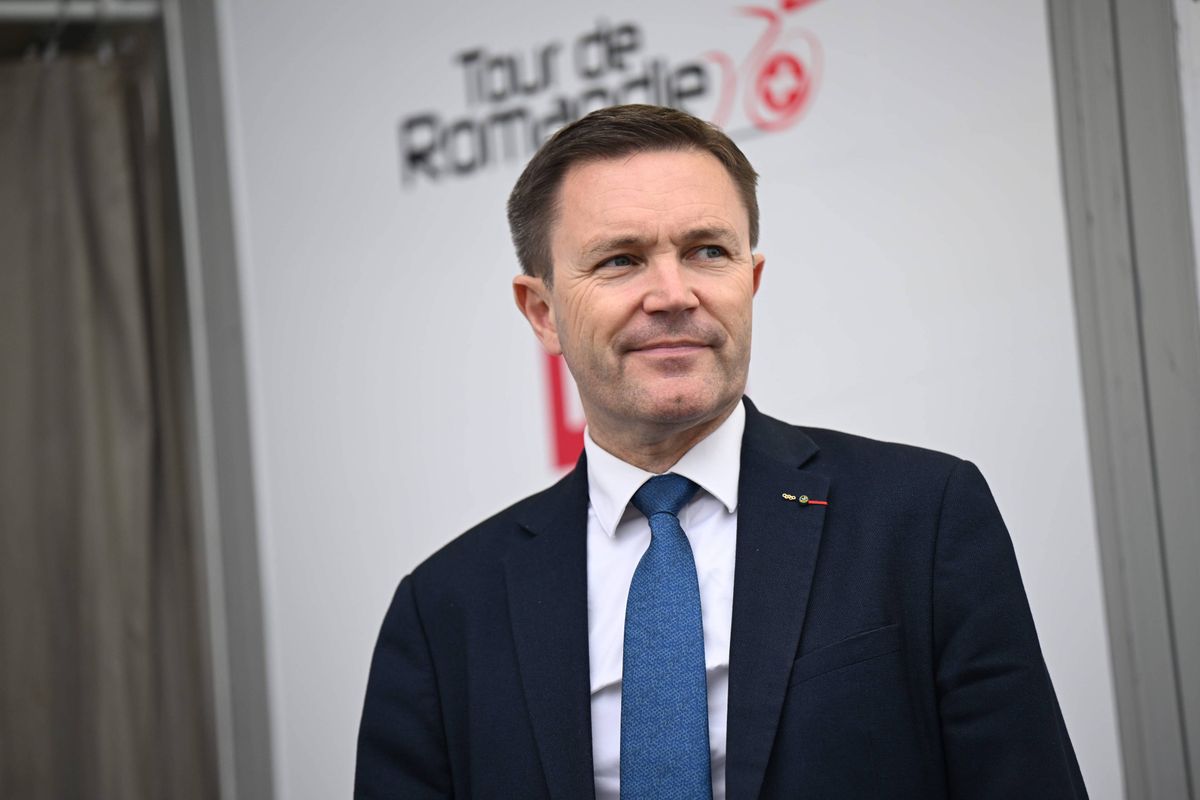
David Lappartient wants to save cycling from its best teams by making them smaller and poorer. It’s a solution that fundamentally misunderstands what makes the sport worth watching.
There is a terrifying beauty to a super-team in full flight. It’s the black and yellow train of Jumbo-Visma in the high mountains, a string of human pistons firing in perfect sequence to detonate a race. It’s the Sky-train of the last decade, methodically turning immense watts into a kind of grim, asphyxiating inevitability.
It is overwhelming force, applied with surgical precision. It can be frustrating, it can feel pre-ordained, but it is never boring. It is the central drama of modern cycling.
And now, UCI President David Lappartient wants to legislate it out of existence.
His renewed proposals are simple: cap salaries to prevent the hoarding of talent and shrink team sizes at the Tour de France to break up the monoliths. The stated goal is to create a more open, unpredictable, and competitive sport.
But this isn't a plan for salvation; it's a blueprint for mediocrity. It’s an attempt to solve a problem that isn't a problem by punishing excellence, and in doing so, it threatens to rip the soul out of the sport’s grandest narratives.
The Allure of the Empire
The conventional wisdom Lappartient is banking on has a seductive simplicity. It says that when one or two teams can afford all the best climbers, time trialists, and super-domestiques, the outcome of a race like the Tour de France is a foregone conclusion. The race is stifled, the suspense gone.
It’s a fair point, if your view of sport is that it should be a lottery. But we don’t tune in to see random chance unfold; we tune in to watch greatness be challenged. The drama of the modern Tour de France is not simply who will win, but how anyone can possibly hope to defeat the reigning empire.
The super-team isn’t the antagonist that ruins the story; it is the story. It provides the narrative gravity around which everything else orbits.
Every attack that goes up the road is measured against the implacable chase of the dominant squad. Every moment of weakness from a leader is magnified by the knowledge that their rival is surrounded by a phalanx of world-class support. To dismantle that is to dismantle the very tension that makes a breakaway’s success so thrilling or an ambush so shocking.
A Tax on Ambition
Let’s be clear about what these proposals actually are. A salary cap is not a tool for equity; it’s a tax on ambition. Teams like UAE Team Emirates or Visma-Lease a Bike are not dominant by accident. They are dominant because they have invested, innovated, and professionalised the sport, pushing the boundaries of nutrition, training, equipment, and strategy.
Capping their ability to hire the best talent doesn’t magically make other teams better. It simply drags the top teams down. It creates a false ceiling, disincentivizing the very investment that has raised the level of the entire sport.
Instead of encouraging a second-tier team to find the funding and the expertise to challenge the leaders, it tells the leaders to stop trying so hard. It’s a philosophy of managed decline, dressed up as competitive balance.
And what of the riders? The cap punishes not just the superstars, but the entire ecosystem. The world-class domestique – the rider who is not a Grand Tour winner but is the absolute best on the planet at pulling on the front for 150 kilometres – suddenly finds his market value artificially suppressed. He is the one squeezed out when teams can no longer afford to build deep, specialised rosters.
The Chaos Theory Fallacy
The most naive part of the plan is the belief that smaller teams will create more aggressive, dynamic racing. The theory goes that with fewer riders per team, no single squad can control the race, leading to chaos and opportunity. History suggests the opposite is more likely.
Reducing a team’s firepower doesn’t automatically incentivize them to attack more; it often forces them into a more defensive posture. When you don't have the numbers to control the race, the safest bet is to do nothing and hope someone else does the work.
The race becomes a grand-scale prisoner's dilemma, a stalemate where no one wants to burn their matches for the benefit of a rival. We see it in one-day races all the time: a strong break is up the road, but behind, the chase is a mess of finger-pointing and recrimination. Nobody wants to be the sucker. So everybody loses.
Reducing team sizes at the Tour de France won't create a swashbuckling free-for-all. It will create a peloton where the yellow jersey is more isolated, more vulnerable, and therefore more inclined to race conservatively, letting breakaways go and killing the GC battle to defend a fragile position. The spectacle will be diminished, not enhanced.
Cycling's most compelling moments are born from the friction between overwhelming order and individual rebellion. They are the lone rider against the machine, the desperate attack against the suffocating train.
David Lappartient’s plan is to dismantle the machine. He thinks this will empower the lone rider, but it will only leave him with nothing epic to fight against. Don’t save cycling from its greatest teams. Let them raise the bar, and dare the rest of the world to clear it.
This isn't a plan for salvation; it's a blueprint for mediocrity.
The super-team isn’t the antagonist that ruins the story; it is the story.
A salary cap is not a tool for equity; it’s a tax on ambition.
Don’t save cycling from its greatest teams. Let them raise the bar, and dare the rest of the world to clear it.