
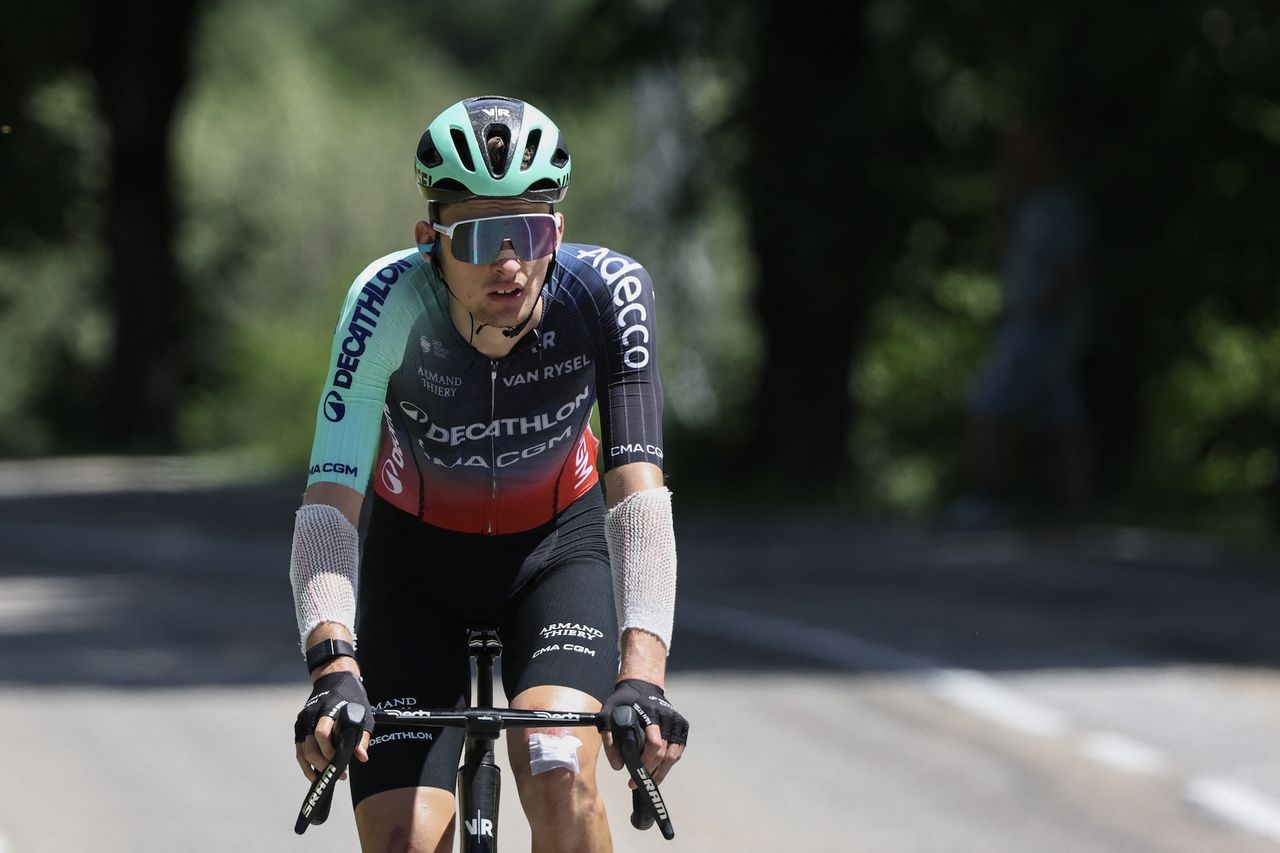
The Kid in the Furnace
The sport is desperate for its next generational hero. In anointing teenage rider Paul Seixas for a leadership role at the Tour de France, it might just be forging a talent that will burn out before he ever glows.
There is a particular kind of silence that falls over a team bus before a mountain stage of the Tour de France. It’s the quiet of calculation, of men conserving every last joule of mental energy for the violence to come. It is not, traditionally, a place for a teenager to be sitting with the weight of a team, a sponsor, and a nation resting on his shoulders.
And yet, this July, that is precisely where Paul Seixas will find himself. The young rider will not just be starting the Tour de France 2026; his Decathlon-CMA CGM team has positioned him as a co-leader, with the stated goal of targeting the general classification.
It is a breathtaking gamble, a story so compelling the sport seems to have willed it into existence. It is also, quite possibly, a terrible idea.
Let’s be clear: the thesis here is not that Paul Seixas lacks talent. To even be in this position suggests a prodigious physical gift.
The thesis is that professional cycling, in its relentless, narrative-hungry pursuit of the Next Big Thing, is becoming dangerously adept at rushing its young through a process that has, for a century, demanded patience.
We are trying to forge a sword by throwing raw iron ore straight into the crucible. Sometimes you get steel. Most of the time, you get slag.
The conventional wisdom, of course, will push back. It will point to the Tadej Pogačars and Remco Evenepoels of the world, riders who arrived not as apprentices but as masters, seemingly fully formed and ready to conquer.
It will argue that modern training, nutrition, and data have flattened the learning curve, allowing young riders to bypass the traditional, years-long matriculation through the peloton. Look at the kids, it will say. They’re different now.
But this is the great, seductive lie of survivorship bias. For every Pogačar, there is a graveyard of prodigies the sport burned for fuel. We don’t talk about them, because their stories are inconvenient.
They are the riders who were given too much responsibility too soon, who cracked under the psychological strain of leadership, or whose bodies simply broke down from the accumulated fatigue of three-week racing before they had finished developing.
A teenage body isn't a finished product; it’s a construction site. Asking it to withstand the daily demolition of a Grand Tour, while also bearing the cortisol-spiking stress of GC leadership, is a perilous request.
The physical challenge is only half of it. The craft of a Grand Tour contender is learned over years of bitter experience. It’s the sixth sense for positioning in the crosswinds, the instinct for when an attack is a bluff and when it’s the race-winning move, the grim calculus of energy conservation, repeated a thousand times over 21 days.
Can Seixas learn this on the job, under the brightest lights in all of sport? Perhaps. But is it the right way to learn? Absolutely not. It’s like learning to fly in a hurricane.
This isn't an isolated phenomenon. Seixas is the poster child, but the pressure is systemic. You hear other names whispered with the same mixture of reverence and expectation—Isaac del Toro, another talent on the Tour de France 2026 start list, is often mentioned in the same breath.
Top teams are already mapping out podium ambitions for the years to come, and the entire ecosystem is geared towards identifying and accelerating these talents. The sport is placing a crown on a head that hasn't finished growing, hoping it fits.
What is the best-case scenario for Paul Seixas? He survives. Maybe he cracks the top ten, a monumental achievement that would only ratchet up the pressure for the following year. Maybe he wins a stage from a breakaway after his GC hopes have evaporated, learning a valuable lesson in resilience.
And the worst-case scenario? He gets shelled on the first summit finish, loses 20 minutes, and spends the next two and a half weeks as a ghost in the peloton, the media's questions growing sharper, the internal doubt metastasizing. A career isn’t over at such a young age, but a deep scar can form, shaping everything that comes after.
This isn't a call for coddling athletes. It is a call for stewardship. The goal should be to build a decade-long champion, not a one-season wonder.
That requires patience. It requires allowing a rider to learn the ropes as a protected domestique, to taste victory in smaller races, to fail without the world watching, and to arrive at the Tour de France not as a question mark, but as an answer.
We will all watch Paul Seixas this summer, because the story is irresistible. We will hope for a miracle, for the birth of a new hero.
But we should also remember what we are watching: a kid in a furnace. The sport needs a narrative. Paul Seixas just needs time. Let’s hope, for his sake, that he gets it.
For every Pogačar, there is a graveyard of prodigies the sport burned for fuel.
A 19-year-old body isn't a finished product; it’s a construction site.
The sport is placing a crown on a head that hasn't finished growing, hoping it fits.