
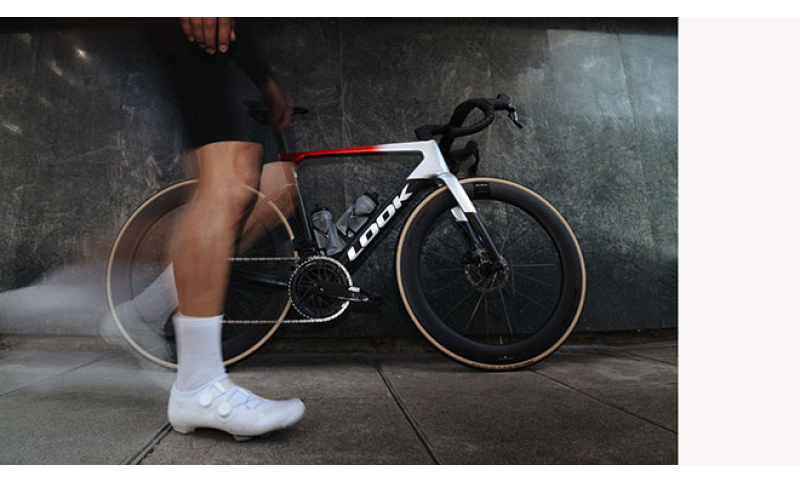
Another year, another 'fastest bike ever'. Who are we kidding?
Every season, we are promised a revolution in speed. Every season, the claims become louder, the numbers smaller, and the meaning harder to find.
It arrives, as it always does, with the breathless certainty of a prophecy fulfilled. The email lands, subject line aglow with superlatives. A major brand has done it again.
With the help of advanced simulation software, they have built The Fastest Road Bike Ever Made. This time, it’s their latest flagship aero model.
Not to be outdone, a few days later, another brand announces its new aero bike, a machine that saves a handful of watts and offers a bewildering number of fit configurations. The cycle repeats.
And here is where we must confess a certain weariness. This annual ritual, this arms race of infinitesimally small gains, has become a parody of innovation, a marketing spectacle that chases watts while obscuring the entire point. It is a story we are told so often that we have forgotten to ask if it’s a story worth telling anymore.
The Gospel of Marginal Gains
The conventional wisdom, of course, will push back on this. It will say that this is the nature of progress.
The engineers at the big brands will argue, quite rightly, that their work is genuine. They will point to wind tunnel data, to computational fluid dynamics models that churned for thousands of hours, to the tangible reduction in drag.
And they are not wrong. These bikes are faster, in a measurable, clinical sense.
The new flagship is, I have no doubt, quicker than the model it replaces. The rival's new bike is more slippery than its predecessor. But the question is not whether the watts are real, but whether they matter.
We have reached a point of such aerodynamic optimization that we are now fighting over crumbs. The great leaps—the shift to aero tube shapes, the integration of cables, the optimization of the handlebar—happened years ago.
Now, we are told to celebrate a victory measured in a handful of watts, a saving so small it can be erased by a poorly pinned number, a moment’s hesitation, or a single gust of wind.
This pursuit of numerical supremacy has created a generation of superbikes that are engineering marvels but often soulless appliances. They are stiffer, more complex, and more proprietary than ever before.
A simple headset adjustment can become a workshop ordeal. A proprietary seatpost limits choice. In the quest for the last watt, we have sacrificed a degree of the simple elegance and serviceability that once defined a beautiful bicycle.
The Human Variable
The deepest flaw in the 'fastest bike ever' narrative is that it fundamentally misunderstands what makes bike racing compelling. It is a story about humans, not machines. It is about tactics, suffering, courage, and that beautiful, unquantifiable thing called morale.
The marketing departments would have you believe that the difference between victory and defeat is the cross-sectional profile of a down tube. Anyone who has ever raced a bike knows it is far more likely to be the decision made in a split second at 50 km/h, the ability to suffer for ten seconds longer than your rival, or the simple, cruel lottery of luck.
Think about it. Did a rider ever lose a Grand Tour and think, “If only my bike had been five watts faster?” No.
They think about the missed attack, the poorly timed nature break, the day they simply didn’t have the legs. The bike is a tool, a crucial one, but it is not the protagonist.
To frame it as such is to diminish the athletes who pilot these carbon-fibre sculptures with such skill and pain.
What’s lost in this conversation is any sense of a bike’s character. We talk about its quantifiable performance, but not its feel. We discuss its stiffness-to-weight ratio, but not the joy of carving through a perfect corner on it.
The language of marketing has flattened the experience of riding a bicycle into a spreadsheet. Does it handle with confidence? Is it comfortable enough to be ridden for six hours without pulverizing your spine?
Is it, for want of a better word, fun? These questions are rarely addressed in a press release focused on “real-world race condition” simulations.
A Different Kind of Innovation
What if we demanded a different conversation? What if the next great innovation wasn’t a watt saved, but a standard adopted?
What if the “best” new bike was one that was easier for the home mechanic to work on, more durable, or built with a more transparent and sustainable supply chain? What if we celebrated a frame’s ride quality with the same fervor we currently reserve for its performance in a virtual wind tunnel?
This isn’t a call for Luddism. Aerodynamics matter. Technology is a wonderful thing. But its pursuit has become a monoculture, a narrative so dominant it allows for no other definition of excellence.
So the next time that email lands, the next time you read about the “fastest bike ever,” take a moment. Ask yourself what “fastest” really means. Is it a number in a spreadsheet, a claim made with advanced simulation software, or is it the feeling of descending a perfect road on a machine that feels like an extension of yourself, a partner in the simple, glorious act of riding?
Because the fastest bike in the world is, and always will be, the one you love to ride.
The deepest flaw in the 'fastest bike ever' narrative is that it fundamentally misunderstands what makes bike racing compelling. It is a story about humans, not machines.