
The wolfpack forgets how to hunt
Soudal-QuickStep’s Tour de France selection isn’t a strategy, it’s a symptom. By trying to be everything to everyone, the sport's most famous pack risks becoming nothing at all.
A wolfpack is a study in brutal singularity. It has one purpose, one mind, one prey.
For two decades, Patrick Lefevere’s teams embodied this idea more perfectly than any other in cycling. They moved as one, they isolated their target, and they devoured it. The ethos was simple, terrifying, and effective. The name fit.
Which is what makes their squad announcement for the 2026 Tour de France so jarring. This isn’t a wolfpack. It’s a committee meeting.
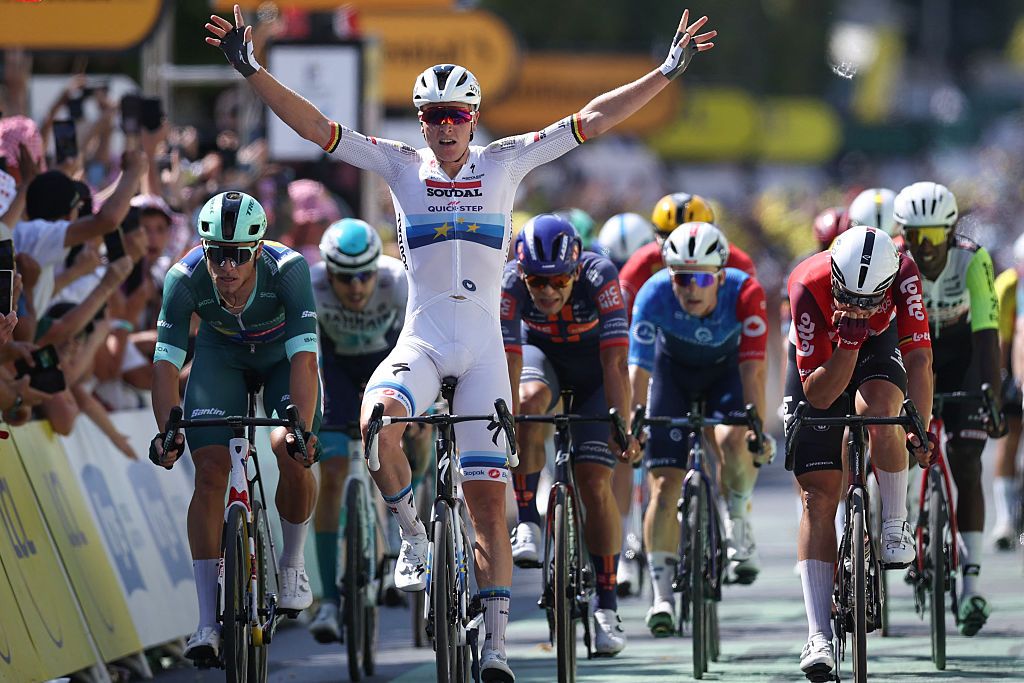
By sending a team built to simultaneously contest bunch sprints for Tim Merlier and chase a high general classification with Ilan Van Wilder, the team has presented a vision not of ruthless focus, but of compromised ambition.
This is a team caught between its past and a future it can’t quite grasp, and the decision to leave a pure climber like Mikel Landa at home is the tell. The official reason is “poor form,” but the real reason is a crisis of identity. A team that doesn’t know what it’s hunting has no use for its most specialized hunter.
The conventional wisdom will push back on this. It will say that a modern WorldTour team must have multiple objectives. Why put all your eggs in one basket?
A few stage wins with Merlier and a top-10 on GC for Van Wilder would, on paper, constitute a successful Tour. It’s a pragmatic approach, a diversification of assets. In any other era, it might have been.
But this is not any other era. This is the era of the super-team, where the general classification of the Tour de France is contested with a level of monolithic, suffocating control that makes any half-measure look like a suicide mission.
To challenge the likes of UAE Team Emirates or Visma-Lease a Bike, you don’t need a Swiss Army knife; you need a perfectly calibrated weapon, with every component dedicated to one task. You need a full train of mountain domestiques capable of holding a pace that cracks everyone but your leader. You need a team that sacrifices everything, every day, for one man.
Soudal-QuickStep has not brought that team. They have brought a squad designed to serve two masters, which in the furnace of the modern Tour means it will likely fail both.
Think about the geometry of it. Supporting a sprinter like Merlier requires horsepower on the flats – riders to shelter him from the wind and pilot him through the chaos of the final three kilometres. Supporting a GC hopeful like Van Wilder requires elite climbers who can survive the high mountains deep into the third week and set a tempo on the final climb.
Are there riders who can do both? A few. But can a team effectively field a world-class lead-out train and a mountain fortress? Absolutely not.
Every rider chosen to protect Merlier on a flat stage is a rider who cannot pace Van Wilder up Alpe d’Huez. Every feathery climber chosen for the Alps is one less burly rouleur to fend off the elbows in a sprint finale. The team is, by its very design, a compromise. And compromise is what gets you eighth on GC and a handful of second places in the sprints.
This brings us to Mikel Landa. The Basque climber is the ghost at this particular feast. Leaving him home makes a certain kind of sense if, and only if, the team has abandoned any real GC aspiration for the Tour de France 2026.
Landa is not a versatile rider. He is a pure, unadulterated climber who exists for the high mountains. He is precisely the kind of specialist you build a team around if your sole objective is the yellow jersey.
His exclusion signals that this was never the objective. The “poor form” line feels like a convenient way to paper over a deeper strategic void. They aren't leaving Landa home because he's not good enough; they're leaving him home because they haven't built a team in which a rider like him makes any sense.
This isn't a new problem. It is the central tension that has defined the team for years as it has tried to evolve from a Classics-devouring machine into a Grand Tour contender.
The old Wolfpack ethos—opportunistic, aggressive, swarming—is perfectly suited to the chaos of a one-day race. It is fundamentally at odds with the patient, attritional, and singular focus required to win a three-week race. They are two different sports played on the same roads.
Soudal-QuickStep is trying to play both at once. The result is a team that feels diluted. The old fear factor is gone, replaced by a sense of faint hope across multiple fronts.
They are no longer the predators, setting the terms of engagement. They are hoping to pick up scraps left by the bigger carnivores.
Perhaps Merlier will win a stage or two. Perhaps Van Wilder will hang on for a respectable place in the top ten. But the Wolfpack was never about being respectable. It was about being dominant, about instilling the certain knowledge in the peloton that when they decided a race was theirs, it was over.
This squad selection tells a different story. It’s the story of a pack that has forgotten its nature, that has traded the thrill of the hunt for the safety of hedging its bets.
And that, in the end, is how a wolfpack starves.
This isn’t a wolfpack. It’s a committee meeting.
A team that doesn’t know what it’s hunting has no use for its most specialized hunter.