
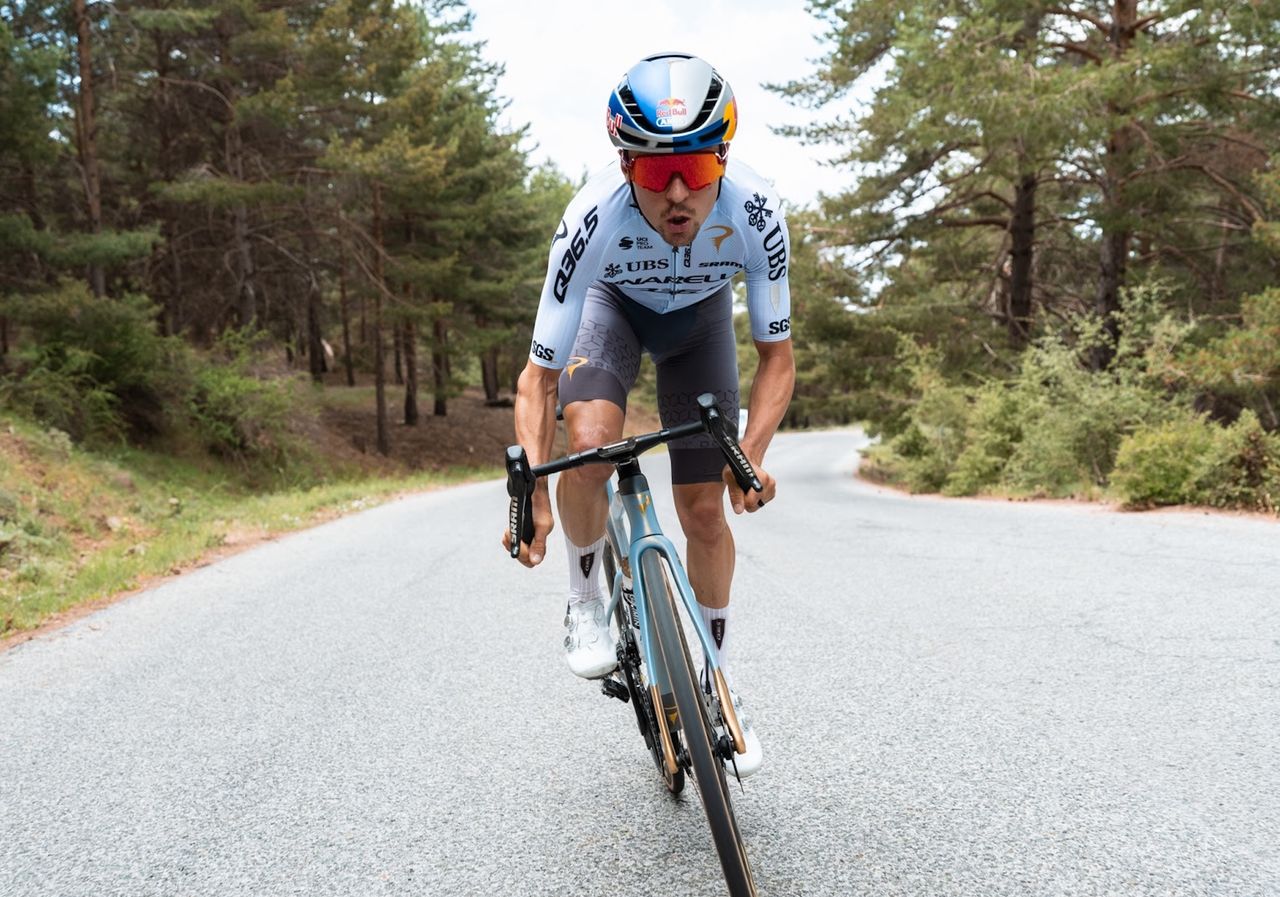
The wrong mountain for Tom Pidcock
He is one of the most gifted cyclists of his generation. So why is he aiming his prodigious, versatile talent at the one target he was never built to hit?
There is a romance to it, isn’t there? A team, Pinarello-Q36.5, stepping up to the grandest stage of them all.
And at the forefront, a rider of singular, multi-faceted talent, Tom Pidcock (Pinarello-Q36.5), is given the keys to a Tour de France team. It’s a story cooked up in a marketing department’s dream session, the kind of narrative that makes us believe, for a fleeting moment, that cycling is a simple sport of heroic will.
But cycling is not simple, and the Tour de France is a uniquely cruel crucible. As Pinarello-Q36.5 lines up for the Grand Départ of the Tour de France 2026, we must confront the uncomfortable truth that this feel-good story is built on hope, not logic.
The thesis is simple and, for many, heretical: Tom Pidcock is a generational talent, but a general classification bid at the Tour de France is a grand, career-altering mistake. To understand why, we have to look past the hype and see the rider for what he is, and the race for what it demands.
The All-Rounder’s Curse
The conventional wisdom will push back on this. It will say that modern cycling rewards versatility, and that the best GC riders are no longer one-dimensional climbers but punchy, aggressive racers who can handle crosswinds, cobbles, and chaotic finishes.
It will argue, quite reasonably, that you never know until you try, and that a rider of Pidcock’s undeniable class deserves the chance to explore his limits. This argument is tempting because it’s optimistic, but it fundamentally misunderstands the brutal mathematics of a three-week stage race.
The Tour de France doesn’t reward the most versatile rider; it rewards the most resilient specialist. It is not a decathlon; it is a marathon, run day after day for three weeks, with a few sprints and hurdles thrown in just to be cruel.
Tom Pidcock is cycling’s great decathlete. His talent is a splash of bright colour across multiple canvases, and he can do things on a bike that pure road climbers can only dream of.
But that very breadth of skill, that explosive energy, is the opposite of what is required to win the Tour. Grand Tour contention is a game of attrition, of metronomic efficiency, of shaving every gram of unnecessary effort. It is a slow grind, not a flash of brilliance, rewarding the rider who can hold 350 watts at the back of the group, not the one who can punch out 1,500 watts for 17th place.
Chasing GC forces a rider to unlearn their most thrilling instincts. It tells them to follow, not attack; to conserve, not to spend. It asks a predator to become a grazer, and for a rider like Pidcock, that is a form of spiritual death.
The Price of a Dream
There is also the brutal opportunity cost. Every hour spent in an altitude tent, every meal meticulously weighed, is an hour not spent honing his explosive power. Is a speculative eighth-place finish in Paris worth potentially missing out on a Monument victory?
This isn't just about Pidcock; it’s about the team around him. A Tour de France GC bid is a massive undertaking, requiring a fortress of riders drilled to perfection to protect their leader.
The team includes riders like Chris Harper, Damien Howson, and Fred Wright. But is it a squad built to withstand the relentless pressure of the GC super-teams over 21 stages?
What, then, does success look like? If Pidcock bleeds time in the first high-mountain test, does the team pivot and unleash him and Wright to chase stage wins? If so, the entire preparation has been for naught, and the project becomes a salvage mission before the second rest day.
This is not an argument against ambition, but for the right ambition. Pidcock’s career should not be measured by whether he can suffer his way to a top-10 in the Tour de France. It should be measured by the audacity of his attacks and the joy he brings to the sport when he is unleashed.
So as we watch him roll out, let’s hope for the best, but also be realistic. The most valuable thing Pidcock can take from the Tour de France 2026 might not be a high placing, but a hard-won lesson.
That lesson might be that his kingdom lies on the bergs of Flanders and the hills of the Ardennes, not on the long, unforgiving slopes of the Galibier. He is a marvel. He should race like one.
Chasing GC forces a rider to unlearn their most thrilling instincts. It asks a predator to become a grazer, and for a rider like Pidcock, that is a form of spiritual death.