
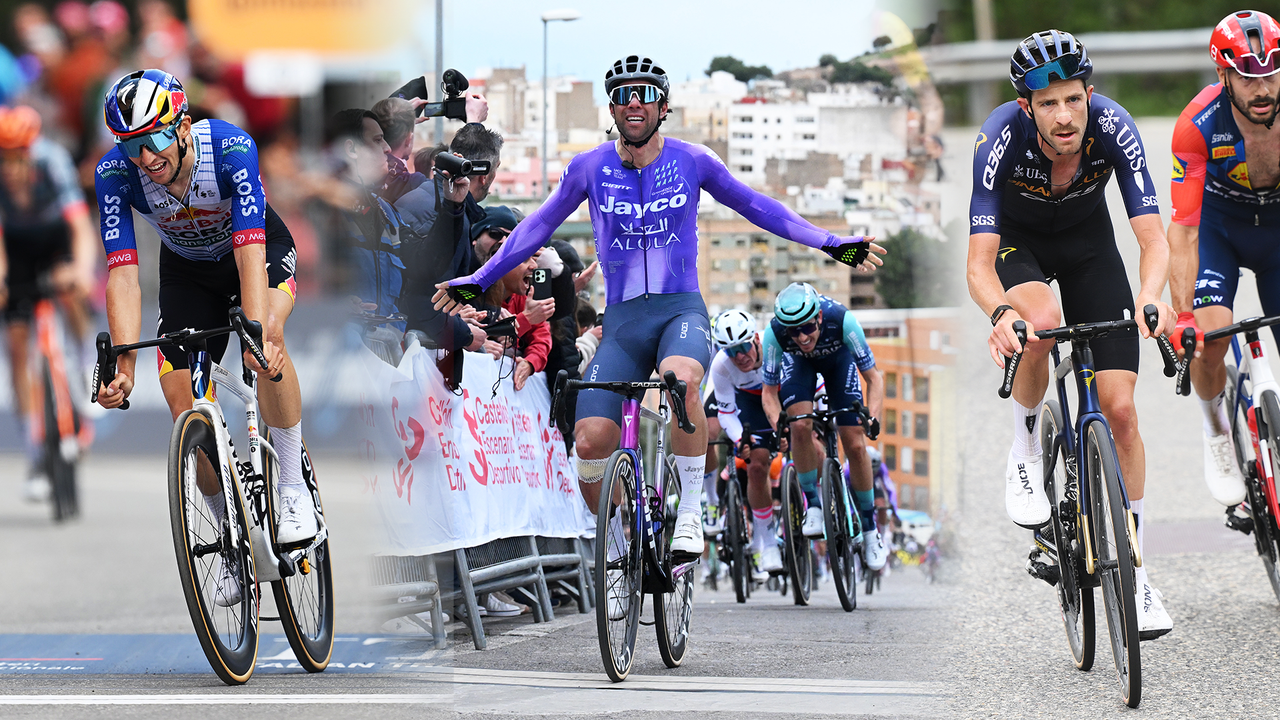
One Throne, Two Kings: The Co-Leadership Delusion
Red Bull-Bora-Hansgrohe says Remco Evenepoel and Florian Lipowitz will share the load at the Tour de France 2026. History, and human nature, say one of them is going to get left behind.
There is a game theory problem called the Prisoner's Dilemma. Two partners in crime are caught and held in separate cells. If both stay silent, they each get a short sentence. If one rats out the other, the snitch walks free while their partner gets the maximum time.
If they both betray each other, they both get a medium sentence. The paradox is that while the best collective outcome is mutual silence, the most rational individual choice is always to betray. The risk of being the sucker is too great.
And so we turn to Red Bull-Bora-Hansgrohe and their plan for the Tour de France 2026. Their two prisoners, Remco Evenepoel and Florian Lipowitz, are not in separate cells but in the same team bus, smiling for the cameras and saying all the right things about shared goals and mutual respect.
They are co-leaders. It is, they insist, a strength. Two cards to play. A dual threat. This is the nicest, most persistent, and most destructive lie in professional cycling, and it is doomed to fail.
To understand why this is not just a pessimistic take but a structural certainty, you have to understand that the Tour de France is not a series of 21 discrete bike races. It is a three-week exercise in accumulating pressure.
It squeezes a team until every hidden weakness, every unspoken hierarchy, every hairline crack in the facade is exposed and then shattered. A strategy that relies on perfect altruism and flawless communication between two supreme alpha athletes is not a strategy; it’s a prayer.
The Steelman: Two Cards to Play
The conventional wisdom will push back on this. It will say, as the team’s management surely is, that having both Evenepoel and Lipowitz gives them options. If one is marked, the other can attack.
If one suffers a crash or an ill-timed puncture, the team’s ambitions don’t immediately evaporate. It forces rivals to cover two threats instead of one. On paper, in a PowerPoint presentation delivered in a sterile boardroom in January, it looks like a masterstroke.
Both riders are playing their part beautifully. They have publicly dismissed any talk of rivalry, insisting they will work together for the best possible team result. It’s a script as old as the sport itself, and every team recites it with unwavering sincerity before the Grand Départ.
They believe it, or at least, they want to believe it. But the road doesn't care about PowerPoint. The road asks questions, and it demands a single answer.
The Inevitable Fracture
Picture this: it’s stage 17. One of your leaders is in the virtual yellow jersey, the other is 30 seconds behind him on GC, and five seconds ahead of the race's main rival. Your two stars are in a select group on the final climb.
One of them feels incredible. The other is visibly on the limit. What do you do? Do you tell the stronger rider to wait, potentially sacrificing his own chance at victory to nurse his teammate, who might crack anyway? Or do you unleash him, shattering the rival but also definitively ending your other leader’s chances?
Who gets the final domestique? Whose pace does the team set? When one attacks, does the other block or just sit on the wheel? These aren't theoreticals; they are split-second decisions with million-dollar consequences.
In the heat of battle, the Prisoner's Dilemma always kicks in. The rational choice becomes self-preservation. He looks like he’s struggling. If I wait and he gets dropped, we both lose. If I go now, at least one of us has a chance. It has to be me.
This isn't a moral failing. It's the psychological makeup of a champion. You do not get to the level of a Remco Evenepoel or a Florian Lipowitz by being a natural subordinate. You get there through a monolithic self-belief and a deep-seated desire to be the one on the top step.
Asking two such riders to sublimate that instinct for three weeks is like asking two lions to share a single gazelle. It might start peacefully, but it will end in blood.
The history of the Tour is littered with the wreckage of co-leadership. The names change, but the story remains the same. A polite fiction crumbles under pressure, giving way to open warfare on the road that ultimately weakens them both against a singular, focused rival.
Red Bull-Bora-Hansgrohe is betting that this time is different. That their culture is stronger, their riders more selfless, their plan more robust. They are betting against decades of evidence.
They are betting against human nature. And human nature has a perfect winning record.
Asking two such riders to sublimate that instinct for three weeks is like asking two lions to share a single gazelle. It might start peacefully, but it will end in blood.