
The unsolvable equation of Chris Froome
The end of a career is always a quiet affair. But for Chris Froome, the silence that follows will be filled with the unending noise of debate.
All great sporting careers end twice. The first ending is the loud one, the one that breaks bones and shatters carbon fibre on a forgotten stretch of road. The second is the quiet one, the one that happens months or years later, in a press release – a confirmation of what the body already knew.
For Chris Froome, the first ending was a life-threatening crash. The second, his official retirement, arrived this week, less a shock and more a final, soft-pedalled revolution of the cranks.
With that, one of the most dominant, confounding, and fiercely debated careers in modern cycling formally closes. What is left is the hard part: the accounting of a legacy that is not a simple monument, but a puzzle box whose solution we will likely argue about forever.
To understand Chris Froome is to hold two contradictory ideas in your head at once. The first is the champion: the gawky, elbows-out automaton who, at his peak, was less a cyclist and more an inevitability.
If you watched him then, you remember the image: the fixed stare at the power meter, the metronomic, high-cadence churning that looked so unnatural yet ground the world’s best climbers into dust. He was the spear-tip of the Team Sky machine, a unit so ruthlessly efficient it felt like it had solved cycling.
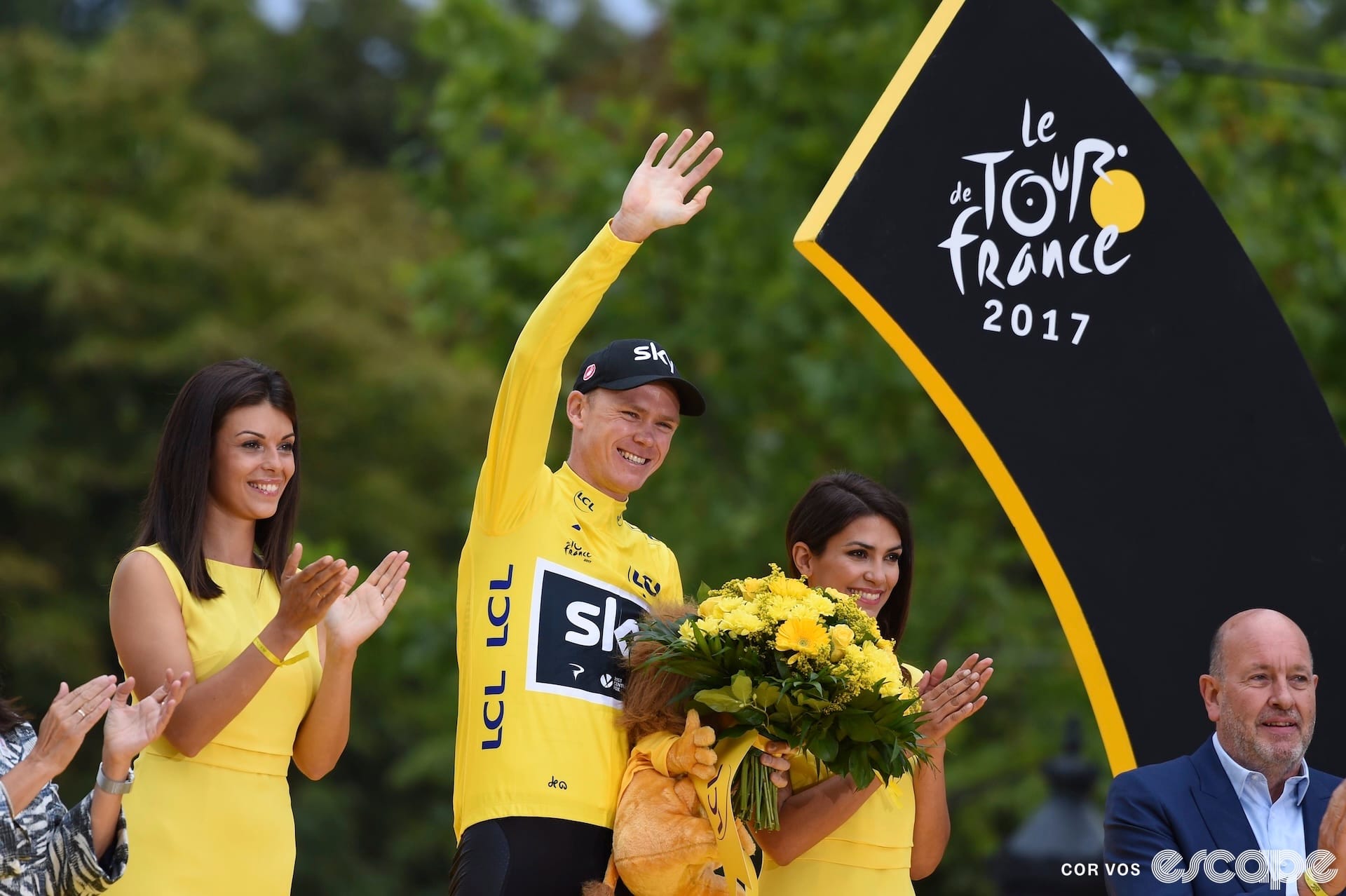
The team would set a tempo that suffocated the race, shedding rivals one by one, until only their leader was left to deliver the final, calculated blow. It was a brutalist form of dominance, an algorithm executed on asphalt, and it delivered him victories at the Tour de France.
The man and the machine
The conventional wisdom will push back on any critique of this period. It will say that Froome and his team simply professionalised the sport, bringing new levels of scientific rigour to a world that often ran on feel.
It will point to the sheer weight of the victories – not just the Tours but other major stage races – as proof of generational talent. You don't accumulate such a string of victories by accident; he was, by any objective measure, a phenomenon.
But that is only half of the equation. The other half is the doubt, a persistent cloud of suspicion that shadowed Froome’s success from the very beginning.
Some of it was earned by his team’s own missteps, some the inevitable byproduct of winning so much, so quickly, in a sport still crawling from the wreckage of the EPO era. The questions are part of the story, as inseparable from his yellow jerseys as the Sky logo.
There were the Therapeutic Use Exemptions (TUEs), the salbutamol adverse analytical finding from which he was eventually cleared, and the constant, attritional warfare with inquisitors in the press and on the roadside.
For a generation of fans, his career wasn't just about watching a champion; it was about choosing what to believe. The sport never delivered a definitive answer, and so the uncertainty became cemented into his legacy.
The final chapter he never got to write
Then came the crash that marked the first ending. In an instant, the machine was broken, and what emerged from the wreckage was simply a man fighting a long, desperate battle to return to a level his body would no longer allow.
The final years of his career were not a victory tour but a quiet, stubborn refusal to quit. He became an underdog, a former king haunting the periphery of the sport he once ruled.
Strangely, this painful epilogue may have done more for his humanity than any of his victories. The invincibility was gone, replaced by a visible vulnerability.
We saw the effort, the pain, and the ultimate, immovable limits of his own body. He was no longer an equation to be solved, but a person to be pitied, perhaps even admired for his grit.
But it doesn't resolve the central question. Chris Froome’s retirement doesn't close the book; it just stops the writing. We are left with a career of two distinct parts: the all-conquering champion shrouded in complexity, and the dogged survivor who earned a different kind of respect.
His story is the story of modern cycling itself — a decade of staggering performances, data-driven revolutions, and the ghosts of the past that refuse to be exorcised.
There will be no simple verdict. His Tour trophies sit in a cabinet, immutable; the questions sit in the air, forever unanswered. And that, in the end, is the entire story.
He was no longer an equation to be solved, but a person to be pitied, perhaps even admired for his grit.