
The price of ambition: Why Bjarne Riis was right
When a team implodes in a Tour de France time trial, it’s more than a mistake. It’s a public lesson in the brutal physics of the WorldTour pecking order.
There is no hiding place in a team time trial. It is cycling’s most honest and cruel discipline, a rolling MRI scan of a team’s collective soul. There is no drafting behind a rival, no savvy breakaway to fluke.
There is only the shared effort, the tyranny of the clock, and the sickening pop as the elastic snaps and a rider is left behind. It is a test of strength, but more than that, it is a test of self-knowledge.
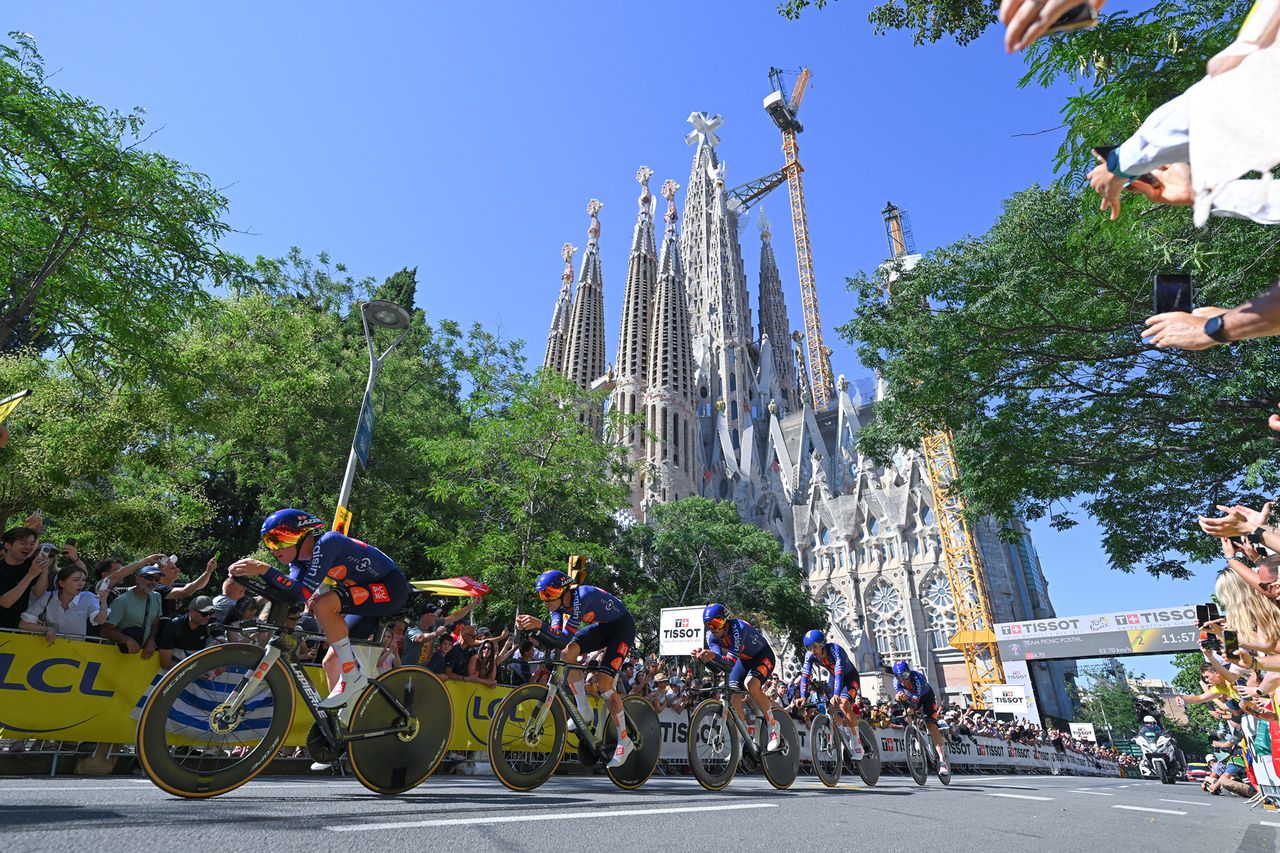
In an early team time trial at the Tour de France 2026, Team Picnic-PostNL learned they did not know themselves at all.
Then Bjarne Riis, a man whose compliments are famously rarer than a pan-flat Tour stage, delivered the verdict: “Embarrassing.”
The team had cannoned out of the start gate in a brazen bid for glory, only to spectacularly disintegrate. They arrived in pieces, their goal not just missed but vaporised. Riis’s single word was cold, sharp, and, to many, needlessly cruel.
The conventional wisdom pushes back. It says Riis is a relic, a hardman from a different era applying an old-school mentality to a young team’s understandable ambition. Shouldn’t we praise the audacity? Isn’t it better to try and fail spectacularly than to ride to a safe and anonymous 12th place?
To understand why that is the wrong argument, you have to understand the grammar of the TTT. It is not a drag race; it is a complex negotiation with pain, a scripted tragedy where the only variable is how elegantly you can delay the ending.
A successful TTT is built on brutal honesty. The team must know, to the watt, its strongest and weakest links. They must pace not for their best rider, but for their fifth. To go out too hard is not a brave gamble; it is a mathematical certainty of failure. It is a fundamental misunderstanding of the assignment.
The Anatomy of an Implosion
What Picnic-PostNL did in that team time trial at the Tour de France 2026 wasn’t just an overzealous start. It was an act of profound tactical naivety. They wrote a pacing script for a team they wished they were, not the team they actually were.
By chasing the glory of an early fast split, they took out a physiological loan their collective body could not repay. The interest came due in the final third of the course, and it was crushing. Each rider who cracked wasn't just losing time; they were increasing the burden on those who remained, creating a death spiral of fatigue.
This is what Riis saw. He didn't see bravery. He saw a team that lacked the internal governor, veteran leadership, or directorial oversight to save them from their own ambition. In the unforgiving ecosystem of the WorldTour, this isn't just a mistake; it's a sign of weakness that rivals will remember.
The embarrassment wasn’t in the failure to win, but in the illiteracy of the attempt. It was like watching a chess novice try for a four-move checkmate against a grandmaster; the outcome is preordained, and the attempt itself reveals the gulf in understanding.
The Unwritten Rules
This gets at a deeper truth about Grand Tour racing. There is a pecking order, an unwritten hierarchy. You cannot simply show up and demand a seat at the head table. You earn it, kilometre by kilometre, season by season.
Trying to leapfrog that process with a single, heroic, but ultimately doomed effort doesn't work. The road, and the peloton, will slap you down.
Riis, for all his controversial history, understands this better than almost anyone. He managed teams that were masterpieces of calibrated effort, knowing exactly how much pressure to apply and when. His criticism wasn’t personal spite. It was the exasperation of a master craftsman watching an apprentice use a chisel as a hammer.
So yes, the word “embarrassing” was harsh. But it was also precise. It was embarrassing because the failure was so predictable, so elemental.
Picnic-PostNL weren't beaten by their rivals so much as by physics and a lack of self-awareness. They will learn from it, of course; pain is a profound teacher.
But the lesson was a public one, and the tuition is steep. And that, in a single, cutting word, is the entire story.
To go out too hard is not a brave gamble; it is a mathematical certainty of failure. It is a fundamental misunderstanding of the assignment.
The embarrassment wasn’t in the failure to win, but in the illiteracy of the attempt.
Riis’s criticism wasn’t personal spite. It was the exasperation of a master craftsman watching an apprentice use a chisel as a hammer.