
The Tour de France is melting
For a century, the Tour has been a story of riders conquering the landscape. Now the landscape is fighting back. If cycling’s greatest race wants to survive, it must stop pretending it’s just another hot summer.
Imagine the finish line. Not the one you know, a riot of colour and noise pressed hard against the barriers, but a silent, sterile chute. The only sounds are the frantic panting of exhausted men, the whir of carbon hubs, and somewhere, in the hazy distance, the unmistakable crackle of a forest on fire.
This isn't a dystopian fantasy. It was the reality for a recent mountain stage, where wildfires forced organisers to ban the very people who give the race its soul: the fans.
That silent finish line is a postcard from a future arriving far faster than a peloton with a tailwind. The prospect of the opening stages of a future Tour de France being threatened by 44°C heat and more fires is not a warning shot; it is the cannon fire signalling that the battle has already been joined.
The sport of cycling, particularly its glorious, sweltering, sun-drenched centrepiece, is in a climate crisis it can no longer ignore.
The conventional wisdom will, of course, push back. It will offer the great Gallic shrug. It will say that the Tour has always been hard, that heat has always been a part of it.
It will point to leather-faced men of the past drinking wine from glass bottles and riding steel bikes over gravel roads and say, “See? They survived.”
To believe this is to fundamentally misunderstand the problem. This is not about being tough; it is about biology. The human body, even the preternaturally gifted body of a Tour de France rider, is not designed to perform at its absolute limit in 44-degree heat while inhaling smoke particulate.
The old stories of suffering were about man versus mountain, man versus man. This new suffering is about man versus a planetary fever.
There is no glory in winning a stage that might cause heatstroke or long-term respiratory damage. It’s not sport; it’s self-harm.
The Boiling Frog Peloton
For years, professional cycling has behaved like the proverbial frog in a pot of slowly boiling water. The temperature creeps up, and the response is incremental: a new extreme weather protocol here, an extra feed zone there.
Ice vests at the start line become ubiquitous. Teams perfect the art of the 'slushy' bidon. These are all sensible, minor adaptations to a problem that is no longer minor.
We are no longer simmering. The water is at a rolling boil. Banning spectators, shortening the publicity caravan, giving regional prefects the power to unilaterally cancel stages—these are not tweaks.
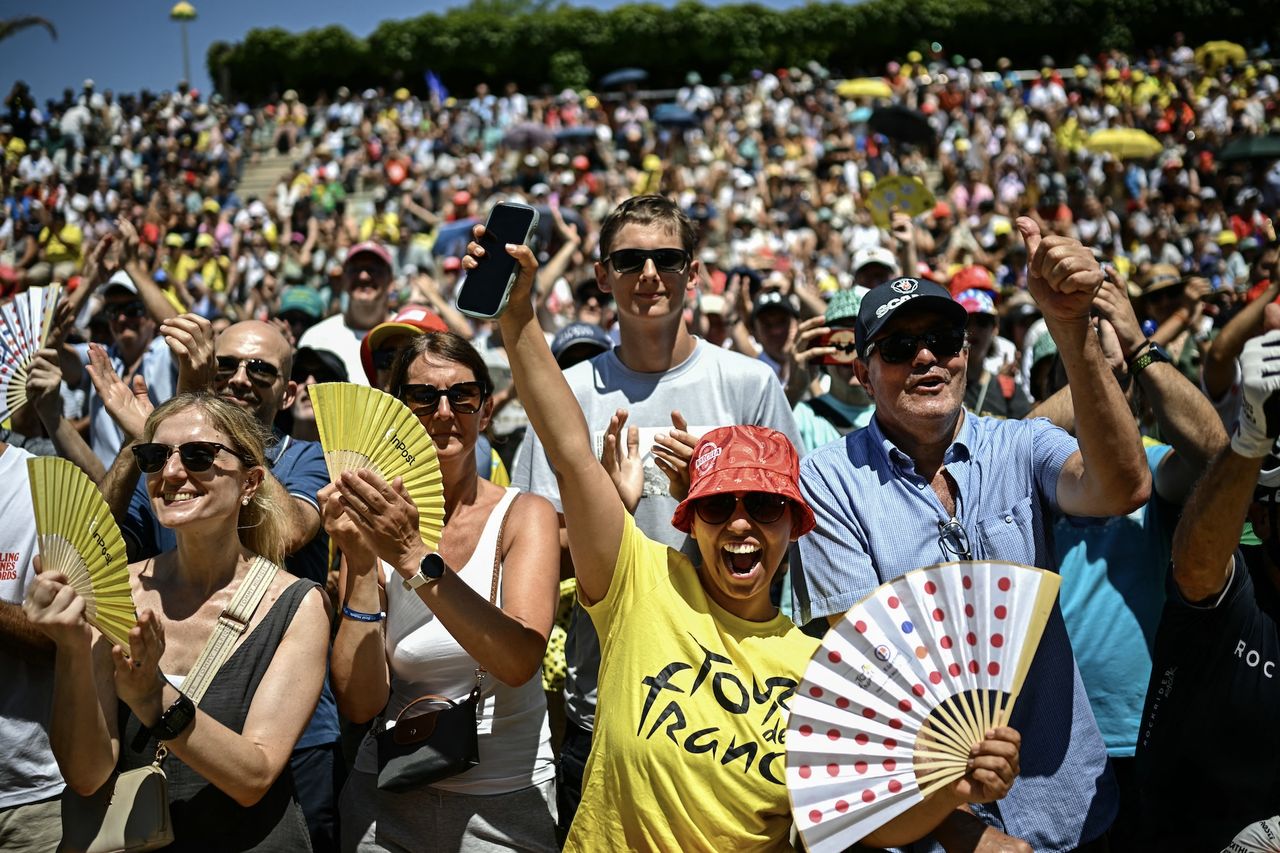
They are emergency interventions that attack the very essence of the event. The Tour is not just a bike race; it is a cultural phenomenon, a rolling festival that brings millions of people to the roadside.
A Tour without fans is a race without a heart. A Tour with cancelled stages is a broken narrative. It becomes a lottery, decided not by strength but by which stages happen to be cool enough to actually run.
What, exactly, are we trying to preserve by clinging so desperately to the July calendar? The romance of racing through fields of sunflowers?
It’s a beautiful image, but less so when the fields are baked brown and the sunflowers are drooping under a sky thick with haze.
The tradition of aligning with the French summer holidays? A fine notion, but one that seems tragically quaint when the tradition involves putting 184 riders in mortal peril.
There Is No Other Way: Move The Race
To understand why this is the right argument, and not just the alarming one, you have to accept the premise that things are not going back to the way they were. The climate models are clear. These heatwaves and fire seasons are the new normal.
So, the sport has a choice: manage a slow, painful, undignified decline into a patchwork of cancelled events and health scares, or make a bold, radical, and necessary change.
The Tour de France must move.
It’s a heresy, I know. The Tour is July. But it doesn’t have to be.
Imagine a Tour de France in May, racing through a vibrant, green landscape under a warm but humane sun. Imagine a Giro d’Italia taking the September slot, a celebration of the Italian autumn.
The Vuelta a España could go later still into October. The entire WorldTour calendar could be re-imagined around a simple, life-preserving principle: race in the right places at the right times.
Of course, it’s complicated. Television rights, local holidays, overlapping with other major sporting events—the logistical hurdles are immense.
But they are logistical hurdles, not an existential ones. They are problems that can be solved by people in boardrooms.
A rider collapsing from heat exhaustion on an exposed climb is a problem that cannot be solved. It’s a tragedy.
For decades, the Tour has asked the impossible of its riders. Now, for the first time, the Tour itself is faced with an impossible situation.
It can cling to the nostalgia of July and watch its own legend burn, or it can adapt, move, and survive. It has always been a race against time.
Now, it's a race against the clock of a burning planet.
And that, in ten years, might be the entire story.
There is no glory in winning a stage that might cause heatstroke or long-term respiratory damage. It’s not sport; it’s self-harm.
A Tour without fans is a race without a heart. A Tour with cancelled stages is a broken narrative.
The Tour de France must move.