
Even the mountains must obey
The sport becomes safer, more sensible, more humane. With every protocol, however, it loses a small piece of the brutal myth that first built it.
In 1910, on the first passage of the Col du Tourmalet in the Tour de France, Octave Lapize is said to have looked at the organisers and screamed his famous curse: “Vous êtes des assassins! Oui, des assassins!”
He was walking, pushing his bicycle through the mud and scree of a road that was barely a road at all. The mountain was a primordial beast, and the men sent over it were sacrifices. The suffering was the point.
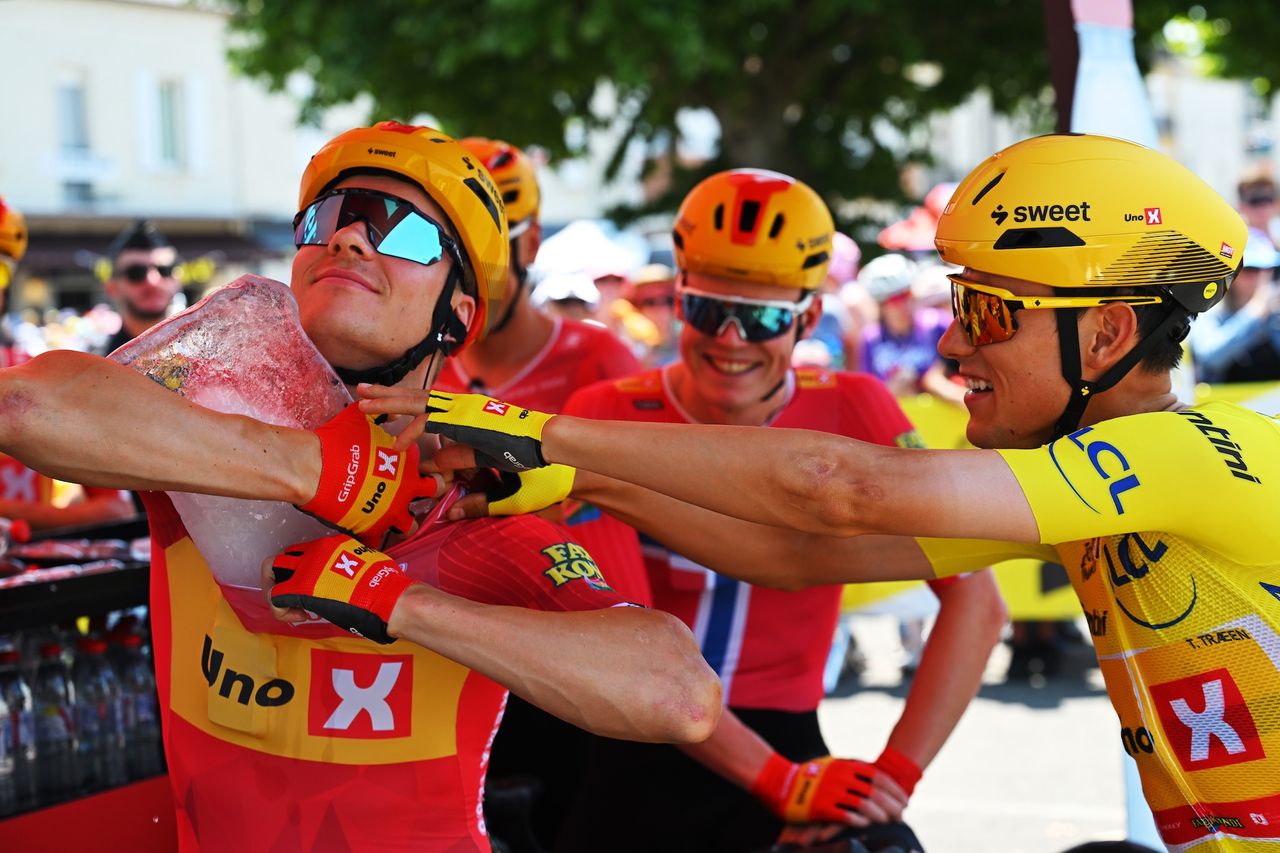
116 years later, ahead of another stage over that same great climb, the Tour de France 2026 has activated the UCI’s Extreme Weather Protocol. The cause is not impassable mud or snow, but forecasted high temperatures and the possibility of thunderstorms.
The stage will proceed, but the protocol's very existence marks another quiet, inexorable turn of the ratchet. The mountains remain, but the terms of engagement between rider and landscape have been rewritten. This is not the end of suffering, but it is the end of its unthinking glorification.
To understand the sport of cycling is to understand its long, often reluctant, march toward professionalism. The heroes of Lapize’s era, and for decades after, were defined by what they endured. Their feats were Homeric precisely because they were borderline suicidal.
They rode on terrible roads with primitive equipment, often with little more than a leather chamois and a wool jersey between them and the elements. The Tourmalet was not simply a climb; it was a filter for a certain kind of person, a test of will against a hostile world. The mythology of the sport was written in these battles against nature itself.
The New Contract
The Extreme Weather Protocol is the logical conclusion of a process that began with helmets, feed zones, and team cars carrying spare wheels. It is an admission that the race should be between the athletes, not between an athlete and heatstroke or hypothermia.
It codifies a duty of care that was once entirely absent. One need not look far into the past for days of racing in conditions that would be unthinkable now. Legendary tales of riders battling through blizzards and extreme conditions are, by modern standards, profound institutional failures.
The modern peloton is a finely tuned athletic enterprise. Riders are monitored to the watt and the kilojoule; their bodies are the result of immense investment, both personal and financial.
To expose them to gratuitous, preventable risk is no longer seen as a test of character but as a dereliction of duty. The protocol is an instrument of reason in a sport long governed by a romantic form of madness. It is, by any objective measure, progress.
An Uneasy Truce with the Past
The conventional wisdom, or at least the romantic heart of the sport, will push back on this. It will say that cycling is suffering, and that by mitigating the extremes we dilute the very essence of what makes a Tour de France rider a giant of the road.
Is a Tourmalet crossed in hot weather, with extra water distribution points and cooling vests, the same Tourmalet that broke Octave Lapize? The question hangs in the air.
But this nostalgia is a luxury afforded to those who are not in the saddle. The riders of today are not weaker, their will no less formidable. The challenge has simply been recalibrated.
The speeds are exponentially higher, the tactical demands more suffocating, the pressure to perform relentless for three weeks. The suffering is still there, measured in heartbeats and lactate, even if the existential threat from the weather is now a risk to be managed rather than a fate to be endured.
The assassins Lapize cursed have been replaced by risk assessors.
That is the shift. The race is no longer a story of pure survival. It is a controlled experiment in athletic performance, conducted on the same epic landscapes.
The Tourmalet has not shrunk. It remains a colossal monument of stone and asphalt, its gradients just as severe, the air at its summit just as thin. What has changed is our expectation of what the sport should ask of its participants.
We no longer demand martyrs. The activation of a protocol is a quiet acknowledgement that a rider’s courage is best expressed in a sprint for the line or a long-range attack, not in a desperate battle with dehydration.
The Tourmalet will still crown its king, but it will no longer be allowed to claim victims. And that, in the long arc of this sport's history, is the most profound victory of all.
The assassins Lapize cursed have been replaced by risk assessors.
The mountains remain, but the terms of engagement between rider and landscape have been rewritten.
The Tourmalet will still crown its king, but it will no longer be allowed to claim victims.