
Is Peter Sagan wrong about his own record?
The rider widely credited with seven green jersey wins believes his record will be broken. The mathematics of modern cycling suggest it’s impossible.
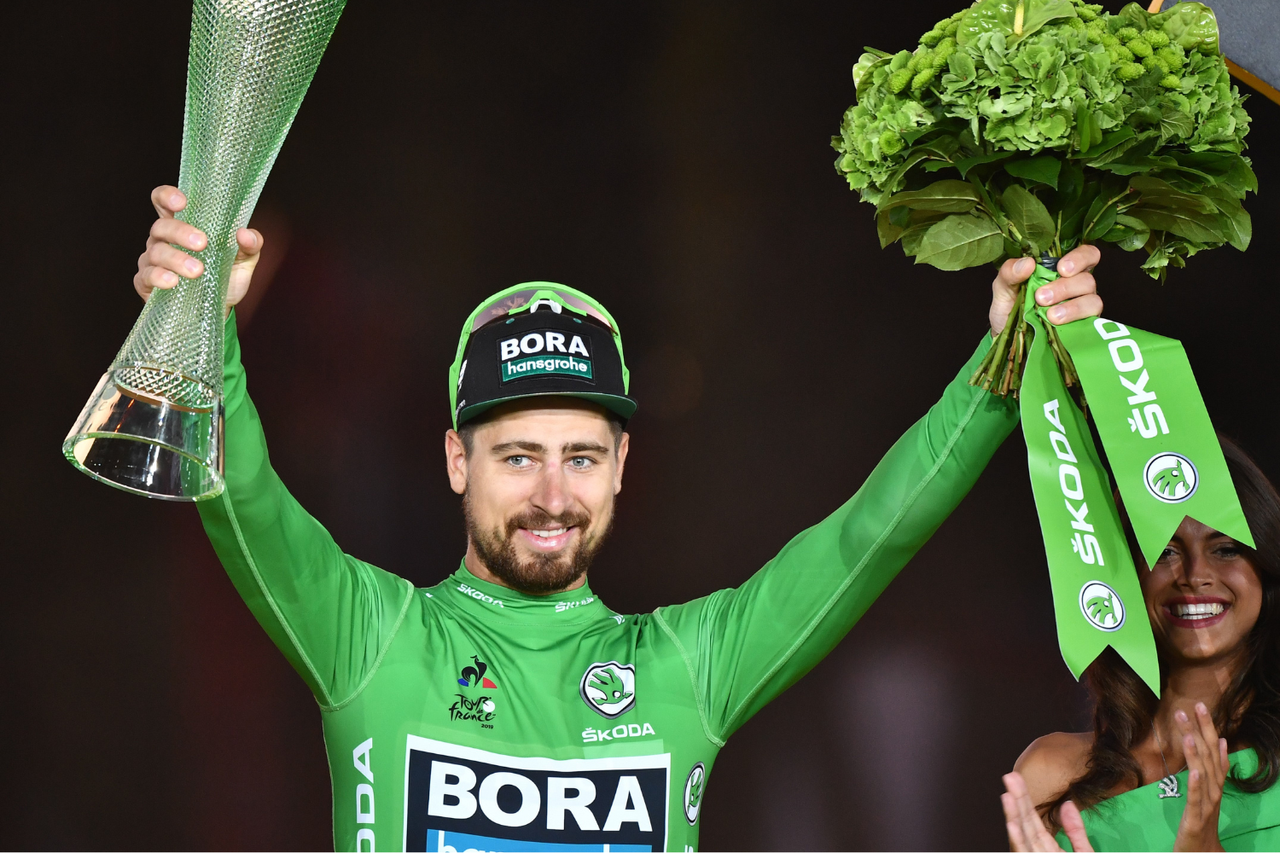
Seven. That’s the number often associated with Peter Sagan's green jersey tally from the Tour de France. And he believes, with the easy confidence of a retired champion, that someone will eventually win eight.
He may be wrong.
This isn’t sentiment. It’s an assessment of the facts. A record like the one Sagan is credited with is not a benchmark waiting to be surpassed, like an hour record or a Grand Tour count.
It is a statistical anomaly, the product of a unique rider operating in a specific tactical era. To believe it will be broken is to misunderstand what the green jersey demands, and how much the sport has changed.
The Fallacy of Inevitability
The conventional wisdom, echoed by Sagan himself, is that all records are made to be broken. It’s a comfortable platitude, suggesting a linear progression of athletic achievement. But not all records are created equal.
Some are tests of pure physiology — more watts, higher VO2 max, better aerodynamics. Those will inevitably fall as training, nutrition, and technology improve.
A record like Sagan's is not one of those. It is a record of versatility, a testament to a rider who could win a bunch sprint one day, infiltrate a breakaway to mop up intermediate points the next, and survive a mountain stage to contest a reduced sprint from a group of 50.
This is not a question of finding a stronger rider. It is a question of finding a rider with an almost paradoxical combination of talents.
The Green Jersey Equation
Winning the points classification is not the same as being the fastest sprinter. The pure sprinters know this. They target four or five flat stages, and their Tour is a success if they win two.
For the rest of the race, their job is survival — finishing inside the time cut, conserving energy, and letting the breakaway specialists and GC contenders have their days.
To challenge for green, a rider must compete for points everywhere. They need the top-end speed to beat the specialists on their own turf, the endurance to get over medium mountain passes, and the tactical intelligence to know which breakaways to join.
Essentially, the formula is this: (World-class sprinter) + (Classics puncheur) + (Opportunistic breakaway artist).
Now, find a rider who embodies all three of those. Then, find a team willing to sacrifice all other ambitions at the Tour de France to support that one rider’s quest.
Finally, repeat that feat multiple times. The odds against it are astronomical.
The Age of the Specialist
The modern peloton is an ecosystem of specialists. Teams are built with singular objectives: you are a GC team, a sprint team, or a stage-hunting team.
The all-rounder who can challenge for the green jersey is a tactical luxury that few can afford, and even fewer can justify building a team around.
The closest modern analogues have all fallen short for predictable reasons. Some riders possess a similar, multifaceted skillset, but their roles have often been as super-domestiques for a yellow jersey contender. Their own ambitions are secondary.
Others have the talent, but not the singular focus; their targets are specific stages and classic one-day races, not a three-week war of attrition for a jersey.
Sagan existed in a unique space. For much of his career, his teams were reportedly built with the green jersey as the central organizing principle.
Every lead-out, every chase, every tactical decision was made in service of that goal. That level of focused support for a non-GC rider across the better part of a decade is a relic of a bygone era.
To break the record, a rider will not only need to replicate Sagan’s unique physiology. They will also need to find a team willing to replicate his unique tactical environment. In an era dominated by the high-stakes battle for yellow, that is an increasingly unlikely proposition.
A record like Sagan's isn’t about being the best. It’s about being the most: the most consistent, the most versatile, the most present. The numbers required to win so many times are staggering not because of their peak, but because of their breadth.
So, no, a record like that may not be broken. It stands as a monument to a rider who defied specialization in an age that was beginning to demand it.
The sport has moved on. The calculation no longer adds up.
To believe the record will be broken is to misunderstand what the green jersey demands, and how much the sport has changed.