
The Commissaire’s Protractor
A rider’s body will always find the path of least resistance. The sport’s rulebook, it seems, is built to add it back in.
There is a story as old as the Tour de France itself: a lone rider, or a small group, breaking the grip of the field and setting out against the vastness of the French landscape. This is the sport in its purest state, a contest of will, wind, and road.
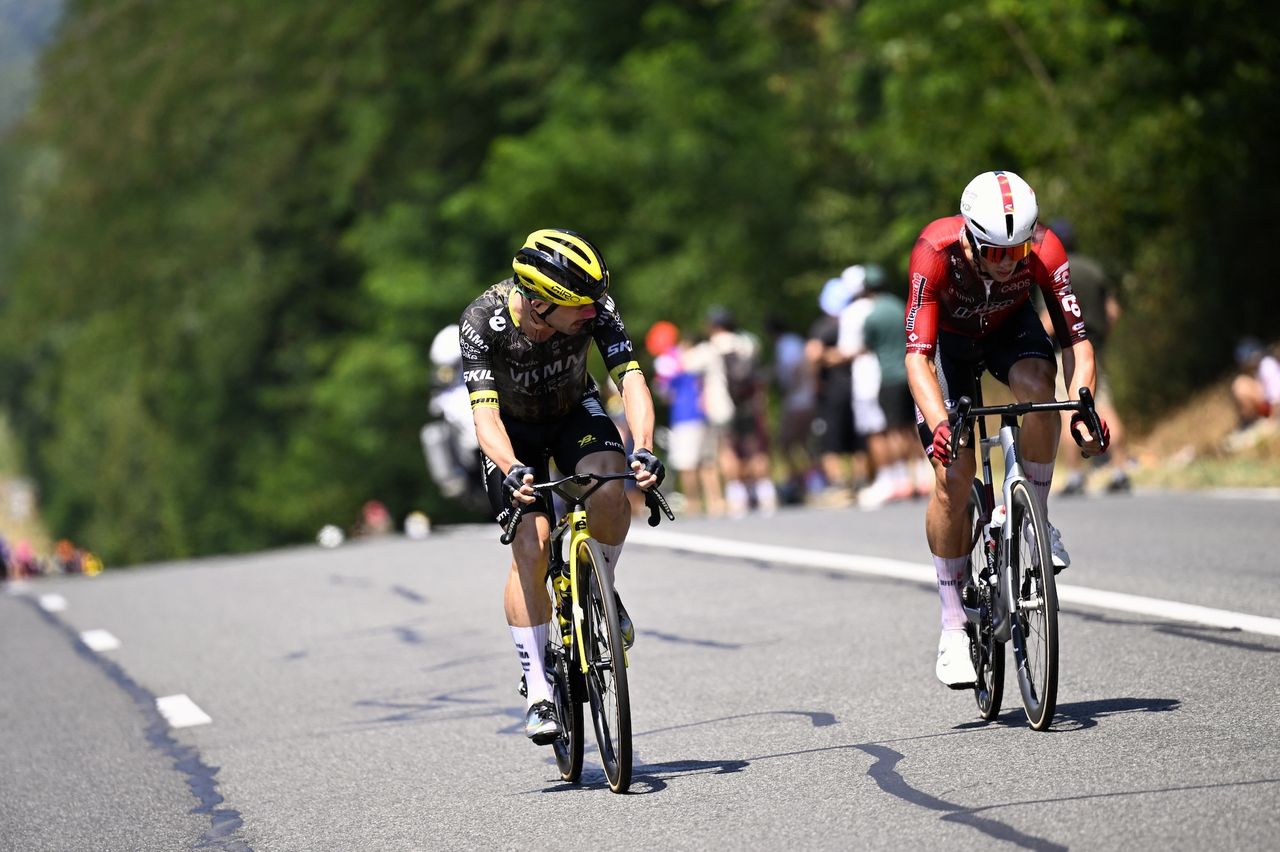
Yet at the Tour de France 2026, a new character forced its way into this timeless drama. It was not a rival team’s chase or a sudden hunger knock that decided the fate of Huub Artz’s breakaway, but the disembodied voice from a commissaire’s car, armed with a regulation about the angle of a wrist.
This is not a new story. It is merely the latest verse in a long, weary song about the sport’s governance. For decades, cycling’s rule-makers have viewed the rider’s body not as an engine of glorious, suffering expression, but as a problem to be corrected, a silhouette to be standardised.
The warning to Artz for an illegal aerodynamic position on his handlebars—a move that saw the rider, confused and demoralised, abandon his effort—is another chapter in the endless effort to place a bureaucratic hand on the handlebars.
One thinks, inevitably, of the 1990s, when innovators broke records with bikes and positions born of frantic genius in a workshop. The UCI, in response, did not celebrate the innovation; it legislated against it, effectively mandating what a bicycle must look like.
These were not regulations for safety, but for aesthetics. They sought to preserve a romantic, conservative image of the sport, even if it meant clipping the wings of its most daring innovators. The message was clear: there is a right way and a wrong way to go fast, and the committee will be the judge.
The Illusion of Safety
The conventional wisdom, pushed by the UCI itself, will insist these measures are about safety. The banning of certain descending positions and those with forearms resting on the bars were both framed as essential interventions to protect riders from themselves.
It is an argument that carries a certain paternalistic weight. In a sport defined by its inherent dangers, who could argue against making it safer?
And yet, one must. The argument collapses under the slightest scrutiny. Is a rider resting their wrists on the flat top of the bar, as Artz appeared to be doing, truly engaging in an act of reckless abandon? Is it more dangerous than descending a rain-slicked Alpine pass at 90 km/h, jostling for position in a 65 km/h bunch sprint, or navigating a course littered with unpadded traffic islands?
The focus is curiously selective. The regulations obsess over the posture of the individual while often ignoring the systemic dangers of course design and race conditions.
What happened to Huub Artz was not a victory for rider safety. It was the triumph of pedantry. It was a race official, likely with a well-thumbed rulebook, deciding that a rider’s natural search for comfort and aerodynamic efficiency on a long day out front was an infraction worthy of intervention.
The result was not a safer race. The result was simply a worse one, robbed of the animation that breakaways provide.
A Battle for the Soul of the Sport
This impulse extends beyond aerodynamics. Consider the infamous regulations on apparel, rules so absurdly concerned with sartorial minutiae that they have become a running joke.
There is no safety argument, no performance-fairness case to be made. It is purely about enforcing a uniform aesthetic. It is control for the sake of control.
The warning to Artz feels closer in spirit to these apparel rules than to any meaningful safety protocol. It is an expression of the governing body’s desire to dictate how the game is played, down to the finest detail.
But cycling has always found its most compelling narratives in the spaces where riders defy convention. The breakaway is, by its nature, an act of rebellion. The rider seeks to escape the control of the peloton, to find a new path to victory.
When that impulse is met not with the challenge of a rival but with the sterile judgment of a rulebook, something essential is lost.
A rider in a breakaway is engaged in a profound conversation with his own body, searching for a position that balances power, aerodynamics, and the simple need to endure. For a commissaire to interrupt that conversation, to tell him he is suffering incorrectly, is an intrusion of the highest order.
The story of the Tour de France 2026 will not remember who won the stage on the day Huub Artz was warned out of his breakaway. But we should remember the moment itself. It is the story of the modern sport in miniature: a rider’s ambition, nullified by a paragraph in a document.
The greatest forces in cycling are no longer the mountains or the wind. They are the whims of the men in the following cars.
The greatest forces in cycling are no longer the mountains or the wind. They are the whims of the men in the following cars.