
Grit, guts, and a really good orthopod
We love a comeback story about a rider's inner fire. But what if the real hero is the person who rebuilt their knee?
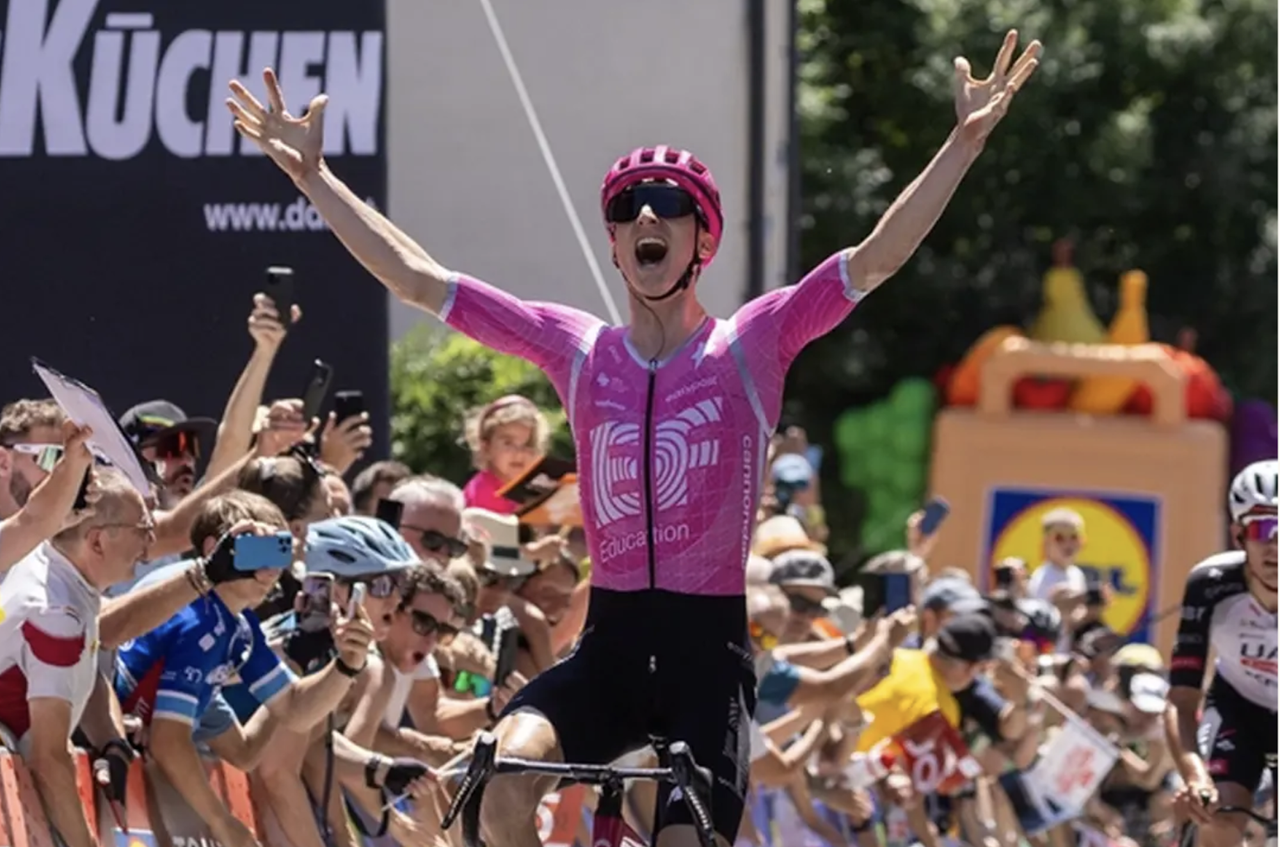
Neilson Powless is back. After a long layoff reportedly for a knee injury, he returned to the peloton at the Tour of Austria 2026 — a triumphant return to the thing he does best.
The team press release practically writes itself, doesn't it? A story of resilience, of dedication, of one man’s unbreakable spirit staring down adversity and refusing to blink.
And sure, let’s get it out of the way: all of that is true. You don’t get back on a bike after a long injury break, let alone compete in a professional race, without a certain amount of bloody-mindedness.
But lean in a little closer, because that’s only half the story. And frankly, it’s not the most interesting half.
The comeback narrative is one of sport’s most treasured myths. It’s the hero’s journey, condensed into a season: the fall, the lonely struggle in the dark, the triumphant return to the light. We love it. We eat it up.
But in modern professional cycling, the story of ‘grit’ is increasingly a story of good science. The real miracle of Neilson Powless isn’t just his mental fortitude; it’s the quiet genius of the surgeon who may have held the scalpel, the physio who measured his recovery in millimetres, and the entire high-performance apparatus that rebuilt him.
The inconvenient truth about 'toughness'
The conventional wisdom will push back on this. It will say you can’t discount the human element, the sheer will to power through the pain of rehab, the psychological toll of watching your teammates race while you’re stuck on a turbo trainer.
And that’s fair. Nobody is suggesting Powless simply went to sleep and woke up fixed. The hours are long, the exercises are tedious, and the doubt is a constant companion.
But how many riders from the ‘80s or ‘90s had the exact same will to win and had their careers ended by the same kind of injury? Plenty. The sport’s history is littered with promising talents cut down by crashes and chronic issues that, today, would be solvable problems.
The variable that’s changed isn't the fundamental toughness of the athlete; it’s the sophistication of the medicine.
A modern comeback is less a training montage and more a complex engineering project. Think of it like this: you can praise a Formula 1 driver for their skill and bravery, but you wouldn't tell the story of their victory without mentioning the multi-million dollar car and the pit crew of 20 specialists who got it onto the grid.
The rider is the essential, brilliant pilot. But they are piloting a machine — their own body — that has been expertly repaired and re-tuned by a team of people in lab coats whose names never appear on the results sheet.
The marginal gains of recovery
When a rider like Powless has a major injury, they aren't just getting a few stitches. They are plugging into a system. Their surgery, if needed, is likely arthroscopic, minimally invasive, guided by technology that didn't exist a decade ago.
Their rehab isn't just a few leg lifts; it's a data-driven protocol, monitored daily, adjusted based on biometric feedback. They have nutritionists managing inflammation, psychologists managing the mental strain, and coaches calibrating their training load to the watt.
This isn't to diminish the rider's role. On the contrary, their job becomes being the perfect patient. Their discipline is channelled not just into gut-busting efforts on the road, but into the mundane, perfect execution of a recovery plan.
The 'grit' isn't just about pushing through pain; it's about the focus to do every tedious exercise, eat every prescribed meal, and trust the process laid out by the experts.
So when we see Powless racing in Austria, what are we really seeing? We’re seeing a talented bike racer, for sure. But we're also seeing a successful recovery, a beautifully managed return to fitness.
We are, in a very real sense, watching the return on investment for EF Education-EasyPost's medical budget.
It’s a team victory, but the most important teammates in this particular comeback weren't in the team car. They may have been in an operating theatre months earlier.
Let’s celebrate the comeback, by all means. It’s great to see Neilson Powless back racing. But let's be adult about what we’re celebrating. It’s not a folksy tale of one man's spirit triumphing over the odds; it’s a testament to the incredible, and incredibly expensive, machine of modern sports medicine.
So, hats off to Neilson. A brilliant return, a testament to his hard work. But if you really want to send a thank-you card for this particular comeback, you might need to look up a surgeon's office in Vail or Girona. They probably don't sign autographs.
The variable that’s changed isn't the fundamental toughness of the athlete; it’s the sophistication of the medicine.
A modern comeback is less a training montage and more a complex engineering project.
It’s a team victory, but the most important teammates in this particular win weren't in the team car. They were in an operating theatre five months earlier.