
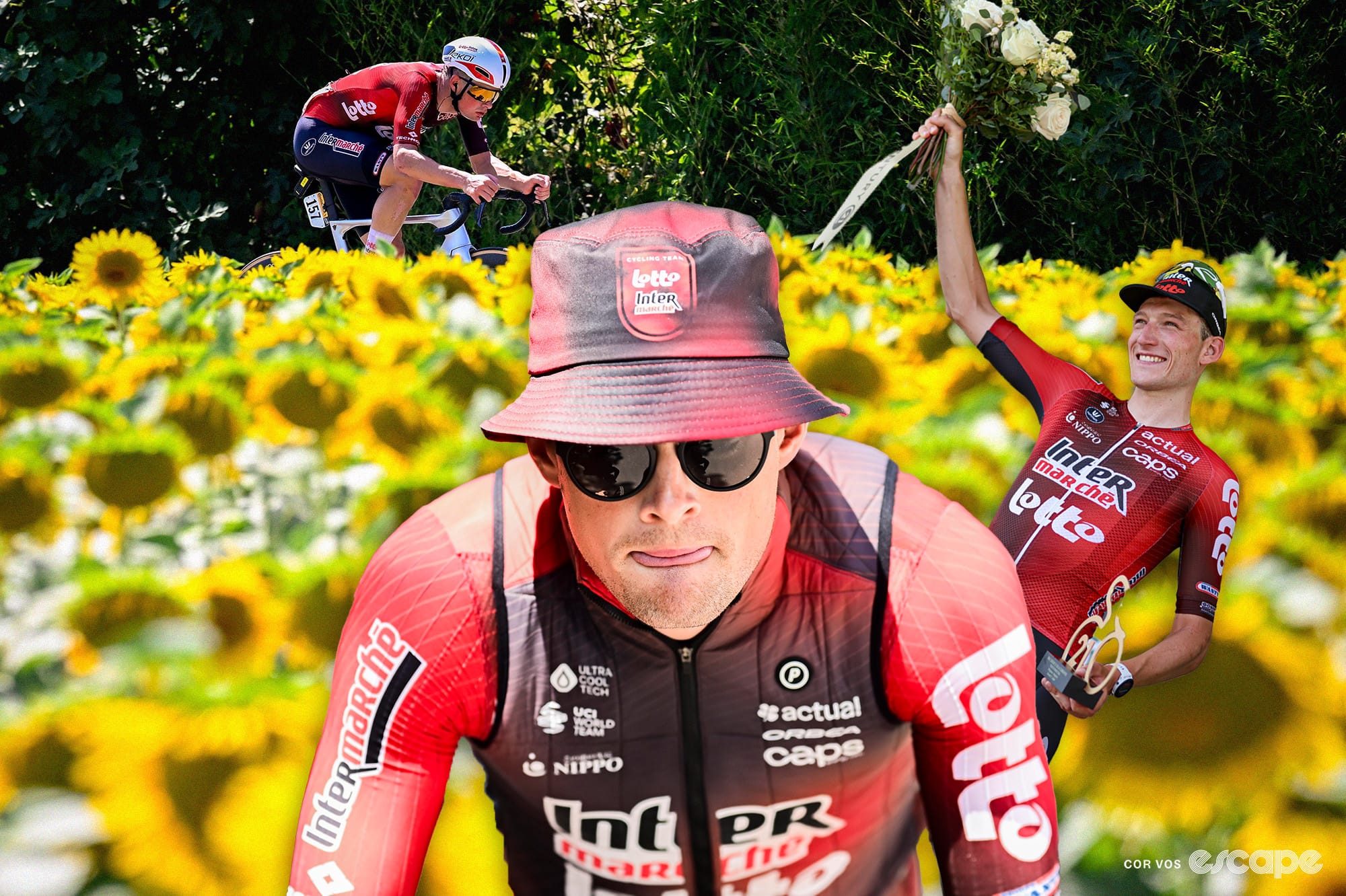
This isn't a fairytale. It's a heist.
Everyone loves the story of Lotto-Intermarché, the plucky underdogs of the Tour. The only problem? It isn't true.
Every year, we go through the same ritual. A team with a budget that wouldn't cover the catering bill for one of the super-squads pops up at the Tour de France and nabs a stage or two. The commentary box erupts.
The headlines write themselves: 'Plucky Underdogs Defy the Odds!' We all get a warm, fuzzy feeling. It's the magic of the Tour, right?
Wrong. Or at least, not in the way you think.
Let’s talk about Lotto-Intermarché at the Tour de France 2026. You’ve heard the narrative, probably from their own performance director, who is very good at his job. He talks about 'aggressive tactics' and 'finding success against the odds'.
And he’s not lying, but he is telling you the story he wants you to hear. The real story is better. It’s smarter, colder, and far more impressive than some romantic notion of luck.
To understand Lotto-Intermarché, you have to stop thinking of them as a team that's getting lucky and start thinking of them as a team that has cracked the code. Calling their success 'defying the odds' is like calling a casino's profits a lucky streak.
The house always wins if it sets the game. And that’s what this team does: it refuses to play the game everyone else is playing.
The glorious absence of a plan A
The most important rider on the Lotto-Intermarché Tour de France squad is the one who isn't there. Their greatest strength isn't a rider. It's an absence: the gaping, glorious, liberating hole where a GC contender would be.
While the big-budget behemoths spend the first two weeks burning through domestiques to keep their anointed leader out of the wind, Lotto-Intermarché is playing an entirely different sport.
They don't have a single rider they need to protect. They don't have to send men to the front to control the pace. They don't have to worry about saving legs for the final week’s mountain showdown.
Think about the sheer amount of energy, both physical and mental, that frees up. Every single one of their riders wakes up in the morning with one job: get in the breakaway and win the stage. They are a team of assassins, while everyone else is playing bodyguard to a king.
This isn't a happy accident because they couldn't afford a Jonas Vingegaard. It's a deliberate, calculated strategy.
They aren't trying to be a cut-price UAE Team Emirates. They're trying to be the best Lotto-Intermarché they can be, and that means weaponizing their own limitations.
The breakaway as a business model
The conventional wisdom sees the daily breakaway as a lottery. A few hopefuls go up the road, the peloton gives them a bit of leash, and then reels them in for the sprinters. A romantic, but ultimately doomed, enterprise.
Lotto-Intermarché sees the breakaway as a science. They know, better than anyone, that the peloton is a finely balanced ecosystem of self-interest. And they know how to exploit it.
They study the road book not for the final climb, but for the first 50 kilometres. They identify the stages the GC teams will be happy to let go, the transitional days where the sprinters' teams won't want to work for 200 km.
When the team talks about 'aggressive tactics', what they mean is being a calculated nuisance. It means sending rider after rider up the road until the peloton collectively sighs and decides it’s less effort to let one go than to keep chasing them all down. It's not about brute force; it's about tactical acupuncture, applying pressure to the exact point where the bunch is weakest.
And the riders they sign are perfect for this. They aren't looking for the next Grand Tour winner. They're looking for guys who are tough as nails, can read a race, and possess that very specific skill set of being able to empty the tank after five hours in the wind and still have a kick.
They find undervalued assets—the rider who isn't the best pure climber or the fastest pure sprinter, but is a devil in a small group at the end of a hard day. It’s Moneyball, but with more suffering and worse tan lines.
So, no, they are not defying the odds. They are playing their own odds, on their own terms. They've opted out of the billion-dollar arms race for the yellow jersey and have instead become masters of the chaos that exists in its margins.
It's not a fairytale. It's a heist, planned with surgical precision and executed by a crew that knows exactly what it's doing.
And honestly? It's way more fun to watch.
They are a team of eight assassins, while everyone else is playing bodyguard to a king.
It’s Moneyball, but with more suffering and worse tan lines.