
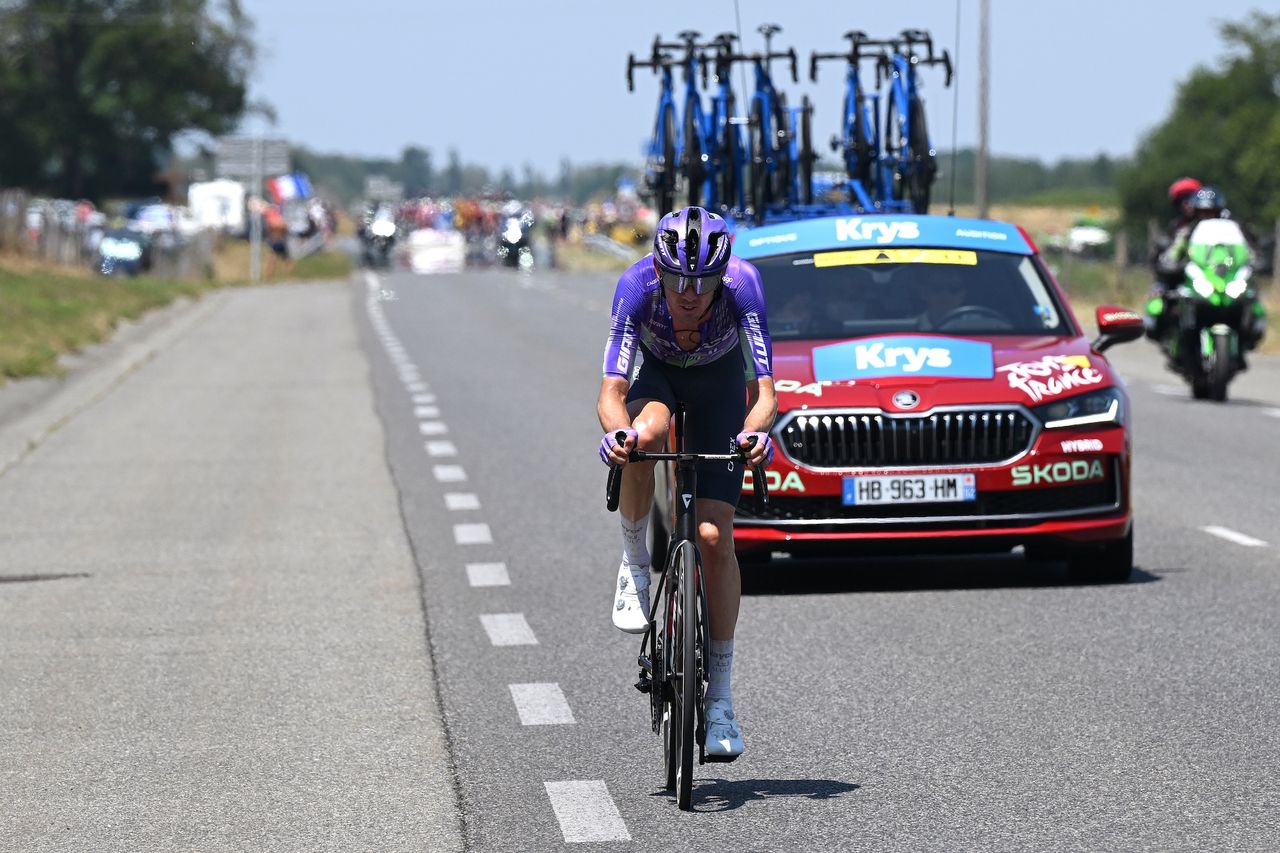
Ben O’Connor has done the math
Giving up on the general classification isn't a sign of weakness. For Ben O'Connor, it's the smartest tactical decision of his career.
Let's be clear. Ben O'Connor's decision to abandon a general classification campaign at the Tour de France 2026 is not a tragedy. It is not a story of diminished ambition. It is the logical endpoint of a rational calculation.
The romantic narrative writes itself. A talented climber, once a contender, steps back from the sport's greatest prize to hunt for scraps. It’s a capitulation, a quiet admission that he can no longer compete with the very best over three weeks. This narrative is comforting, simple, and completely wrong.
Cycling is not a romance. It is a brutal exercise in resource management. The currency is kilojoules, and every rider starts the Tour de France with a finite account.
A GC campaign is the most expensive purchase a rider can make. It demands conservative riding, minute-by-minute vigilance, and the suppression of every instinct to attack for personal glory. It is a tax on ambition, paid daily for three weeks, with almost no chance of a return for all but two or three riders on the start line.
The Fallacy of the Top Ten
The conventional wisdom idolises the GC battle. It assumes that any rider capable of a top-ten finish must, by definition, pursue it. To do otherwise is seen as a failure of nerve. This is the fundamental miscalculation.
A GC bid shackles a rider. For what? To finish seventh, nine minutes down? To be celebrated for a week in the press for a ride that will be a footnote in the record books?
The energy spent defending that seventh place—following wheels, closing small gaps, surviving bad days—is energy that could have been invested in a stage win. A victory that lasts forever.
Ben O'Connor's history of "mixed fortunes" is the only data point that matters. It demonstrates the high variance of a three-week campaign: some days are good, some are bad.
That variability is fatal to a GC campaign, which requires relentless, metronomic consistency. But for a stage hunter, it is irrelevant. You only need one day, one perfect, explosive day where the legs and the opportunity align.
The Economics of a Stage Win
Think of it as an investment portfolio. The GC rider puts everything into one high-risk, low-probability stock. They need the market to be perfect for 21 consecutive trading days.
One bad moment, one crash or ill-timed puncture, and the entire investment is wiped out.
O'Connor (Team Jayco-AlUla) is diversifying, trading a lottery ticket for a series of calculated risks. By targeting stages from breakaways in the second and third weeks, he opts out of the daily GC grind.
He can afford to lose 20 minutes on a flat stage. In fact, he needs to lose that time. That time gap is what buys him his freedom from the peloton's leash.
Once he has that freedom, he can choose his days. He can identify the mountain stages that suit his profile, save energy on the days in between, and invest every kilojoule into a single, decisive effort.
The probability of him winning the Tour de France is near zero. The probability of him winning a mountain stage from a breakaway, if he dedicates his entire Tour to that goal? Significantly higher.
This Isn't Surrender. It's Strategy.
The peloton is full of riders clinging to GC ambitions that are statistically doomed. They ride to respectable, forgettable finishes, their potential for memorable victories squandered in the service of a good placing.
O'Connor has simply made a clear-eyed assessment of his own abilities against the generational talents that now dominate the grand tours. He has chosen to play a different game—one he is far more likely to win.
This isn't a capitulation. It is a correction. It's an acknowledgement that the goal is not to be a contender, but to be a winner.
A Tour de France stage win is not a consolation prize. For the vast majority of the 184 riders who start the race, it is the highest possible achievement.
Ben O'Connor is not giving up. He's just decided to start winning.
The energy spent defending seventh place is energy that could have been invested in a stage win. A victory that lasts forever.