
The new lingua franca of the peloton
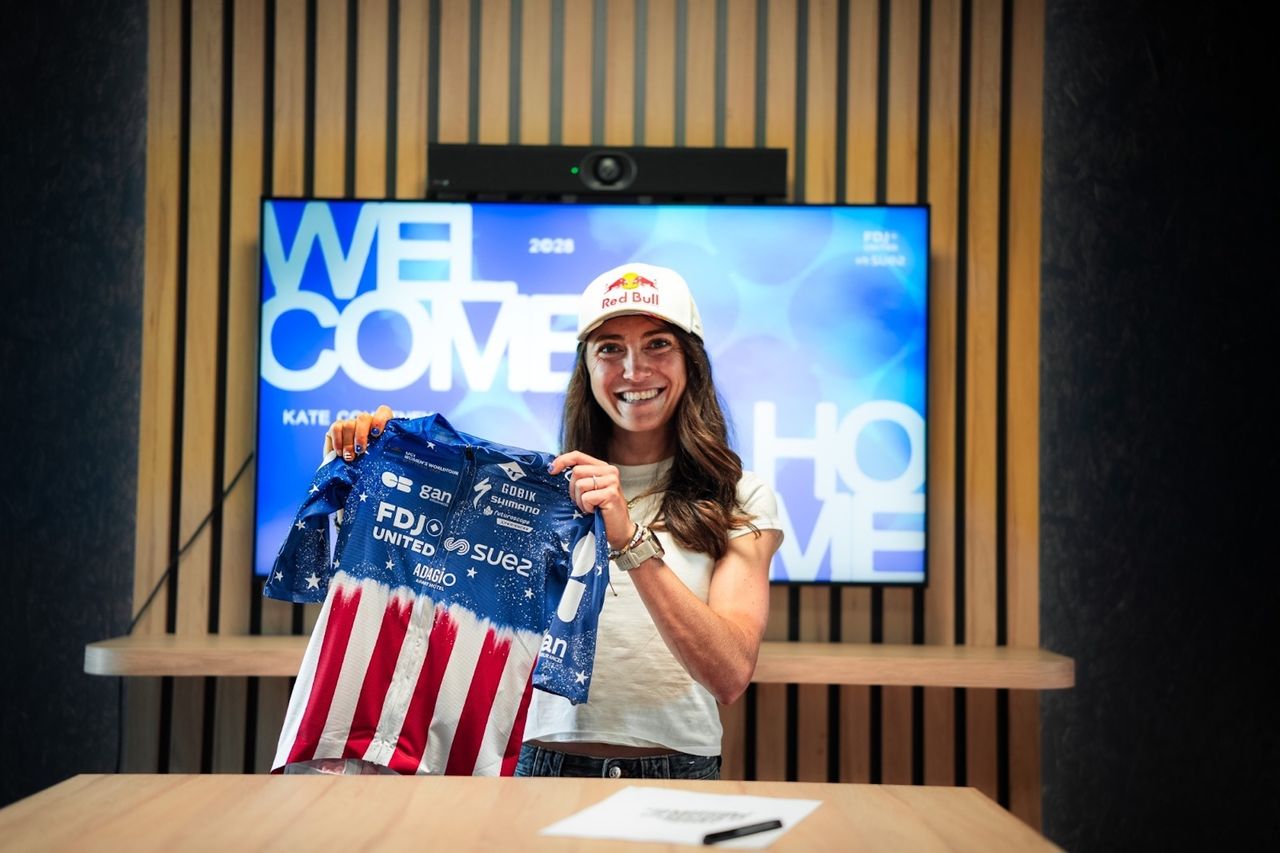
Kate Courtney's move to the WorldTour isn't a career change. It's a translation, proof that the language of racing is no longer bound by the terrain on which it's spoken.
There are vocabularies we use to make sense of the world, and cycling has more than most. We put riders into neat little boxes with tidy labels: climber, sprinter, rouleur, puncheur. They are nouns that feel like destinies.
For decades, the most fundamental distinction of all was the surface: you were a road rider, or you were a mountain biker. You spoke one language and lived in one country. To cross the border was a novelty, an exception that proved the rule, a story told about a rider's quaint provincial past before they learned to speak the true language of the peloton.
Kate Courtney’s signing with a top-tier WorldTour road team is not just another one of those stories. It is the end of that story.
This isn't a transfer; it's a thesis statement, a multi-year argument signed and sealed that the future of the sport belongs to the polyglots. It’s a declaration that the monolingual athlete is a dying breed.
To understand why, you have to understand how the language of road racing itself has changed. The old tongue was one of pure endurance and metronomic rhythm, of long kilometres and predictable attrition.
The new dialect is far more chaotic. It’s written on the white gravel roads of Strade Bianche, spoken in the explosive grammar of a race like the Tour of Flanders, and punctuated by the technical, twisting finales that have become the calling card of modern stage design.
The road is starting to look a lot more like the trail. Bike handling, explosive power, the ability to read a constantly changing surface and find a line where others see only chaos—these are no longer niche skills. They are the core curriculum.
And who are the native speakers of this new language? The mountain bikers.
The View from the Other Side
The conventional wisdom will push back on this. It will call this a clever marketing move, a way for a team to gain a foothold in a new market. It will point, not incorrectly, to the vast chasm between the solo effort of a mountain bike race and the fluid, almost telepathic dance of a WorldTour peloton.
It will say that an engine is not enough, that navigating a 150-rider field is a dark art learned over a decade, not a season. That the road is a different country with its own laws, and a tourist can’t just show up and expect to govern.
And there is truth to that. The peloton is a brutally complex organism. It has an etiquette, an unspoken code that can punish the uninitiated with a sudden, painful education in the tarmac.
But to see Courtney’s move through that lens is to miss the point entirely. It is to assume she is arriving as a foreigner who needs a visa and a phrasebook.
Look closer. This isn’t a tentative first step. Courtney arrives not just as a decorated mountain biker, but as a rider who has already demonstrated a fluency on the road.
The translation is already happening. She has already shown a capability that makes a mockery of the idea that these disciplines are mutually exclusive. She didn't just learn a few phrases; she wrote a sonnet.
The signing by her new team is not a gamble on a rookie; it's an investment in a proven talent who is already bilingual.
The length of the contract is the tell. A one-year deal is an experiment. A long-term contract is a statement of belief.
It’s a team recognizing that the very definition of a road racer is expanding. They are hiring not just a powerful athlete, but a different perspective, a new set of instincts forged on singletrack and fire roads. They are hiring a problem-solver for the kind of problems modern road racing loves to create.
The Talent Pool Gets Deeper
For years, the flow of talent was seen as a one-way street, from the dirt to the road, and usually early in a career. It was a place you graduated from.
What this move signals is a fundamental shift in that dynamic. The wall between the disciplines is becoming a permeable membrane. It suggests a future where a rider’s palmarès might include a World Cup XC win one season and a cobbled classic the next, and nobody will find it strange.
It forces every WorldTour director to ask a new question. Are they scouting the junior road ranks deeply enough? Or is the next great Classics champion currently railing berms in a forest somewhere, unaware that her true calling lies on the pavé of Northern Europe? The talent pool didn't just get a little bigger; it merged with an entire ocean.
Kate Courtney is not the first to make this journey, but the nature of her arrival feels different. It feels definitive. It’s a move made from a position of strength in one discipline to challenge the very best in another.
It’s a test case for a new kind of athlete, one whose talent is so fundamental it refuses to be categorized by the surface it’s ridden upon. She is not leaving a world behind. She is proving the worlds were never that far apart in the first place.
She isn't just learning the language of the road; she's about to teach it a few new words.
The road is starting to look a lot more like the trail. Bike handling, explosive power, the ability to read a constantly changing surface and find a line where others see only chaos—these are no longer niche skills. They are the core curriculum.
The talent pool didn't just get a little bigger; it merged with an entire ocean.
She isn't just learning the language of the road; she's about to teach it a few new words.