
The old complaint
Thomas Dekker’s critique of the Tour de France 2026 is not a new frustration. It is the timeless lament of a sport that too often mistakes calculation for racing.
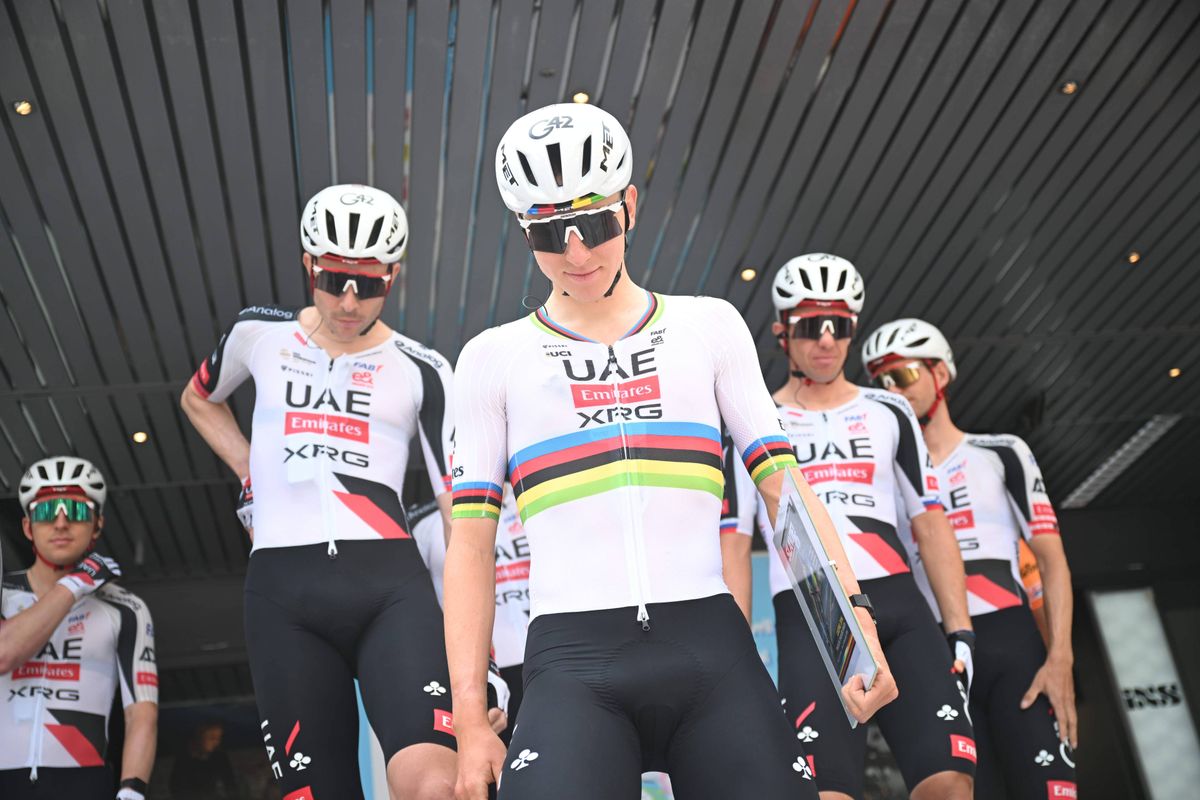
One could be forgiven for hearing the words of Thomas Dekker and believing them to be a product of this moment alone. His recent critique of the peloton at the Tour de France 2026, watching passively as UAE Team Emirates throttled the race into a predictable shape, feels like a distinctly modern complaint.
But it is not. It is a familiar score, played in a different key by a new generation. The names on the jerseys change, but the inertia he describes is one of cycling’s oldest and most frustrating traditions: the collective, logical, and soul-crushing acceptance of a foregone conclusion.
To see a dominant team impose its will upon the Tour is to witness a masterpiece of strategy and strength. But to see an entire peloton shrug and accept it is to watch the race die a little.
Dekker’s point, comparing the current quietude to the acquiescence before Jumbo-Visma’s machine at a past Tour de France, is well-made. The argument he forwards is that the other teams are not merely being beaten; they are declining to truly fight.
This is the heart of the matter. The race is not lost on the final climb, but in the hundred kilometres before it, when the chase is never organised, the early attack is never risked, and the pace of the leader’s train is accepted as an immutable law of physics.
History provides a full and sober accounting of this phenomenon. Dominant teams of the past have perfected a kind of high-tempo suffocation that turned mountain stages into exercises in attrition.
For years, the sight of a single team's jerseys on the front, setting a rhythm no one could attack, became a defining image of July. In different eras, various teams offered a similar display of force, a rolling fortress that insulated its leader from the chaos the Tour is meant to foster.
In each era, the criticism was the same: the racing was becoming sterile, a procession dictated by power meters and predetermined tactics. The sport had become too much of a science.
The Calculus of Capitulation
The conventional wisdom will push back on this, of course. It will say that this is not cowardice, but calculation. And it will, in a narrow sense, be correct.
Why should a team chasing a top-ten on the general classification send its riders on a suicidal attack that will only serve to burn matches and see them swallowed up 50 kilometres later? Why should a squad with ambitions for the polka dot jersey compromise its own goals to soften up a rival for the benefit of another?
The arithmetic of a three-week Grand Tour is unforgiving. Energy is a finite resource, and to waste it on a doomed attack is seen as poor management, not romantic heroism.
Each team, acting in its own rational self-interest, chooses to conserve. The collective result of these individual calculations is a peloton-wide paralysis.
Everyone waits for someone else to make the move that they themselves are unwilling to make. The responsibility to animate the race is deferred until it is too late, and another stage clicks by, another mountain is crested, with the hierarchy perfectly preserved.
This is the prisoner’s dilemma played out on asphalt. And when nobody wants to be the sucker, everybody loses. The race becomes not a battle, but a transaction.
Yet we remember the moments when that logic was defied. We remember the alliances of convenience, the desperate long-range attacks, the days when the script was not just ignored, but torn to pieces. We remember when the peloton decided, as one, that a controlled race was a boring race, and that a chance of glorious failure was worth more than the certainty of a quiet defeat.
These are the days that define the sport, because they remind us that it is, at its heart, a human endeavour, susceptible to impulse and irrational courage. The greatest champions are not those who faced no resistance, but those who were challenged by rivals who refused to accept the inevitable.
Thomas Dekker is not asking for recklessness. He is asking for ambition. He is asking for someone, anyone, to race as if winning is still a possibility.
His frustration is the frustration of every spectator who has watched a supposedly epic mountain stage neutralized by a tempo set 200 kilometres from the finish line. It is a lament for the loss of chaos, the vital ingredient that makes Grand Tour racing so compelling.
The story of the Tour de France 2026 will be written by its victors, as it always is. But the quality of that story, its resonance in the years to come, will be decided by the audacity of the vanquished.
A coronation is a ceremony. A bike race should be a fight. And a fight is only truly over when the challenger no longer tries to land a punch.
The race is not lost on the final climb, but in the hundred kilometres before it, when the chase is never organised, the early attack is never risked.
A coronation is a ceremony. A bike race should be a fight.