
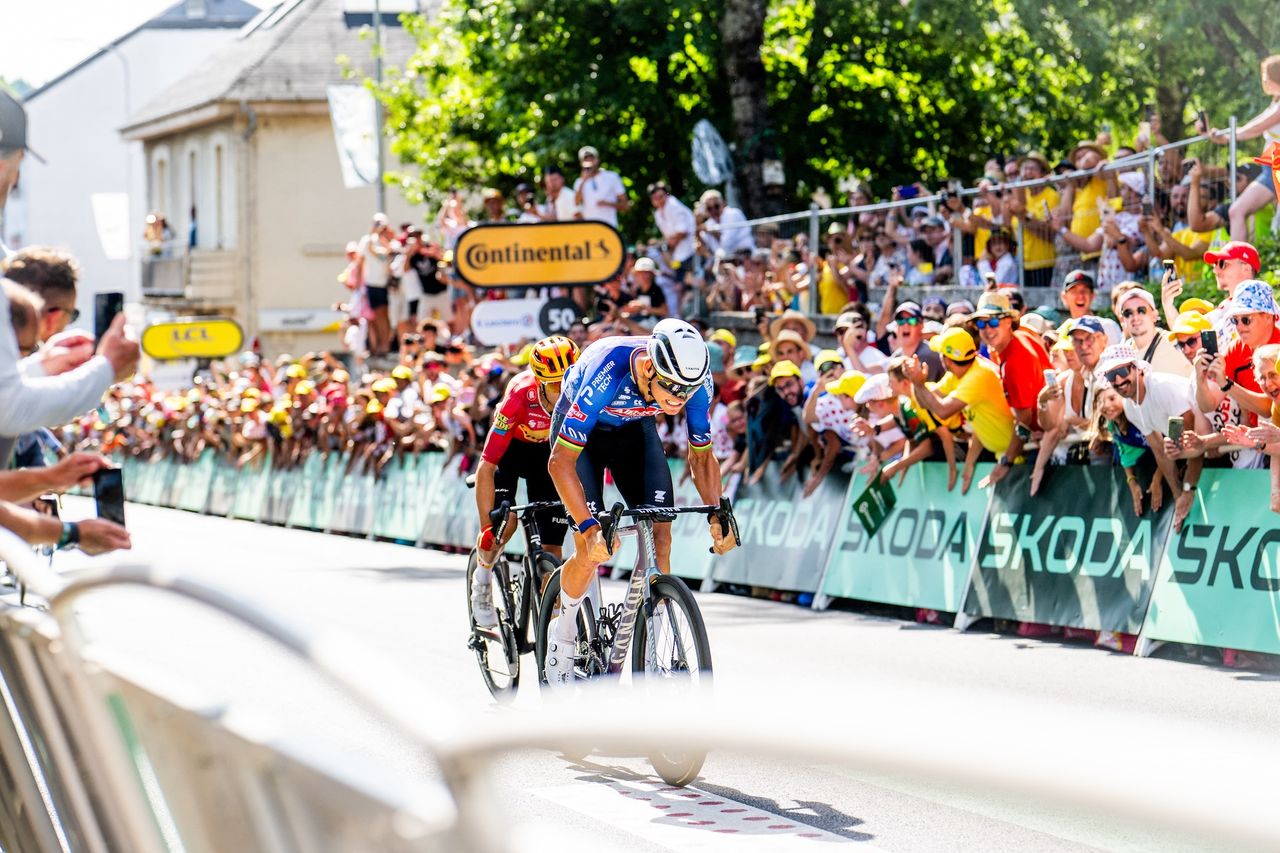
The Wolfpack's last howl
A sponsor change is never just a sponsor change. For the team once known as Quick-Step, it’s the end of a religion.
So, Quick-Step is out. After years propping up the Belgian cycling establishment with laminate flooring and sheer, bloody-minded aggression, the name is heading for the exits. From 2027, the team will be known as Soudal-Safety Jogger.
Let that sink in. Safety. Jogger.
The Wolfpack, a brand built on snarling, unpredictable chaos, will be co-sponsored by a company that makes sensible work boots. You can’t make this stuff up.
And while the team bus will keep rolling and Patrick Lefevere will keep grumbling, make no mistake: this isn't just a logo swap. This is a eulogy. It’s the final, quiet chapter for an identity that once defined modern cycling.
The official line, of course, is that nothing changes. Lefevere will tell anyone with a microphone that the spirit remains, that the DNA is immutable, that a wolf in a high-vis vest is still a wolf.
He has to say that. But the racing tells a different story. The entire sport tells a different story.
To understand the Wolfpack, you had to see them race. It wasn’t just a team; it was a philosophy, a rolling bar fight disguised as a sporting endeavour. They didn’t control races so much as detonate them.
They swarmed, they attacked from anywhere, they turned crosswinds into their own personal playground, and they won. They won everywhere, with everyone. It was a system that valued instinct over instruction, a collective noun for swagger.
And its high priest was Julian Alaphilippe (Tudor Pro Cycling Team). Remember him? The guy who rode a bike like he was trying to simultaneously win the race and get into a fistfight with the road itself.
He was the embodiment of the whole enterprise: pure, unadulterated instinct. He was the Wolfpack made flesh. The alpha wolf had already left the den long before the nameplate was being unscrewed.
His departure wasn't just a transfer; it was a symptom. The peloton the Wolfpack once terrorised is disappearing, replaced by something altogether more controlled. More sanitised.
The Spreadsheet vs. The Street Fight
The conventional wisdom will push back on this. It will say that teams have always been disciplined, that cycling is a sport of watts and numbers. And that’s true. But the dominant philosophy has shifted.
The rise of the super-teams, your UAEs and your Vismas, has turned Grand Tour racing into a relentless, suffocating process of attrition. It’s a game of chess played with power meters, where every move is calculated and spontaneity is a liability.
This is a world that has little room for the glorious, beautiful chaos that Quick-Step once weaponised. You hear it in the way the new generation talks. Take the recent calls to overhaul the calendar to avoid the summer heat.
On the surface, it’s a perfectly reasonable, sensible suggestion. But listen closer. It’s a call for more control, more predictability, fewer variables. It’s the voice of an athlete who wants to eliminate chance, to turn the wildness of a three-week race into a problem that can be solved with data.
The Wolfpack thrived on chance. They prayed for bad weather, for cracked roads, for the exact moment of hesitation in the bunch they could exploit. Their entire model was built on turning the sport’s inherent unpredictability into their advantage.
How do you do that in a world that’s actively trying to engineer unpredictability out of existence?
You Can't Trademark an Attitude
And now, they will be Soudal-Safety Jogger. A name that sounds less like a threat and more like a risk assessment. It’s a name for a team that looks both ways before crossing the road, not one that blows the race apart in a gutter with 80 kilometres to go.
The brand and the identity are now completely at odds. The Wolfpack wasn't a marketing slogan Lefevere cooked up in a meeting. It came from the road.
It was earned in the classics, in the sprints, in the moments when their collective will simply broke everyone else’s. It was an ethos. And that ethos feels like a relic from another time.
The team will, of course, go on. They will win bike races. But the aura is gone, the fear factor has faded. They are no longer the apex predators of the one-day scene.
They are just another team trying to figure out how to compete with giants who have bigger budgets and a more modern playbook.
The era didn't end with a bang. It ended quietly, with a press release announcing a partnership with a company that ensures your toes are safe on a construction site.
The wolf has been domesticated, given a pension and a comfortable pair of shoes. And you get the feeling it won’t be howling much anymore.
The Wolfpack, a brand built on snarling, unpredictable chaos, will be co-sponsored by a company that makes sensible work boots.
It wasn’t just a team; it was a philosophy, a rolling bar fight disguised as a sporting endeavour.
The wolf has been domesticated, given a pension and a comfortable pair of shoes. And you get the feeling it won’t be howling much anymore.