
The Gospel of Suffering, Bottled and Sold
The burn in the legs was once the body's final word. Now, at the Tour de France 2026, teams are trying to turn it into a super-fuel, and in doing so, they reveal just how desperate the search for an edge has become.
There is a language the body speaks when it is pushed past all reasonable limits. It is not a polite language. It is a scream, a primal command to stop, and its dialect is acid.
For more than a century, the defining sensation of going truly deep on a bicycle has been the burn. That sharp, flooding fire in the muscles that signals the end of the party. It has a name, of course: we call it lactate.
For generations of cyclists, lactate has been the enemy – the metabolic byproduct, the waste, the governor on the engine. We trained to clear it, to buffer it, to raise the threshold at which it overwhelmed us. It was the gospel of suffering.
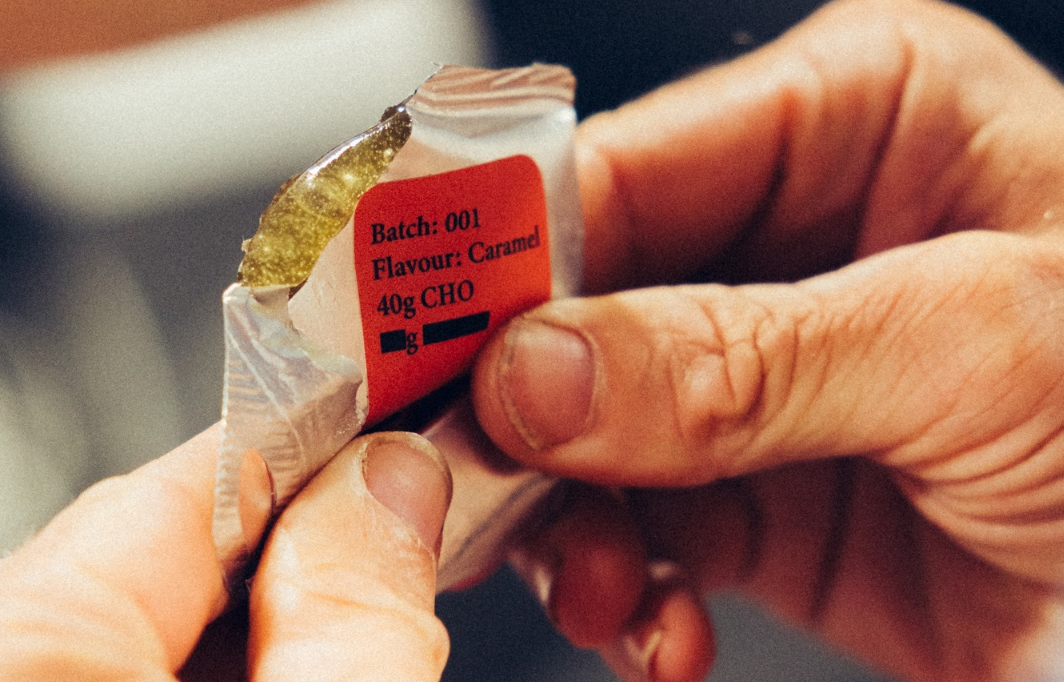
And now, in the year of our lord 2026, they are squeezing it into a foil packet, adding some flavouring, and calling it fuel.
The arrival of a new gel called Exolactate in the musettes of a WorldTour team at the Tour de France 2026 is both a perfectly logical next step and a moment of profound strangeness. The premise, based on a growing body of science, is simple: lactate isn’t just the byproduct of intense effort, it’s also a preferred and efficient energy source for the muscles.
Why let the body go to the trouble of producing it when you can just drink it directly? A shortcut. A hack.
This is the modern search for the edge in its purest form. A pursuit so relentless, so microscopic in its focus, that it has led us to this: bottling the pain and selling it back as the cure.
The Shrinking Frontier
It wasn't always this esoteric. The history of performance nutrition in cycling is a story of ever-diminishing returns. The pioneers of the Tour fueled themselves on red wine, raw eggs, and stubbornness.
Then came the age of science, or what passed for it. We learned about carbohydrates, the magic of pasta, the importance of hydration. The gains were enormous; simply eating and drinking correctly could transform a rider.
Then came the era of precision. Not just carbs, but how many grams per hour. Not just hydration, but the exact osmolality of the fluid. The Low-Carb High-Fat insurgency came and went.
Ketones arrived, a fearsomely expensive and reportedly foul-tasting super-fuel that offered a sliver of an advantage for a sliver of the peloton. Each new frontier was smaller than the last. The gains became marginal.
The conventional wisdom, peddled by performance directors and sport scientists, will tell you that this is merely progress. It will say that ignoring a potential legal advantage is unprofessional.
It will argue that if the science shows lactate can be used as an efficient fuel, then to not provide it to your riders is a dereliction of duty. To understand the logic of the modern WorldTour is to understand that no stone can be left unturned, no matter how small or strange that stone may be.
And there is a cold, hard logic to it. This is, after all, a professional sport. A job. The romance of the open road is for us, the spectators; for the riders, it is a brutal, rolling office where a 1% improvement can be the difference between a contract and unemployment.
A Deal with the Body's Devil
But there comes a point where the line between innovation and a kind of desperate alchemy begins to blur. Where does this road end? We have optimised the riders’ bodies to be impossibly efficient machines, engineered their bikes to be impossibly light and aerodynamic, and scripted their race tactics with the cold calculus of game theory.
Now, we are trying to short-circuit the body’s own feedback loops.
Lactate, for all its technical roles, is also a signal. It is the body’s way of telling the brain that the current effort is unsustainable. That burn is a warning flare.
To ingest the very substance that defines that limit feels less like fuelling and more like a deception. It is like pouring water on a smoke detector while the fire rages downstairs. You are silencing the alarm, not putting out the fire.
What would you do if that was you? Your whole career, you have been taught to fight the burn, to endure it, to push your limits by tolerating its presence. Now, your directeur sportif hands you a gel and says, ‘Here, drink the burn.’
The psychological dissonance must be immense. It requires a complete and total surrender of one’s own physical intuition to the authority of the team’s sport scientists.
Perhaps this is the ultimate marginal gain: the final victory of the spreadsheet over the soul. The moment a rider ceases to be a person interpreting their body's signals and becomes a vessel, a machine to be fuelled and managed by an external crew.
It’s doubtful that Exolactate will be a silver bullet. The history of these wonder-fuels is littered with more misses than hits. But its very existence tells a story.
It tells of a sport so obsessed with finding the next small advantage that it’s willing to fundamentally re-evaluate the nature of suffering itself.
The rider deep in the pain cave still feels that fire in his legs. But now, as he reaches into his back pocket, the sensation is no longer just a warning. It is also, impossibly, on the menu.
And that, in a 70-calorie gel, is the entire story.
This is the modern search for the edge in its purest form: bottling the pain and selling it back as the cure.
Perhaps this is the ultimate marginal gain: the final victory of the spreadsheet over the soul.
The rider deep in the pain cave still feels that fire in his legs. But now, as he reaches into his back pocket, the sensation is no longer just a warning. It is also, impossibly, on the menu.