
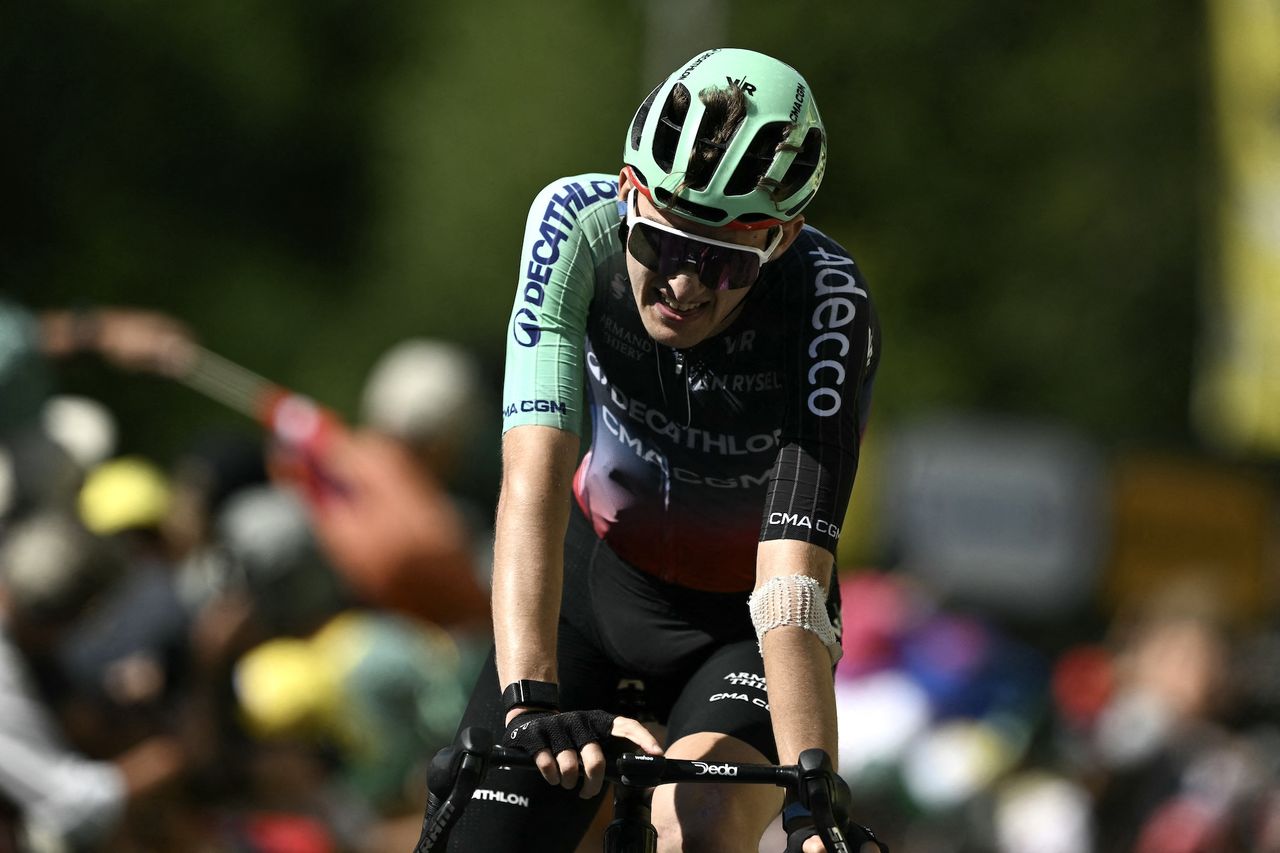
The kid was good. The melting road was better.
Paul Seixas’s ride at the Tour de France 2026 wasn't just a breakout performance. It was a postcard from a future where the tarmac itself is trying to beat you.
Let’s get the official story out of the way first. A young rider, Paul Seixas (Decathlon CMA CGM Team), at the Tour de France 2026, rides his heart out, navigates a treacherous day in the mountains, and lands a remarkable result. A star is born, France has a new hope, et cetera, et cetera. You’ve seen this movie before. The team puts out a press release full of superlatives, the kid thanks his sponsors, and we all move on.
But stay with me, because the real story isn’t about the result. It’s about what Seixas said afterwards. He described a key descent as being 'like an ice rink'. Not because of rain, or gravel, or some rogue oil slick. Because the road, in the frankly biblical heat, was melting.
Think about that for a second. The very surface these guys are paid to race on, the one constant they are supposed to be able to rely on, was turning to soup under their multi-thousand-dollar tubulars. This isn't a story about a plucky debutant anymore. This is a story about a fundamental shift in what it means to be a professional cyclist.
The Heat is On the Start Sheet
The old guard will tell you cycling has always been a battle against the elements. They’ll bore you with stories of riding through snowdrifts at the Giro d'Italia in the 1980s or battling crosswinds that could peel the paint off a barn door in Belgium. And they’re not wrong. Suffering is baked into the DNA of this sport. It’s the currency it trades in.
But this is different. This isn't suffering for the cameras, the black-and-white photos of mud-caked legends staring into the middle distance. This is the infrastructure of the sport literally coming apart at the seams. A wet road is one thing; you change your tyre pressure, you adjust your line, you deal with it. A road that has lost its structural integrity is another beast entirely. It’s unpredictable. It’s a new kind of rival, and it’s one that doesn’t care who is in the yellow jersey.
The peloton is getting younger and the planet is getting hotter. These two facts are not unrelated. The generation of talents like Seixas are entering a sport where the goalposts aren't just moving, they're dissolving. Their careers will be defined not just by their watts per kilo or their tactical nous, but by their ability to survive conditions that would have seen stages neutralised a decade ago.
A New Kind of Skillset
What does it even mean to be a good descender when the braking points and apexes you studied are turning into sticky, unpredictable traps? Seixas’s performance wasn't just a feat of physiology; it was a masterclass in adaptation. He didn't just out-climb his rivals; he out-survived them on a descent that had ceased to be a road in the traditional sense.
This is the new skillset. Forget learning to ride the cobbles; the next generation will need to learn how to ride the mire. They’ll need a sixth sense for where the tarmac is about to give way, for how a tyre will react to a surface that’s halfway between a solid and a liquid. You can't learn that on a turbo trainer.
And what about the organisers? For years, the attitude has been a Gallic shrug. The race must go on. But for how long? How long until a melting descent causes a crash that makes the sport re-evaluate its entire relationship with summer? You can bet the conversations are already happening behind closed doors, away from the microphones. They have to be. Because the alternative is waiting for a disaster that everyone saw coming.
Paul Seixas showed what the future holds. A generation of supremely talented athletes, pushed to their absolute limits, not just by the brutal climbs and the cut-throat tactics, but by a racing environment that is actively hostile in a way it has never been before.
His performance on the stage was a great result. But his survival was the real victory. It was a glimpse of the new normal, where the biggest fight isn't for the wheel in front, but for traction on a road that’s decided to give up the ghost. Welcome to the future of the Tour. Mind the puddles.
Forget learning to ride the cobbles; the next generation will need to learn how to ride the mire.