
The Unclosed Road
For all its carbon fibre and data streams, the sport’s most fundamental contract is still written on tarmac shared with two-tonne vehicles. A recent training accident is a story as old as the bicycle itself.
There is a photograph of Fausto Coppi from late in his career, not long before the end. He is training near his home, a solitary figure in wool against a stark landscape. The road is empty, a ribbon of possibility disappearing into the hills.
It is an image of peace, but also of profound vulnerability. The open road was his cathedral and his office, the place he forged his legend and the place that, in its own way, would ultimately claim him.
The dangers then were potholes, stray animals, the cold. The automobile was a presence, but not yet the omnipresent, suffocating force it is today.
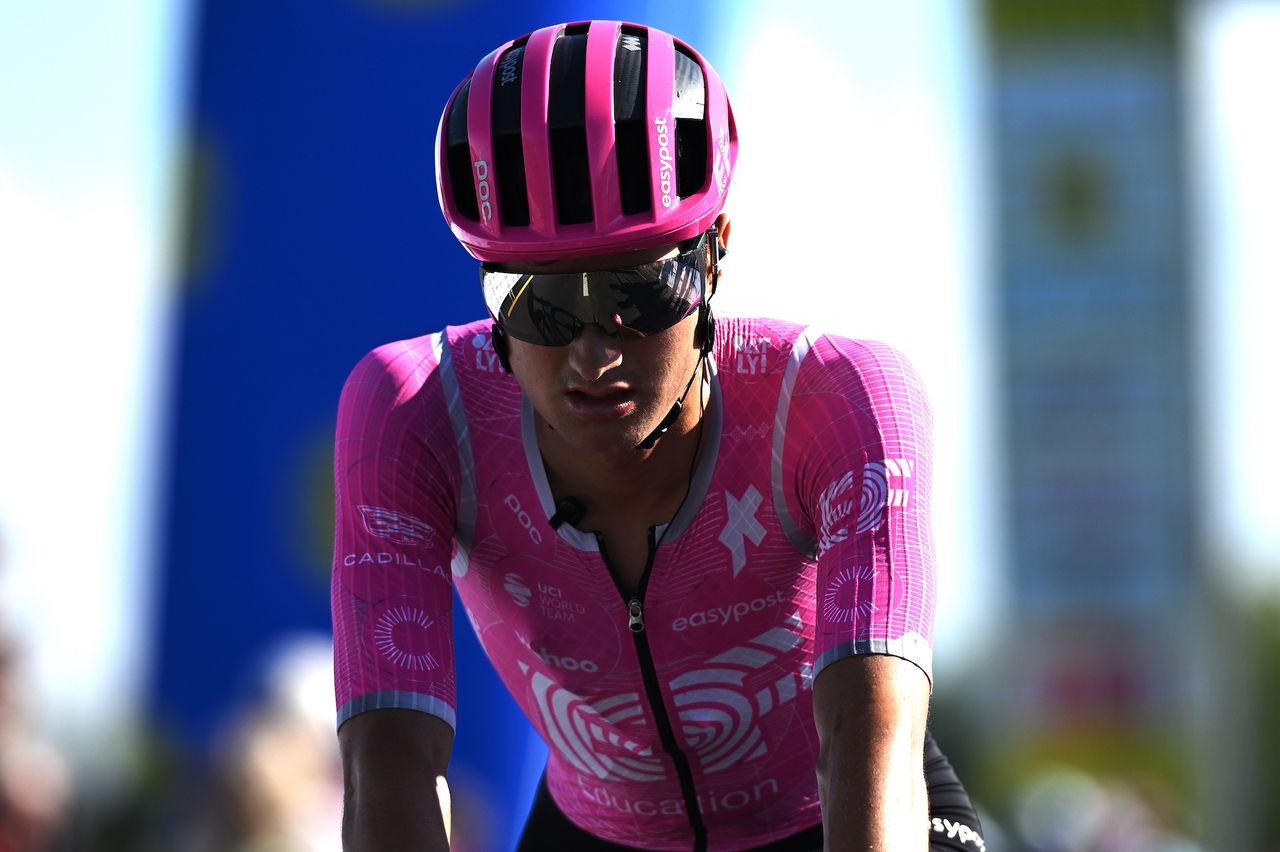
News arrived this week that a young professional rider was struck by a car while training. He suffered serious injuries.
It is a story that is at once utterly modern—a WorldTour rider, part of a global, high-tech sporting enterprise—and deeply, almost unnervingly, archaic. The rider's crash is not a new kind of accident; it is the oldest kind. It is a reminder that for all the sport’s scientific advancement, its most elemental danger has not been mitigated by a single watt, algorithm, or aerodynamic improvement.
The Modern Paradox
Consider the controlled world of the modern professional. Every gram of food is weighed, every kilojoule of effort measured. Riders live in a bubble of scientific optimisation, from altitude tents that simulate mountain air in their own bedrooms to wind tunnels that shave milliseconds by reshaping a helmet’s curve.
The team bus is a mobile clinic, a sterile environment of recovery boots and carefully calibrated protein shakes. Within the confines of a race, the roads are closed, the caravan a protective shell. Every variable is, as much as possible, brought under control.
And then the rider goes training.
In that moment, he steps out of the 21st century and back into the age of Coppi, only now the empty road is a memory. He is a fragile organism of bone and sinew, moving at 40 km/h, sharing his workspace with distracted commuters, delivery vans, and agricultural machinery. The professional cyclist is a peculiar anachronism: a 21st-century athlete whose place of work is a 20th-century road network creaking under the demands of a population that sees him, at best, as an inconvenience and, at worst, as an obstacle.
The rider's injuries are the consequence of this paradox. The immense apparatus of his team, for all its resources, could not place a barrier between his body and the car that hit him.
That is the sport’s unresolved tension. It has professionalised the rider but has been unable to professionalise his environment.
An Old Danger, Amplified
The conventional wisdom will suggest this is merely an unfortunate, isolated incident. But it is not. It is the steady, attritional drumbeat of the sport, a danger that has claimed careers and lives far from the television cameras.
Think of the professionals killed on training rides in recent years. Think of the countless others, professional and amateur, whose stories do not make the headlines.
This is not a new problem, but it is an amplified one. The roads of the 1950s that Coppi trained on are not the roads of today.
They are busier, faster, and populated by drivers whose attention is fractured by technology. The bicycle remains a simple machine, but the world it must navigate has become infinitely more complex and hostile.
Helmets, high-visibility clothing, daytime running lights—these are the modern concessions to a danger that they cannot truly solve. They are appeals to the humanity and attention of a motorist, a plea to be seen and respected.
But a helmet that can save a rider in a 40 km/h fall offers little defence against a tonne of steel moving at twice that speed. The safety measures are a prayer, not a shield.
The rider will recover. He is young, and the body has its own remarkable science. But his story serves as the sport’s periodic, brutal reminder of its foundational bargain.
To be a cyclist is to accept a level of ambient risk that would be unthinkable in any other major professional sport. A footballer does not have to dodge traffic on his way to the penalty box; a tennis player does not worry about a lorry drifting into the service lane.
His story is now written into the sport’s long, quiet history of lonely accidents, a ledger that predates the Tour de France itself. It is a chapter of serious injuries sustained not in the heat of a sprint, but on an anonymous stretch of public tarmac on an ordinary Tuesday.
The bikes will get lighter, the training more precise. But until the road is safe, every rider remains just one moment of inattention away from becoming another historical data point. The names change, but the road and its carelessness remain the sport's constant, unforgiving adversary.
The professional cyclist is a peculiar anachronism: a 21st-century athlete whose place of work is a 20th-century road network.
It has professionalised the rider but has been unable to professionalise his environment.
The safety measures are a prayer, not a shield.