
Movistar’s complaint isn’t about rules. It’s about weakness.
One team calls it 'suffocating' racing. The rest of the peloton should call it a tactical lesson they have failed to learn.
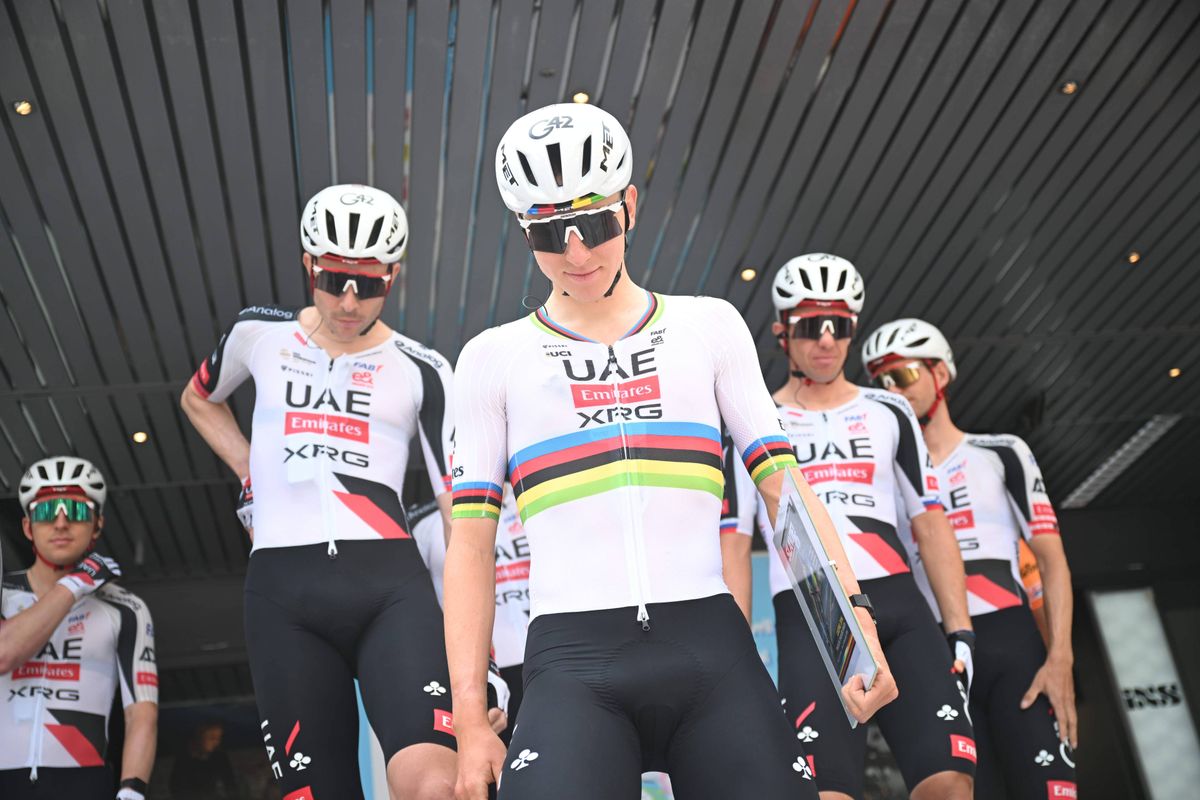
“Suffocating.” That’s the word a Movistar sports director used to describe UAE Team Emirates’ tactics at the Tour de France 2026. He says they are disrespecting the peloton’s unwritten rules.
He is wrong. The complaint isn’t about disrespect. It's a public admission of tactical bankruptcy. This isn't a breach of etiquette. It's what happens when one team is playing chess and the rest of the peloton is still setting up the checkers board.
Unwritten rules are for losers
The conventional wisdom, the argument the Movistar director is leaning on, goes like this: In a Grand Tour, the GC leader’s team controls the race, but does not contest every single stage. They let breakaways go. They allow other teams a chance at victory.
It’s a gentleman’s agreement, a way to share the spoils and maintain a certain equilibrium. It allows smaller teams to justify their existence and keeps the peloton from burning itself out before the third week.
This is a fine theory. It is also a relic.
“Unwritten rules” are a code of convenience for teams that cannot impose their will. They are a pact of mediocrity, designed to protect squads from the harsh reality of their own limitations.
What UAE Team Emirates is doing is not disrespectful; it is simply logical. They have built a super-team with depth across every discipline. Why would they voluntarily cede opportunities to win?
It is not UAE’s job to make the Tour de France 2026 comfortable for their rivals. It is their job to win bicycle races. All of them, if possible.
The anatomy of dominance
Let’s be precise about what “suffocating” means in this context. It means UAE Team Emirates uses its collective strength to nullify the traditional rhythms of a Grand Tour stage. They don’t just ride tempo on the front for their leader.
They use their formidable train to keep breakaways on a short leash, or place their own riders in the move, forcing others to chase. They contest bunch sprints, intermediate sprints, and hilly transition stages. They leave no scraps.
To the Movistar director, this is an affront. To an analyst, this is total football. It is a team using every one of its assets to exert maximum pressure, all the time.
The goal is not just to win the yellow jersey, but to grind down the opposition, day by day, until morale cracks. The stage wins are trophies, but the real prize is the accumulated fatigue and psychological damage inflicted on everyone else.
Complaining about this tactic is like complaining that a boxer keeps punching you. It is the entire point of the contest.
A voice from the outside
The debate extends beyond just the two teams. Consider the perspective of a rider like Michael Matthews (Team Jayco-AlUla). As a direct competitor, fighting for the same stage wins UAE is targeting, his view on the tactical situation is a crucial barometer for sentiment in the wider peloton.
Whether other rivals agree with Movistar's complaint or see it as the new tactical standard is the key question. If the wider peloton accepts UAE's approach as legitimate, then the complaint from one team starts to look less like a valid grievance and more like an inability to adapt.
It becomes the sound of one team realizing it has been out-thought and out-muscled, and choosing to litigate the race in the press because it cannot do so on the road.
Adapt or complain
The fundamental failure here does not belong to UAE Team Emirates. It belongs to Movistar and every other team that finds itself “suffocated.”
For years, the template for challenging a dominant team has been clear: form alliances, isolate the leader, attack relentlessly, and use your numbers to create tactical chaos.
Where are the coalitions? Where are the coordinated attacks on mountain stages, forcing UAE to chase multiple threats? Where is the tactical imagination?
It is absent. It is easier to appeal to a mythical book of unwritten rules than it is to devise and execute a plan to defeat a stronger opponent.
The Movistar director is not making a sporting argument. He is asking the strongest team in the race to please, voluntarily, become weaker for the sake of tradition.
That is not how elite sport works. The standard has been set. The correct response is not to cry foul. It is to rise to meet it.
This isn’t suffocation. This is evolution. And it is leaving Movistar behind.
Complaining about this tactic is like complaining that a boxer keeps punching you. It is the entire point of the contest.