
The Price of the Peloton
Every crash at the Tour de France is treated as a tragic surprise. It’s not. It is the predictable, escalating invoice for the speed and spectacle we demand.
There is a sound the peloton makes when it breaks. It is not the tidy click of a gear change or the whir of 184 sets of tyres on asphalt. It is the sickening percussion of carbon fibre exploding against bone, a sound that travels faster than the gasp from the crowd. It is the sound of the bill coming due.
After a crash in a sprint finish at the Tour de France 2026, that sound echoed in the sudden, shocked silence. When the tangle of bodies and bikes was finally unspooled, the day’s ledger was grim: Fernando Gaviria (Caja Rural-Seguros RGA) and Jenno Berckmoes (Lotto-Intermarché) were two of the riders caught in the chaos. Two more names added to the Tour’s long, grim accounting.
We call these moments accidents. We use words like “unfortunate,” “ill-fated,” “a shame.” But what if they are none of those things? What if they are, instead, the entirely predictable outcome of a system pushed past its breaking point?
The recurring, brutal crashes that mar the modern Tour are not a bug; they are a feature. They are the price paid for a sport’s relentless pursuit of more. More speed, more tension, more spectacle.
The Inevitable Calculus
The conventional wisdom will push back on this. It will say that racing has always been dangerous, that riders accept the risk, that this is simply the nature of the sport. And this is true, but it is an incomplete truth.
It mistakes the constant for the variable. The risk is constant, yes. But the conditions that amplify that risk into near-certainty are not. They are a choice.
Consider the arithmetic of the modern peloton. Teams are more desperate than ever for television exposure, which means they must be at the front, not just for the finale but for hours beforehand.
The bikes are faster, stiffer, and less forgiving. The speeds are higher; a routine stage now averages what a fast one did a decade ago. Add to this the proliferation of road furniture – the roundabouts, the traffic islands, the pinch points that litter the French countryside – and you have created a physics problem with a foregone conclusion.
You cannot safely funnel 184 riders, all moving at 50 km/h and fighting for the same few metres of road, through an ever-narrowing aperture. Eventually, the pressure becomes too great. The system fails.
What results is a kind of brutal triage. The crash doesn’t choose its victims based on talent or worthiness. It is a tax levied indiscriminately. Gaviria and Berckmoes were simply the ones in the wrong fraction of a second at the wrong millimetre of the road. Their races were compromised not because of a tactical error or a failure of form, but because they were occupying a space that the race’s brutal calculus had already reclaimed.
Paying in Installments
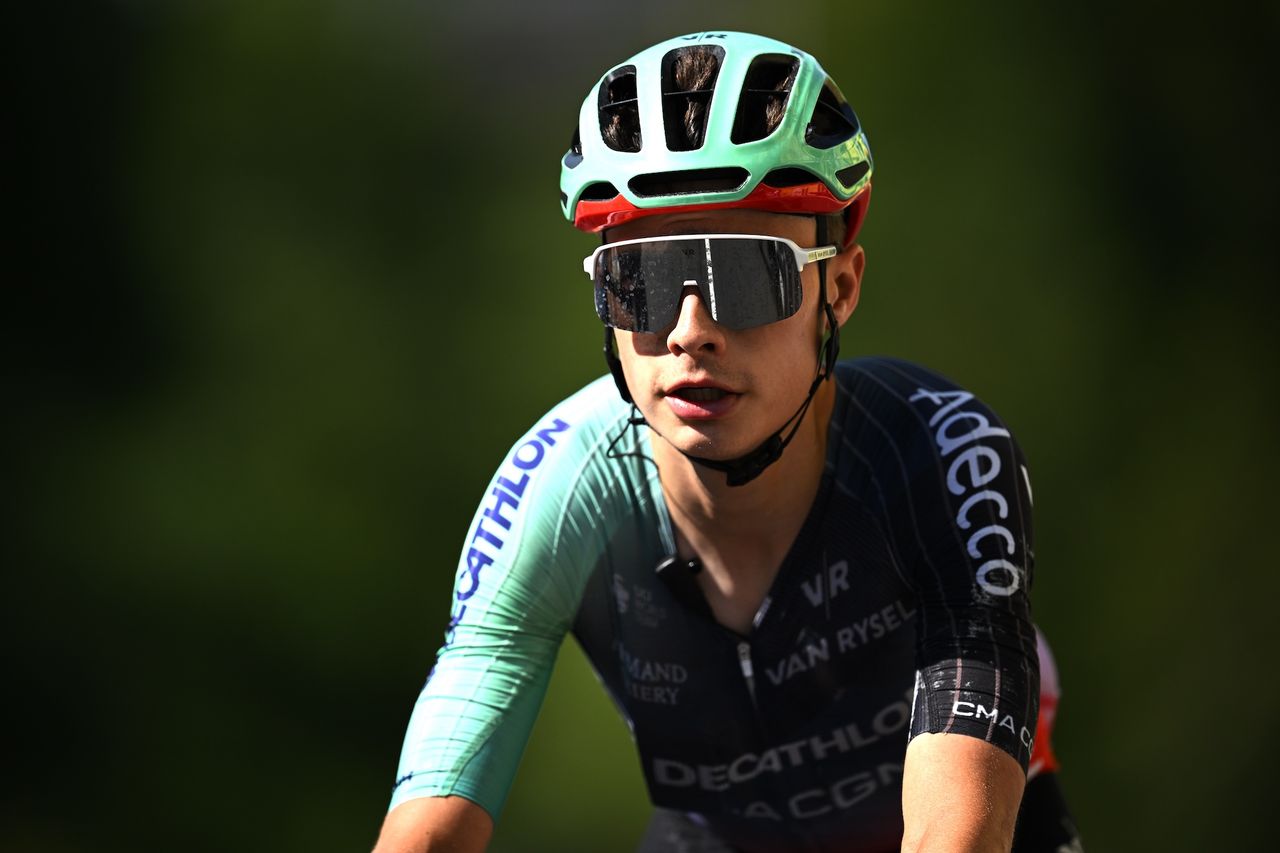
And then there are the other invoices, the ones paid not in a single, catastrophic moment, but over days and weeks. Look at Matthew Riccitello. The Decathlon CMA CGM Team rider crashed hard earlier in the race.
He continues, paying for his Tour de France 2026 in installments. Every pedal stroke is a small payment on a debt of pain, all for the distant hope of recovering for a mountain still a week away. This is the quiet heroism the sport is built on, the stubborn refusal to quit. But it is also part of the same transaction. His continued presence is a testament to his own grit, but it is also a rolling advertisement for the sport’s casual acceptance of attrition.
We, the audience, are complicit in this. We watch, captivated by the tension. We crave the elbow-to-elbow drama of the mass sprints. We hold our breath as the peloton negotiates a treacherous descent.
We are, in effect, co-signing the check. The spectacle is the product, and the riders’ bodies are the raw material from which it is forged. We can’t celebrate the thrilling, chaotic beauty of the race on one hand and then act surprised when that chaos consumes another rider.
The crashes are not accidents. They are the cost of doing business. They are the price of admission, for riders and for us. We just get to watch from a safe distance, while they are the ones left sitting on the asphalt, staring at a limb that doesn’t work anymore, listening to the sound of the peloton riding away.
The recurring, brutal crashes that mar the modern Tour are not a bug; they are a feature. They are the price paid for a sport’s relentless pursuit of more.
You cannot safely funnel 184 riders, all moving at 50 km/h and fighting for the same few metres of road, through an ever-narrowing aperture. Eventually, the pressure becomes too great. The system fails.
We can’t celebrate the thrilling, chaotic beauty of the race on one hand and then act surprised when that chaos consumes another rider.