
The weight of a finish line drawn too soon
When a rider names the day their career will end, history suggests the sport rarely honours such carefully laid plans.
There is a particular temptation, late in a great career, to try and write one’s own final scene. To choose the stage, the setting, and the stakes is to impose a narrative order on an inherently chaotic profession.
It is an understandable impulse, a desire to control the uncontrollable one last time. It is also, very often, a mistake. The sport has a long and cruel memory for riders who attempt to script their own farewells; the road does not feel beholden to the tidy endings we might wish for.
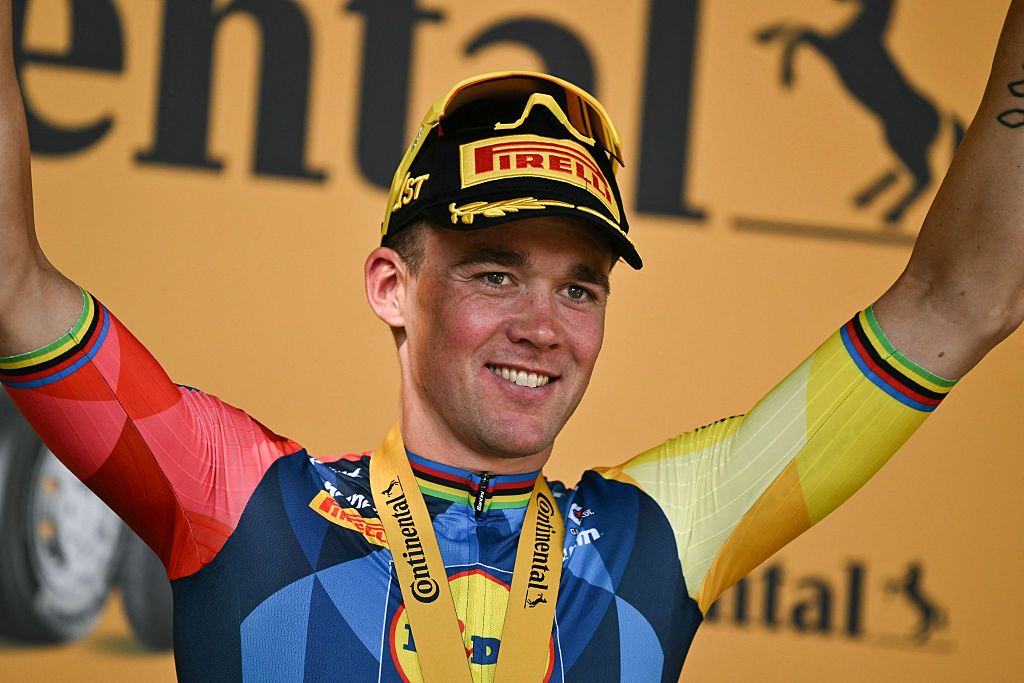
Into this tradition steps a prominent rider, who has announced his intention to retire following a future World Championships in his home country. He will be at an age at which many riders are still at the peak of their powers.
The story is an appealing one: a former world champion, returning home several years from now to chase the rainbow bands one final time before a home crowd, then bowing out. It has the satisfying symmetry of a well-told tale.
To understand why this is a heavier burden than a boon, one must understand the nature of pressure in professional cycling. The conventional wisdom will argue that such a long-term goal provides a North Star, a singular point to orient the final phase of a career.
It will be framed as a mark of supreme confidence, a declaration that will fuel the training hours and sharpen the resolve needed to achieve remaining ambitions, like a Monument victory or a Grand Tour points jersey.
And perhaps, for a time, it will. But cycling is a sport of brutal, unsparing immediacy. Its fundamental truth is the present moment: the form held today, the gap that must be closed, the split-second decision on which a season can turn.
A five-year plan is a beautiful fiction in a world governed by the puncture, the ill-timed crash, or the sudden emergence of an unaccounted-for rival. To name a finish line so far in the distance is to invite five years of measurement against a standard that may prove impossible to meet.
Every victory between now and then will be seen as a stepping stone. More dangerously, every defeat, every near-miss, every season that does not yield a major prize will be framed as a failure on the path to that preordained finale.
The joy of a present success is diminished when it is merely a scene in a much longer play; the sting of a current loss is amplified. The career ceases to be a living thing and becomes a countdown.
We have seen this pattern before. The rider who announces his final Tour de France only to abandon in the second week; the sprinter who targets one last Champs-Élysées victory and finds his legs desert him in the final 200 metres.
The great champion who hangs on for one more season, hoping for a final blaze of glory, only to fade quietly into the peloton. The intention is to create a celebration, but the risk is that one creates a vigil.
The pressure of a home World Championships is already immense. It is a unique weight, carrying the hopes of a nation on a single day where anything can, and usually does, go wrong.
To add the self-imposed burden of it being the final race of a career is to pile melodrama atop an already volatile situation. It transforms a bike race into a referendum on an entire body of work.
Let us assume this rider is one of immense strength, both physical and mental. That his style is one of aggressive, front-foot racing, of forcing the issue rather than waiting for it.
But this announcement is a different kind of act. It is an attempt to tame the future, to smooth its jagged edges into a pleasing arc.
He has given his career a destination and invited the world to watch him arrive. The question, now, is whether the journey can survive the weight of its own ending.
A five-year plan is a beautiful fiction in a world governed by the puncture, the ill-timed crash, or the sudden emergence of an unaccounted-for rival.
The intention is to create a celebration, but the risk is that one creates a vigil.
The career ceases to be a living thing and becomes a countdown.