
The King is Second, Long Live the Kid
Jonas Vingegaard was not beaten by Tadej Pogačar on a key climb of the Tour de France 2026. He was beaten by the future. And the future has a name: Paul Seixas.
There is a sound the television microphones never quite catch. It is not the whirring of chains or the desperate, ragged breathing of a man at his limit. It is the quiet, internal snap of an invisible cord, the one that tethers a champion to his rival.
For years, that cord has bound Jonas Vingegaard (Team Visma | Lease a Bike) and Tadej Pogačar (UAE Team Emirates-XRG) together, a private battle waged metres ahead of the rest of humanity.
On the brutal slopes of a key climb in the Tour de France 2026, that cord snapped. But the man holding the scissors wasn’t Pogačar.
He was already gone, of course, a wraith in UAE colours dancing his way towards another victory and a seemingly dominant position. That was the day’s headline, the simple story of strength.
But the real story, the one that will echo long after the Tour de France 2026 is a memory, unfolded minutes down the road.
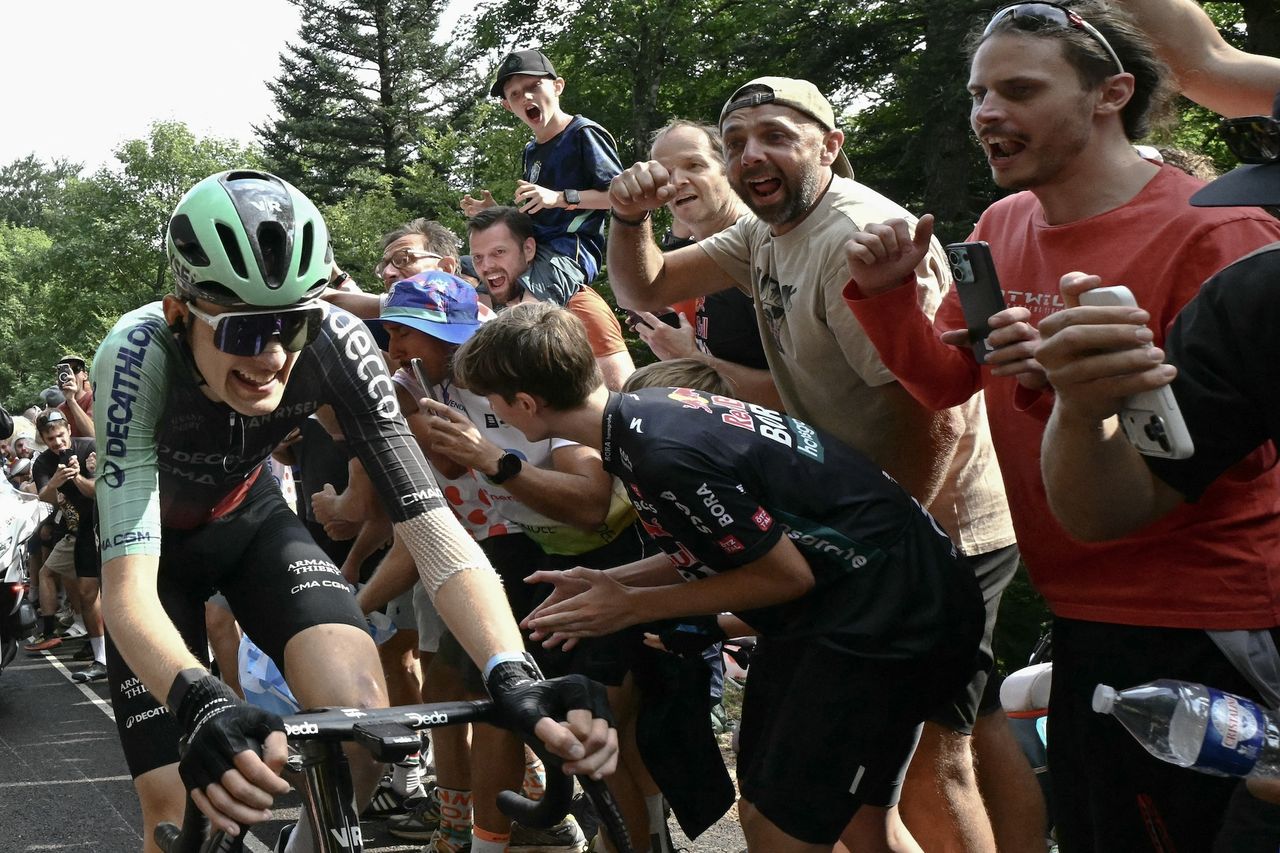
It was the story of a young rider, Paul Seixas (Decathlon CMA CGM Team), looking back not in awe but in assessment, and then riding away from Vingegaard. Not scrambling. Not desperately holding a wheel. Just… leaving.
It wasn't the time gap that mattered. It was the sound of the elastic snapping. It was a moment that felt less like a tactical masterstroke and more like a law of physics being rewritten in real time.
To understand why this matters more than the stage result, you have to understand the ecosystem the two monoliths of modern cycling have created. The Pogačar-Vingegaard era has been a closed loop, a duopoly so complete it has warped the ambitions of everyone else.
For other GC contenders, victory wasn't about winning the Tour; it was about the increasingly desperate scramble to be the best of the rest. They were racing for bronze in a two-man sport, trying to claim the final step on a podium whose upper tiers were permanently reserved.
Then came Seixas. A young talent, a rider so new his presence in the front group was itself a novelty.
On the climb, he refused to play by the established rules. He did not wait to be dropped or ride defensively to conserve a surprising top placing.
He attacked. He forced the selection. He made one of the two most feared climbers on the planet look, for a few hundred metres, profoundly and shockingly mortal.
Conventional wisdom will tell you to calm down. It will say this was a blip, a confluence of a young rider’s perfect day and a champion’s rare misstep.
It will point out, correctly, that Vingegaard is still highly placed overall, and Pogačar is in a different postal code entirely. It will argue that one good day on one climb does not a generational shift make.
This is the sensible take. And it is entirely wrong.
This take is wrong because it mistakes the symbol for the event. The true significance of what happened on the road to the finish is not that Seixas gained a high stage placing, or even that he now sits closer to the podium.
The significance is that the spell of invincibility has been broken. For the first time, a rider from outside the duopoly has not just survived an encounter with one of the kings, but has dictated the terms of engagement and won.
He showed the world, and more importantly, the peloton, that the emperor is wearing slightly less intimidating cycling kit.
The careers of great champions are like tides. They swell, dominate the shoreline, reshape the landscape in their image, and at their height, seem like a permanent state of being.
But the turn is always inevitable, and it rarely announces itself with a tsunami. It begins with a subtle change in pressure, a single wave that doesn’t quite reach the mark of the one before it.
Paul Seixas is that wave. He is the first sign that the Vingegaard tide, which has battered the shores of the Tour for years, might just be starting to ebb.
A kingdom is never more vulnerable than when its king seems untouchable. Pogačar is untouchable right now, but the fissure appeared in the court of his rival.
The sight of Vingegaard, isolated and unable to respond, is an image that will lodge itself in the minds of every ambitious climber in the peloton. It’s a crack in the façade, a blueprint for future rebellion.
So yes, Tadej Pogačar was the strongest on the day. He will almost certainly win the war.
But the most important move of the day was thrown by a kid in the battle for the top placings. It was a move that won him nothing tangible, just a strong stage placing and a few seconds.
It bought him something far more valuable, however. It bought him belief. And it may have just bought the rest of us the future.
He made one of the two most feared climbers on the planet look, for a few hundred metres, profoundly and shockingly mortal.
The significance is that the spell of invincibility has been broken.
Paul Seixas is that wave. He is the first sign that the Vingegaard tide, which has battered the shores of the Tour for years, might just be starting to ebb.