
The King and the Ghost
A Tour de France can be won by attrition. But a legend can only be forged in fire, against a true rival.
Great rivalries are not stories of victory and defeat. They are dialogues: a question asked on one mountain, an answer given on another.
For years, the grammar of the Tour de France has been written in just two languages: the explosive, joyful Slovenian of Tadej Pogačar and the relentless, grinding Danish of Jonas Vingegaard.
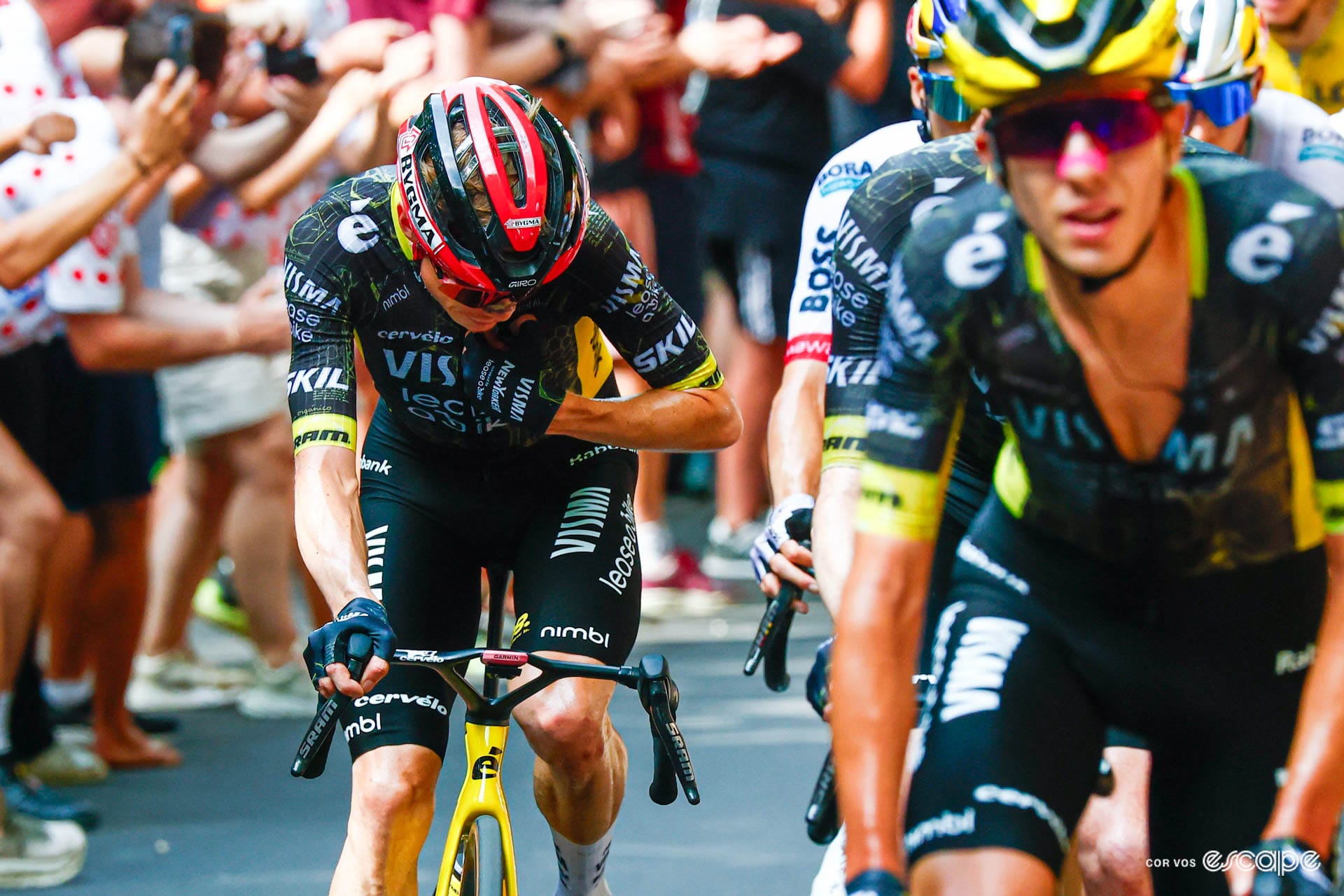
We came to the Tour de France 2026 to hear the next chapter of that conversation. Instead, on the tarmac, we got silence. An ambulance door closing. The end.
And so, as Pogačar rides towards Paris, he rides towards a hollow crown. Let’s be clear: if he wins this Tour de France, and it seems an inevitability now, he will be a worthy champion. The man is a marvel, a generational talent who races with the heart of a junior and the legs of a deity. But a coronation is not a contest.
This victory, should it come, will forever be footnoted. It will be the Tour that was decided not by a pedal stroke but by a patch of gravel. The defining question of this race—who is stronger?—was not answered; it was cancelled.
The conventional wisdom will push back. It will say a win is a win, that staying upright is a skill, that you can only beat who is in front of you. All true.
But greatness is measured by the challenges overcome, not the ones that fall by the wayside. Pogačar’s legend is built on the ferocity of his challengers, and the most ferocious of them all is now watching from a hospital bed.
The Necessary Enemy
Every hero needs a villain, or at least an equal; someone who forces them to dig deeper, to find a gear they didn't know they had. For Pogačar, that person has been Vingegaard.
Their battles in previous Tours have been the stuff of cycling lore, a perfect clash of styles. The artist versus the assassin. The rider who attacks with a grin against the one who attacks with a grimace.
They made each other better by making each other miserable.
Without that foil, the narrative collapses. Pogačar is no longer one half of a historic duel; he is a solo artist performing to a crowd that came to see a band.
He is racing against the field, yes, and against men like Remco Evenepoel, a rider Pogačar himself has acknowledged as a powerful rival. But Evenepoel is a different puzzle, not the one Pogačar has spent years trying to solve.
The Belgian is a threat, certainly, but he is not the ghost. He is not the other half of the dialogue.
What Pogačar has lost is the chance for true vindication. The real prize wasn't just the yellow jersey; it was beating him. It was proving, once and for all, on the highest cols and against the clock, that he was the master.
Now, any victory will be qualified with a “what if.” What if Vingegaard hadn't crashed? What if the great battle of the third week had actually happened?
These questions will hang over the Champs-Élysées, an invisible asterisk next to his name.
It’s a strange and lonely position for a rider as dominant as Pogačar. He is so good that his only true measure is a man who is no longer there.
In his sympathetic words for his fallen rival, you can hear a quiet acknowledgment of this truth. He wanted to win a fair fight. He wanted the answer as much as we did.
Instead, he gets a procession. A victory lap that will last a week. He will wear yellow in Paris, and he will deserve it.
But the ghost of a Dane will ride alongside him, a silent reminder of the battle that never was. The crown will be his, but it will not shine so brightly.
Pogačar is no longer one half of a historic duel; he is a solo artist performing to a crowd that came to see a band.
The crown will be his, but it will not shine so brightly.