
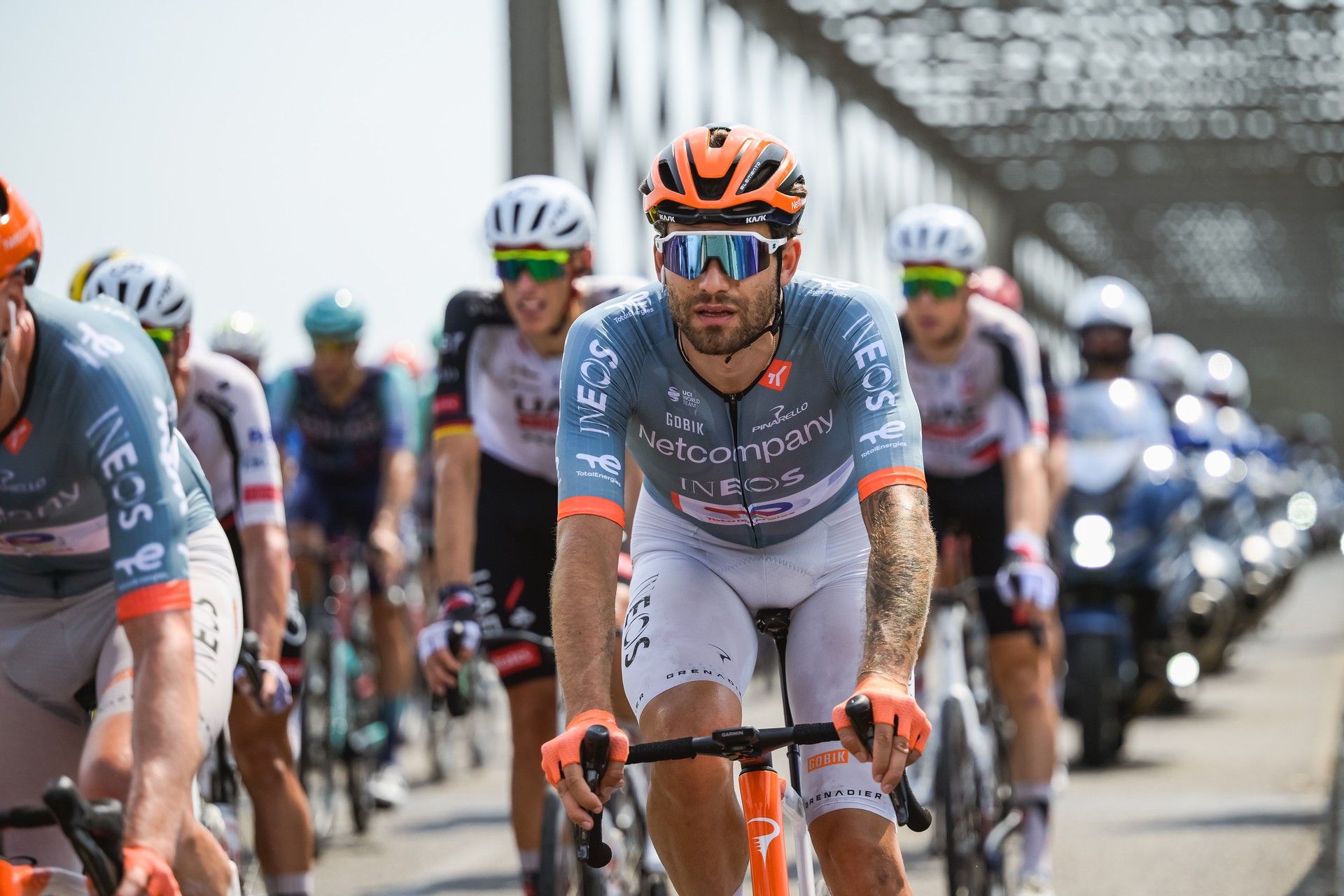
Eleven punctures: Ineos Grenadiers doesn't have a luck problem
Misfortune happens once. A pattern suggests a flaw. Ineos Grenadiers' repeated flats at the Tour de France are not an accident; they are a data point.
Eleven.
That’s the number: 11 punctures for Ineos Grenadiers at the Tour de France 2026. The figure is not an official statistic, but a damning estimate reportedly coming from inside the team bus.
In professional cycling, there is a romance with the idea of fortune. Bad luck, good luck, the chaotic variables of the roadside – it’s a convenient narrative that explains away failure and magnifies victory. It is also, in this case, wrong.
Luck is what happens once. A stray nail or a shard of glass is noise. Eleven times is a signal. Eleven flats concentrated within one team is a systemic failure, and blaming fortune is an abdication of analysis.
The team says it is investigating. That investigation should start with the spreadsheet, not the roadside.
The Anatomy of a Failure
Conventional wisdom says this is the cost of racing. That the Tour de France is three weeks of chaos and punctures are an inevitability, pointing to rough roads and nervous positioning. This is true, but it is insufficient.
Every team rides the same roads and navigates the same peloton. Yet we are not hearing about a plague of punctures across the race, but a cluster. The problem is localized to Ineos Grenadiers.
When a problem is localized, you look for local causes. There are two categories of possibility: the machine or the man.
The Equipment Question
This is the most likely culprit. The modern racing wheel and tyre system is a high-strung, optimized ecosystem of tubeless tyres, hookless rims, proprietary sealants, and carefully calibrated pressures.
The entire setup is engineered to the absolute limit for gains measured in single-digit watts. When you operate at the limit, the tolerance for error is zero.
A single incompatibility can cause a cascade failure. Is the tyre bead seating perfectly on the rim under extreme cornering forces? Is the sealant effective on French roads? Is the team running pressures so low they risk sidewall cuts?
These are not questions of luck. These are questions of engineering, data, and testing. A team with the budget of Ineos Grenadiers can test every combination to destruction.
Eleven failures suggest either the pre-race testing was flawed, or a variable has changed in the field that their models did not account for.
The Rider Question
This is the uncomfortable variable. It is harder to quantify but cannot be ignored. Are Ineos riders taking bad lines?
Watch the overhead shots of a peloton. There is the clean, dark strip of tarmac, and then there are the edges of the road, littered with debris. Riding the clean line is a skill requiring focus and good position.
A tired or poorly positioned rider is more likely to drift into the gutter. Is there a pattern to which riders are puncturing, and where they were positioned when it happened?
A single rider puncturing repeatedly might be an individual flaw. An entire team suffering from it suggests a tactical or cultural issue. It is less probable than an equipment fault, but it must be on the checklist.
The Real Cost
Forget the time lost waiting for a wheel change. The true cost is measured in kilojoules: the frantic, 600-watt chase back to the peloton, the teammates forced to drop back, burning matches needed for the final climb.
Then there is the psychological drain of knowing your equipment could fail at any moment. A general classification campaign is built on the methodical conservation of energy, and each puncture blows a hole in that foundation.
Ineos Grenadiers can talk about fortune. They can hope their luck turns. But hope is not a strategy. The data is telling them something is wrong with their system.
Whether it’s the tyres, the rims, the sealant, the pressure, or the line choices, it is a solvable problem. Eleven is not a story of bad luck. It is an engineering problem.
And it needs to be solved before the next number they are counting is the seconds they’ve lost the Tour de France by.
Luck is what happens once. A stray nail or a shard of glass is noise. Eleven times is a signal.
A general classification campaign is built on the methodical conservation of energy, and each puncture blows a hole in that foundation.
Eleven is not a story of bad luck. It is an engineering problem.