
The Knock at the Door
In the quest to ensure a perfectly fair race, cycling's anti-doping system may be creating a more dangerous one. The guardians of the sport have become a hazard in themselves.
There is a sound that every Grand Tour contender knows. It is not the roar from the roadside, nor the whir of a perfectly tuned drivetrain. It is a quiet knock on a hotel room door, sometime after midnight, when the body is deep in the cellular repair that makes three weeks of racing possible.
It is the sound of vigilance. And at the Tour de France 2026, it became the sound of a system beginning to eat its own tail.
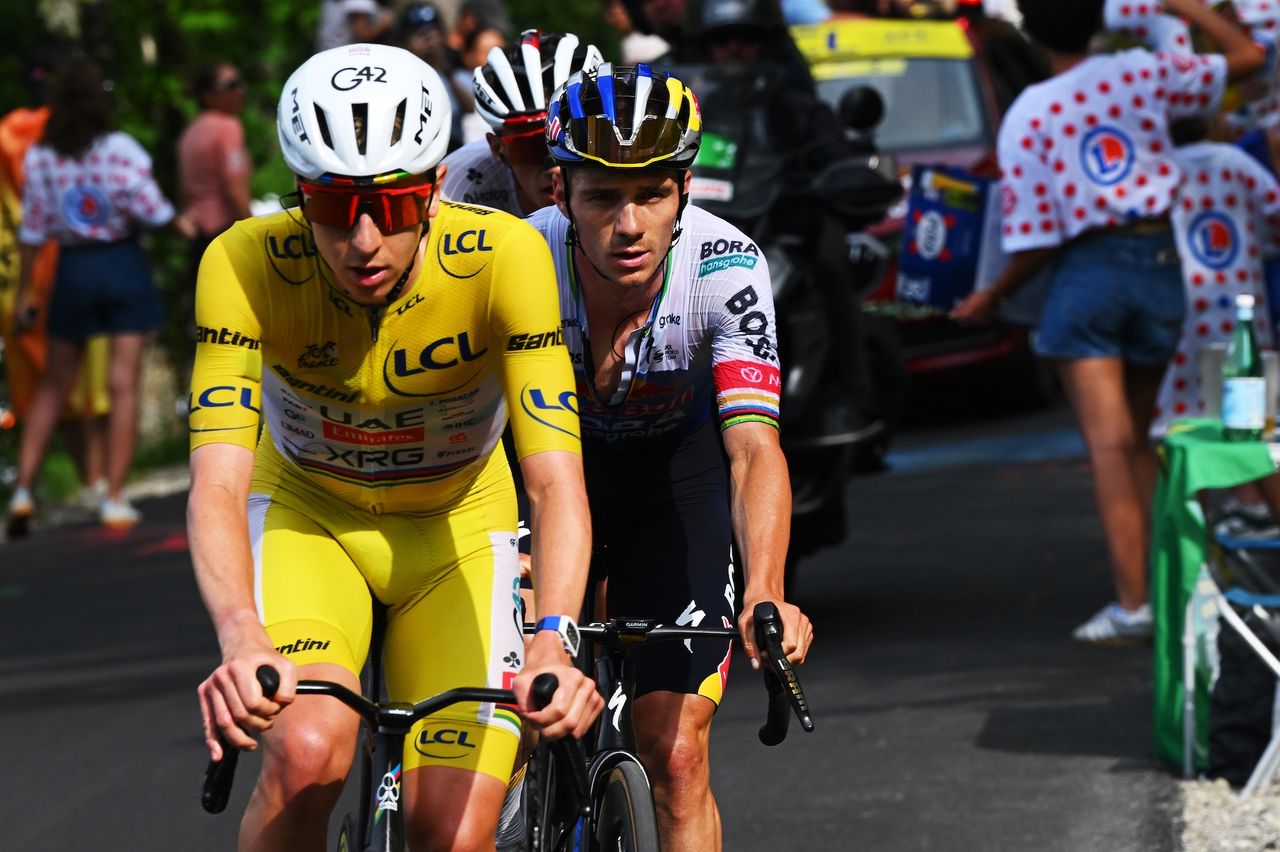
When Tadej Pogačar (UAE Team Emirates) called these nocturnal visits from anti-doping testers ‘inhumane’, he wasn’t just complaining about a bad night’s sleep. He was articulating a creeping paradox at the heart of the modern sport: the very apparatus designed to protect the integrity of the competition may be actively undermining it.
He made his comments in the context of rider safety, suggesting that a key rival like Jonas Vingegaard (Team Visma | Lease a Bike) could have his concentration dulled by ruined sleep. Pogačar questioned the impact of these nocturnal visits on a rider's ability to navigate the race safely.
Of course, a team might deny such a link. No team wants to pin a potential loss on an official process.
The cause of any crash is likely more mundane, a simple touch of wheels or a moment's lapse on a technical descent. But that almost doesn’t matter. Pogačar had already given voice to the question that hangs over every pre-dawn blood draw: what is the cost of this total surveillance?
The Unassailable Logic of the Watchmen
The conventional wisdom will push back on this. It will say, and with good reason, that the sport’s past sins demand such measures. The ghosts of Fuentes and Armstrong and a dozen other cautionary tales stalk the corridors of every team hotel.
A clean sport, the argument goes, requires a testing regime with no loopholes, no schedules, no quiet hours where a rider can hide. The testers must be able to appear at any time, because the cheats will use any time they are given.
On its face, this logic is faultless. The sport paid an almost fatal price for its blind spots, and the Whereabouts system is the penance.
To argue against it feels like arguing for a return to the dark ages. It feels like making excuses.
Remco Evenepoel (Red Bull-BORA-hansgrohe) has been more forceful in his criticism than Pogačar, but even he couches it in the language of logistics and common sense, not a desire for less testing overall. No one is asking for a free pass.
But a system can become so devoted to its own principles that it loses sight of its purpose. The goal of anti-doping is to ensure a fair and level playing field, to let the strongest rider win. But what happens when the policing of that field begins to warp the game itself?
A professional cyclist, particularly a GC contender at the Tour de France, is not a normal human being. They are a physiological experiment, an exquisitely calibrated engine pushed to the absolute limit for 21 days.
Their most powerful performance-enhancing drug is sleep. It is the foundation of recovery, the bedrock of cognitive function.
Take that away, and you don’t just get a tired athlete. You get a compromised one: a rider whose reaction time is dulled by a few critical milliseconds, whose ability to navigate the chaos of a 184-rider peloton is subtly impaired.
The system designed to catch cheats is now, perhaps, catching out the champions themselves. It trips them up not with a positive test, but with the exhaustion of proving their innocence, night after night.
A Hazard of Our Own Making
Is a hypothetically cleaner race worth a demonstrably more dangerous one? That is the real question Pogačar was asking.
We are asking riders to perform superhuman feats of endurance and then navigate treacherous descents on a thimbleful of sleep. We demand they be sharp enough to avoid the slightest mistake, while actively dulling their senses with protocols that treat them like suspects in the middle of the night.
There is a tragic irony here. The sport has spent two decades trying to purify itself, to prove that the spectacle is real. Yet the very methods of that purification risk degrading the spectacle.
A Tour de France decided by a crash born of fatigue is no more a true test of strength than one decided by a syringe. The outcome is equally artificial, the result skewed by a variable that has nothing to do with form or tactics on the road.
The debate between the riders themselves—Evenepoel’s frustration, Pogačar’s more diplomatic concern—shows this isn't a settled issue. It is a live problem for the very people whose bodies are the site of this experiment.
They are caught between the need for a believable sport and the need to simply survive it.
The knock on the door in the dead of night is the sound of a system that has forgotten what it is for. It is no longer just about catching the guilty.
It has become a ritual of suspicion that punishes the innocent, a tax paid in REM cycles and reaction times. In the quest for a perfect race, we risk breaking the only thing that matters: the racers.
In the quest for a perfect race, we risk breaking the only thing that matters: the racers.