
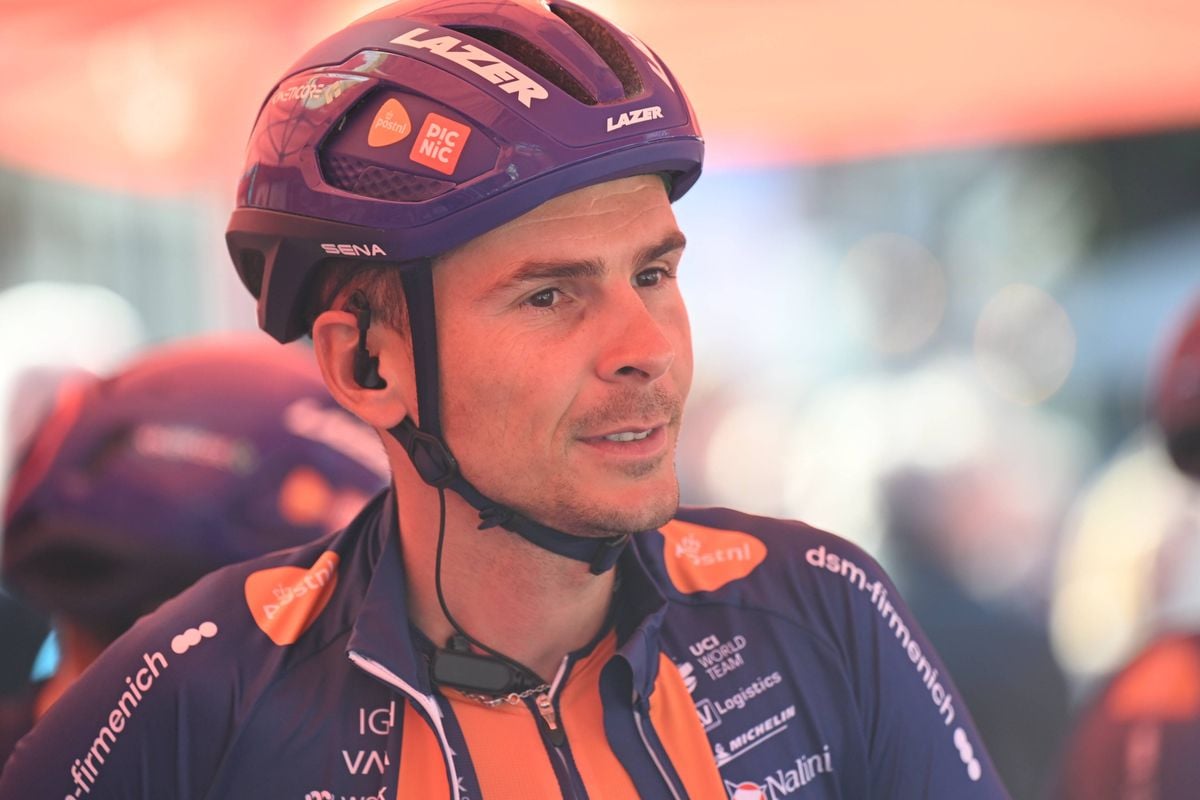
Warren Barguil is right. The sport's youth policy is wrong.
We celebrate when records are broken by the youngest riders ever. We should be asking why their careers are getting shorter.
Let’s start with the premise everyone accepts: professional cycling is younger and faster than ever before. Riders are winning Monuments in their early twenties and contending for Grand Tours before they can legally rent a car in some countries. The development pipeline has become an industrial-grade talent accelerator.
And according to the established narrative, this is a triumph. A victory for modern science, for sophisticated coaching, for a globalised talent pool. It is presented as the inevitable, positive direction of progress.
Warren Barguil disagrees. He recently called for restrictions on the development of young riders to prevent burnout, seeing the current trajectory as unsustainable. The reaction was predictable: a veteran clinging to the past, an old-school mentality threatened by the new wave.
This reaction is wrong. Barguil’s proposal is not nostalgia; it is a diagnosis of a fundamental design flaw in the sport's operating system. Burnout is not an unfortunate side effect of the current model. It is the logical, engineered outcome.
The Conventional Wisdom Is a Trap
The argument against Barguil goes like this: the best should be allowed to compete against the best, regardless of age. To hold them back is to stifle talent and deny meritocracy.
If a 20-year-old is good enough to win, he should be allowed to win. Anything else is protectionism, designed to insulate the careers of older, slower riders.
This argument is seductive because it sounds like fairness. It is also analytically weak.
True meritocracy is not just about identifying the best performer on a given day. It is about creating a system that allows talent to have a full, productive career.
The current system does the opposite. It selects for early physical maturation and throws those riders into the highest-stress, highest-load environments immediately.
It’s an arms race. If one team pushes a 19-year-old to 280 race days across three seasons, every other team feels the pressure to do the same with their own prodigy.
The result is a system that mistakes precociousness for sustainable talent. We are measuring the wrong thing.
We are optimising for the steepest possible performance curve, and in doing so, we are guaranteeing the cliff on the other side is just as steep.
Follow the Economics
Forget sentiment. Look at this as a business problem. A WorldTour team invests millions in scouting, coaching, and developing a young rider; that rider is a high-value asset.
A system that sees that asset peak at 23 and burn out by 27 is an absurdly inefficient model. It is a terrible return on investment.
No other high-performance industry treats its most valuable assets with such calculated neglect. Pitch count limits exist in baseball for a reason; load management is a non-negotiable part of modern basketball.
These are not measures to stifle talent; they are measures to preserve it. They are acknowledgements that peak performance carries a physical cost, and that cost must be amortised over a career.
Cycling, in its chase for the next phenom, has forgotten this. Barguil’s suggestion to restrict development—perhaps through limits on WorldTour race days for U23 riders or mandated longer off-seasons—is not radical.
It is rational asset management. It is a market correction.
This Isn't About Making Riders Slower
Let’s be clear: this is not an argument to make young riders less professional or less dedicated. It is an argument to manage their progression intelligently. The goal is not a lower performance ceiling, but a longer career spent near that ceiling.
Barguil also mentioned the risk of doping, and he is right to connect the two. An unsustainable system of physical and psychological pressure creates the exact conditions where bad decisions are made. Reducing that pressure isn't just about rider welfare; it's about the integrity of the sport.
The system is breaking riders. We see the ones who succeed and build a narrative of progress around them. We don't see the dozens who were just as talented but were pushed too hard, too soon, and quietly disappeared from the sport by their mid-twenties.
Warren Barguil has seen enough of them. His proposal isn't a plea to go back to the old days; it is a pragmatic, clear-eyed assessment of a system that is eating its own young.
He is not the one who is out of touch. The sport is.
We are optimising for the steepest possible performance curve, and in doing so, we are guaranteeing the cliff on the other side is just as steep.