
The best breakup in cycling
Losing your generational talent is supposed to be the end of the story. For Soudal-Quick Step, it was the start of a much better one.
You remember the melodrama, don't you? When Remco Evenepoel finally packed his bags, it felt less like a transfer and more like a messy, public divorce.
There were whispers, briefings to friendly journalists, and the general sense that an empire was crumbling. The boy king was leaving, and Soudal-Quick Step, the team built around his every whim, was being left behind. The consensus was clear: this was a catastrophe for the super-team.
Well, funny thing about catastrophes. Sometimes they’re the best thing that could possibly happen to you.
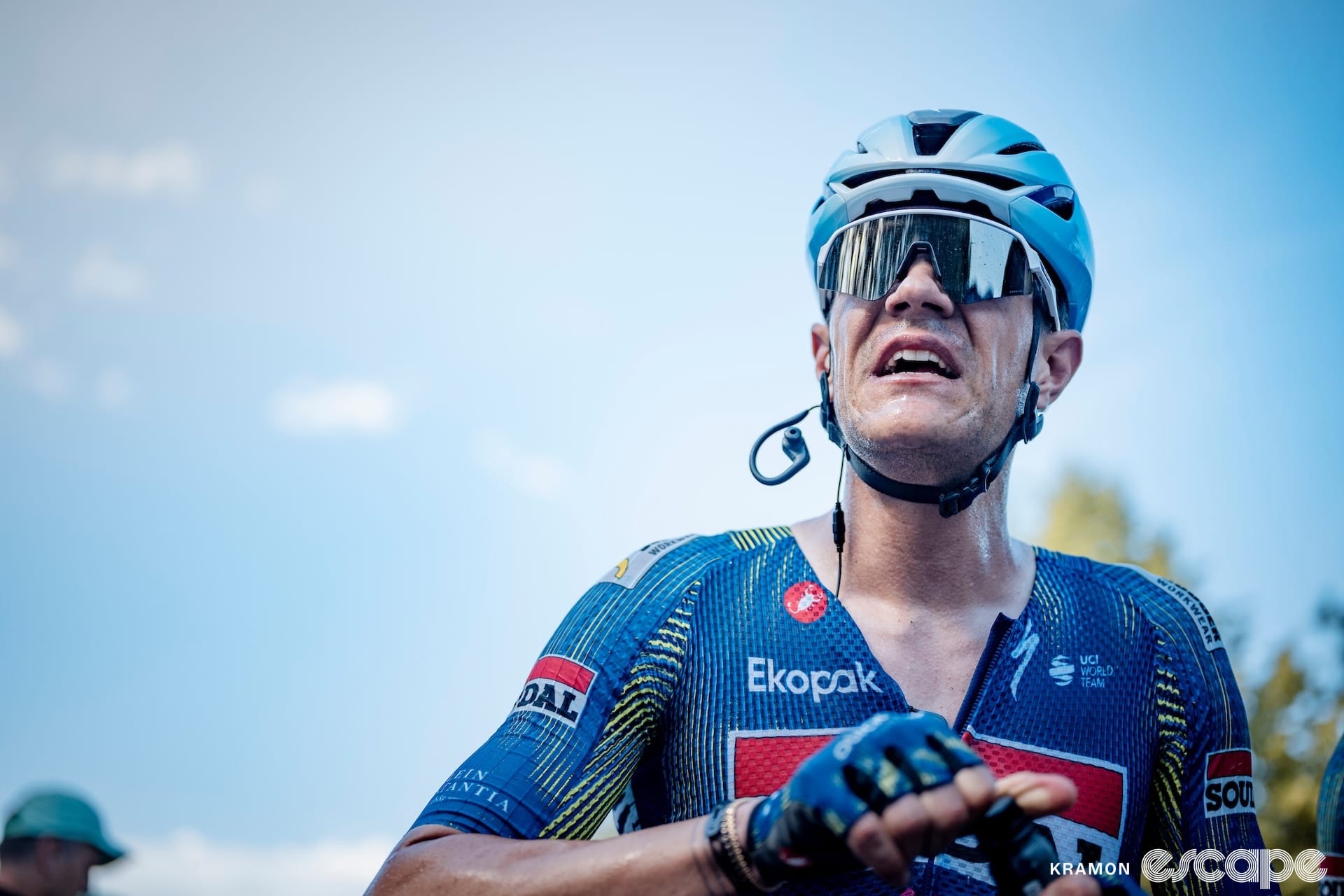
Because look at them now. The team that was supposedly gutted is racing with a swagger we haven’t seen in years. They’re winning, sure, but that’s not the point. It’s how they’re winning: chaotic, unpredictable, and frankly, fun again.
This isn’t a team in mourning. This is a team that’s been let out of a very expensive, very high-pressure cage. They didn't just survive the departure of their superstar; they rediscovered their soul because of it.
The Golden Handcuffs
Let’s be honest about the Evenepoel years. For all the major victories, the team was becoming… boring. Predictable.
Every race was filtered through a single question: 'How does this help Remco win the Tour de France?' The entire machinery of the legendary Wolfpack, the most fearsome one-day squad in modern history, was being retooled to serve one man’s singular, all-consuming ambition.
They signed climbers who couldn’t handle cobbles. They rode defensively to protect a leader. They turned up to their beloved Classics looking like a B-team, saving the A-listers to babysit Remco at some high-altitude training camp.
Patrick Lefevere, a man whose philosophy was always 'win early, win often, win everywhere,' had bet the entire farm on the grandest, most elusive prize of all. In doing so, he was slowly strangling the very thing that made his team great.
The Wolfpack wasn't a wolfpack anymore. It was a star and his security detail.
The official line, of course, was that this was evolution, what modern cycling demanded. To stay at the top, you needed a Grand Tour contender. But you could see it in the racing and hear it in the careful, PR-approved quotes.
The old identity was being papered over, not replaced. A team that thrived on instinct and aggression was being asked to ride on spreadsheets and power files. It was a bad fit, like watching a punk rocker forced to play a violin recital.
Subtraction as Addition
The conventional wisdom will tell you this is all nonsense. It will say that any team that voluntarily loses a rider of Evenepoel's calibre is, by definition, a weaker team. On paper, that’s true. You lose a guy who can win a Grand Tour, and your chances of winning one drop to zero. Simple math.
But that’s precisely why the paper is the wrong place to look. This isn't a math problem; it's a chemistry experiment. By removing the biggest, most reactive element from the equation, you don't necessarily get a lesser result. You just get a completely different reaction – one that, it turns out, is far more suited to the team's DNA.
Without Evenepoel, the budget is freed up. The tactical straitjacket is gone. The pressure to sacrifice everything for three weeks in July has vanished. A rider can attack from 50 km out at a semi-classic because he isn't saving himself for a mountain stage two months from now.
The team can load up for the cobbled season without worrying if their best rouleurs are needed for pace-making duties in the Pyrenees. They are free to be themselves again: the opportunistic, aggressive, multi-pronged menace that terrorised the peloton for two decades.
The success they're finding now isn't a fluke. It's a return to first principles. It's proof that sometimes, the best way to grow is to cut something away, even if that something is glittering and gold.
It was a mutually beneficial breakup. Remco gets the singular focus and dedicated Grand Tour support he craves, and his old team gets its identity back. Everybody wins – especially the fans who enjoy watching bike races that aren't entirely predictable from the moment the flag drops.
So yes, they lost their king. But it turns out the Wolfpack never needed one in the first place.
The Wolfpack wasn't a wolfpack anymore. It was a star and his security detail.