
The second act of a champion
A rider's career has seasons. The autumn of a general classification contender can become the brilliant, defiant summer of a stage hunter.
There is a well-worn path for the great champions of the Grand Tours, a chapter that opens when the relentless arithmetic of the general classification begins to slip from their grasp. It is a path trod by men who, having once commanded the entire race, must learn to command a single day.
We saw Laurent Jalabert, a sprinter remade as a contender, remade again as a swashbuckling King of the Mountains. We saw others, their names etched on the great trophies, find a new and perhaps purer purpose in the breakaway.
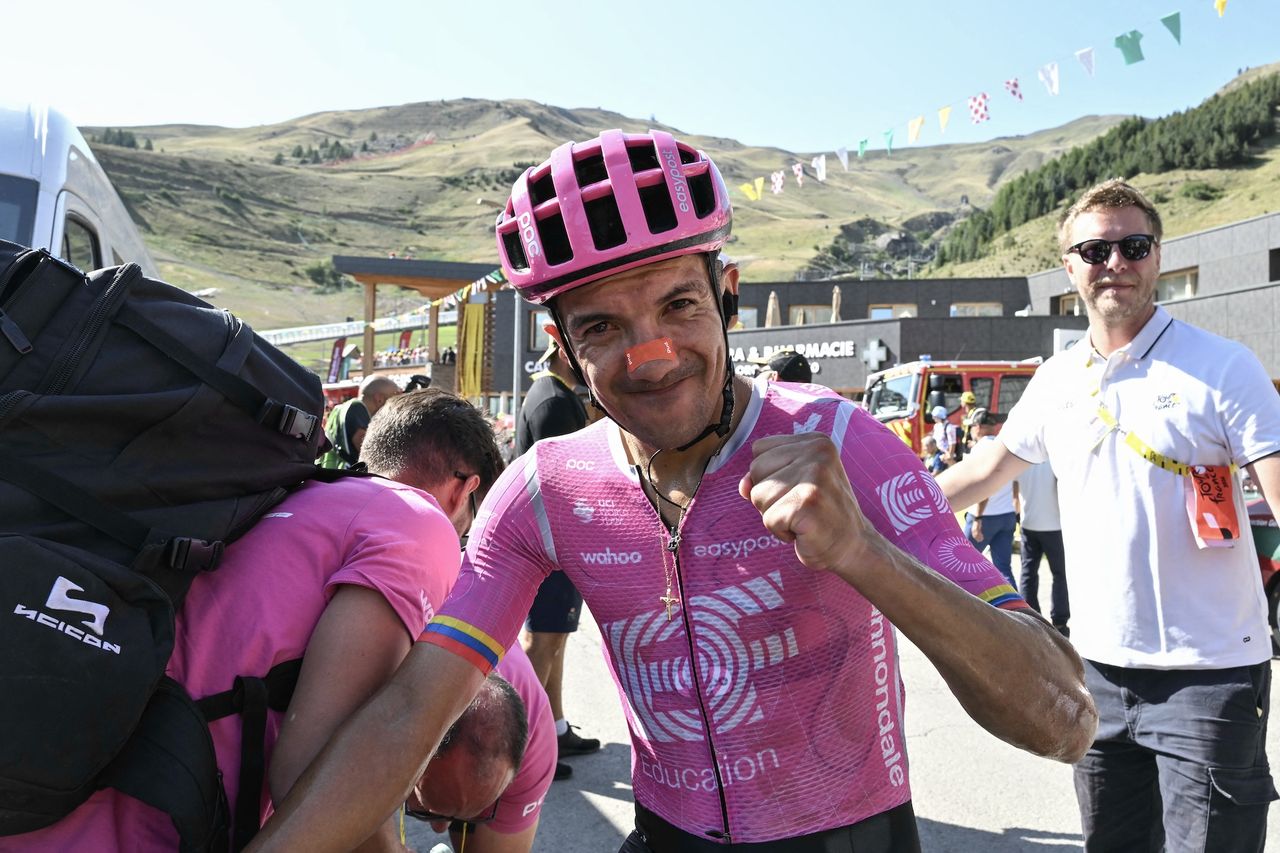
Richard Carapaz (EF Education-EasyPost), on the roads of the Tour de France 2026, was not exploring new territory. He was following a map drawn by his predecessors.
His attack on Stage 18 was, in its execution, a masterpiece of the familiar. The lone figure, pulling away on a final climb.
It was a sight that recalled his greatest triumphs, yet the context was entirely changed. This was not a move to gain 30 seconds on a rival for the podium; it was a move to win the day.
There was no calculation for the three weeks to come, only the explosive and singular ambition to cross one line, on this afternoon, ahead of everyone else. The yellow jersey had long since departed up the road in the company of younger men; what remained for Carapaz was the stage itself.
To understand this transition is to understand the two different tyrannies that govern elite cycling. The first is the tyranny of the clock, the defining feature of the general classification contender.
His life is a slow bleed of seconds, a three-week exercise in vigilance, conservation, and carefully rationed aggression. Every effort is weighed against its cost; every attack is a risk to be managed.
It is a war of attrition, and it grinds the panache from even the most attacking rider. Carapaz lived in the world of the general classification contender for years.
But time, eventually, imposes its own victory. And so the champion must free himself from the first tyranny to embrace the second: the tyranny of the finish line.
The stage hunter’s world is one of liberation. The long game is abandoned for the visceral thrill of the moment. He can burn all his matches in one glorious, defiant blaze because there is no need to save anything for the next day, or the day after that.
The yellow jersey is a tyrant. The stage win is a liberation.
A renaissance, not a retreat
The conventional wisdom will push back on this. It will frame this kind of stage hunt as a consolation prize, a noble but diminished ambition for a rider whose best years are behind him.
It will point to the GC standings and see a great champion reduced to hunting for scraps from the breakaway, a king exiled from his court. This is the easy, and the incorrect, interpretation.
It mistakes a change in objective for a failure of spirit. What we saw on Stage 18 was not an ending, but a transformation.
The qualities that make a Grand Tour champion—the deep reserves of endurance, the tactical shrewdness, the sheer capacity for suffering—do not simply vanish when the body can no longer sustain a challenge for three consecutive weeks.
Instead, they are repurposed. They become the engine for a different kind of glory, one measured not in minutes accumulated over a month, but in the singular, explosive beauty of one perfect day.
This is not the twilight of a champion; it is the bright, sharp afternoon. It is the moment an artist, having completed his grand, complex fresco, rediscovers the joy of the single, perfect sketch.
Carapaz is no less a champion for being this way. He is, perhaps, more completely a bike racer, freed from the defensive posture of the contender and able to return to the attacking verve that first announced his talent to the world.
A stage victory at the Tour de France 2026 would not be recorded with the same historical weight as a past Grand Tour title. It would not change the fundamental trajectory of his career.
But it may, in time, be remembered more fondly. It was a reminder that victory in this sport wears many faces, and that a rider’s greatness is not only defined by the jerseys he wins, but by his refusal to stop fighting for the win in front of him.
The general classification tells you who was the strongest rider over three weeks. A day like this tells you who was a champion.
The yellow jersey is a tyrant. The stage win is a liberation.
This is not the twilight of a champion; it is the bright, sharp afternoon.
The general classification tells you who was the strongest rider over three weeks. A day like this tells you who was a champion.