
The Beautiful, Sterile Flower
We spend our seasons dissecting watts and team orders on immaculate tarmac. But the messy, vibrant, essential soul of cycling is found somewhere else entirely: in the mud.
There is a particular hum to a WorldTour paddock. It’s the sound of managed perfection: the whisper of ceramic bearings, the low thrum of a turbo trainer, the clipped, multilingual chatter of soigneurs polishing carbon until it gleams under the surgical lights of a team bus.
It is a world of data streams and dietary precision, of tiny percentages eked out over thousands of kilometres. We, the analysts and the essayists, spend our years trying to decipher it, to find the story in the numbers. And it is a beautiful story.
But it is not the whole story. What if I told you that the most important thing that happened in cycling this year wasn't televised? That it wasn’t measured by a power meter or decided by a commissaire’s call? What if I told you the true, untamed spirit of the thing we love is thriving on dirt tracks and raw trails, far from the polished spotlights?
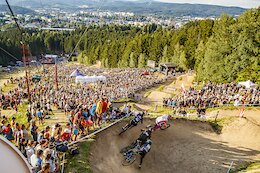
To understand this, we must turn our gaze from the grand boulevards and toward the muddy ruts of a national downhill championship. There is no peloton here, no drafting; there is only a rider, a hill, and gravity as an unforgiving dance partner.
The document of record is not a multi-camera international broadcast, but a piece of footage charmingly labelled ‘Dad Cam’. And in that simple name is the entire thesis.
This is not the view from the helicopter. It is the view from the B-line, through the trees, past a cheering parent. You hear the frantic buzz of a freehub, the gasp of a rider wrestling their bike through a root garden, the very human shouts of encouragement from the sodden sidelines.
The stakes are both incredibly high and beautifully low. A national title is on the line, yes, but the energy that radiates from that shaky footage is one of pure, unadulterated joy and grit.
This is the sport not as a career path, but as a calling. Not a science, but a barely-controlled skid.
This is the soil from which everything else grows.
If a national downhill championship is the sport’s raw, individualistic nerve ending, then a four-cross race is its explosive, chaotic heart. Look at the 2026 Czech Republic National Championships. Four-cross is a discipline that feels almost primal.
Four riders, shoulder to shoulder, are dropped onto a BMX-style track from a starting gate like greyhounds out of a trap. The race is over in less than a minute. There is no room for long-term strategy, no space for a patient domestique to shepherd a leader.
It’s the opposite of a five-hour procession to a sprint finish; a fistfight in a phone booth, on bikes. It is pure reaction, aggression, and bike handling skill, distilled into a 30-second burst.
It is magnificent, and it barely registers in the mainstream cycling consciousness. That is a tragedy of perspective.
The Roots in the Dirt
The conventional wisdom will, of course, push back. It will say that the Grand Tours are the pinnacle, the ultimate test of endurance and strategy, and it will be right. The Monuments are cycling’s great cathedrals.
But we have become so obsessed with the spires that we’ve forgotten the foundations. We have mistaken the beautiful, sterile flower for the whole plant.
The energy of a ‘Dad Cam’ video or a 4X gate drop is the same energy that first put every Tour de France winner on a bike. It’s the thrill of going a little too fast, of railing a corner, of feeling the bike move beneath you as an extension of your own will. It’s the community of the trackside, the shared language of tyre pressures and suspension settings, the smell of mud and chain lube.
When we ignore this world, we ignore the sport’s own nursery. We are pretending the ecosystem can survive without its roots.
The polished professionals on the tarmac are magnificent athletes, but they are the final product of a process that begins in places exactly like these. It begins with a kid pushing their bike back up a hill for one more run, long after the metaphorical sun has gone down.
So yes, let’s talk about VAM and CdA. Let’s dissect the leadout trains and the mountain stages. But let’s not forget where the soul of it all lives.
It lives in the mud. It’s captured on a parent’s phone. It’s in the frantic, glorious, messy humanity of a sport that is so much more than the numbers we use to define its highest level.
And that, in a muddy rut, is the entire story.
We have become so obsessed with the spires that we’ve forgotten the foundations. We have mistaken the beautiful, sterile flower for the whole plant.
It’s the opposite of a five-hour procession to a sprint finish; a fistfight in a phone booth, on bikes.
This is the sport not as a career path, but as a calling. Not a science, but a barely-controlled skid.