
The unfashionable virtue of waiting
In a sport obsessed with instant results, Decathlon CMA CGM is choosing to build its house brick by brick. Their 2027 timeline isn't a delay; it's the blueprint for something meant to last.
There are two ways to build a house. You can buy a kit home – all pre-fabricated panels and snap-together walls – and have it standing in a week. It will look like a house. It will, for a time, function as a house.
Or, you can dig a foundation, pour the concrete, and wait. You can frame the walls, lay each brick, and watch it slowly take a shape that is deliberate, solid, and entirely your own. One is an act of acquisition; the other is an act of creation.
Professional cycling, particularly in its recent rush to expand the women’s peloton, has seen its share of kit homes. Teams appear almost overnight, flush with cash and ambition, aiming to bolt a WorldTour-level squad onto an existing men’s structure.
The impulse is understandable, even noble. But it often mistakes presence for permanence.
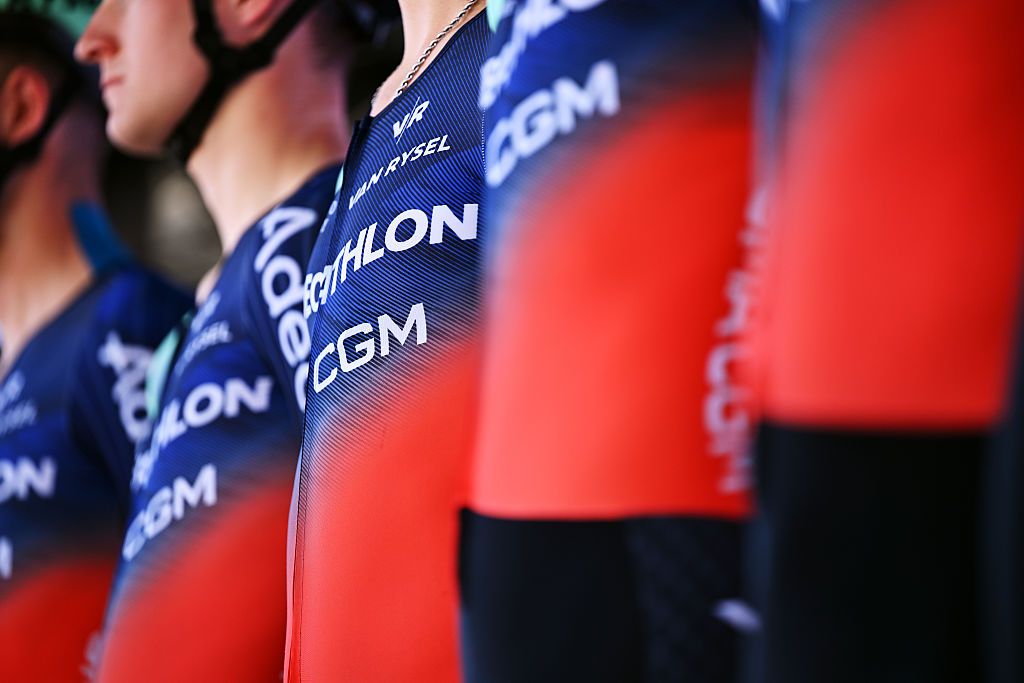
Into this landscape comes the announcement from Decathlon CMA CGM: a new women’s team will launch in 2027. Not next year, but in three years’ time. It will begin not at the top, but as a development squad, with WorldTour ambitions filed under “future,” not “immediate.”
The conventional wisdom might see this as hesitation, a missed opportunity. Why wait when the iron is so obviously hot?
To ask that question, however, is to misunderstand what is being built here. This isn't a delay; it is a declaration of intent. Decathlon CMA CGM isn’t buying a team, it’s building one.
The seduction of speed
Let’s steelman the other side. The argument for speed is powerful. Women’s cycling is growing at an exponential rate; the talent pool is deeper than ever, the racing is more compelling, and the audience is expanding.
To wait is to risk being left behind. It is to miss out on signing the generational talent who is available now, and to cede the narrative to the teams already winning the Tour de France Femmes.
Starting a team is a complex logistical ballet. A rushed start often means compromising on equipment, staff, vehicles, and, most importantly, riders. It means signing riders to fill a roster rather than to fit a philosophy. It means inheriting a culture instead of creating one.
The result can be a collection of talented individuals who never cohere into a team. A squad that exists to fulfill a sponsor obligation rather than pursue a sporting vision. It looks the part, but the foundation is shallow, vulnerable to the first stiff breeze of disappointing results or a wavering backer.
What Decathlon proposes is the antidote. Three years is a long time in cycling, but it’s the right amount of time to do the work that happens before a single rider is signed.
It is time to establish a genuine development pathway, to scout the junior and U23 ranks not for who they are in 2024, but for who they might become in 2028. It is time to define a team’s identity.
Will it be a squad for the Classics? A haven for climbers? A team built around a single superstar or a collective of opportunists? These are not questions to be answered in a single, frantic off-season.
The architecture of a legacy
By starting below the WorldTour, the new squad gives itself the most valuable resource of all: the permission to learn. The pressure in the WorldTour is immediate and unforgiving.
A sub-WorldTour existence allows for mistakes. It allows for development without the blinding glare of weekly classification battles. It lets a young roster find its legs, forge bonds, and celebrate the small victories that are the mortar holding a team together. It allows a Directrice Sportive to build a playbook, not just react to someone else’s.
This approach signals a maturity in the sport and its sponsors. It reflects an understanding that a successful women’s team is not merely a branding exercise or a belated nod to equality, but a complex, living organism that requires patient cultivation.
The return on investment is not measured in first-season wins, but in the creation of a sustainable, respected program that becomes part of the fabric of the sport for a decade or more.
This is the long game. It’s a strategy that trusts the process over the outcome, that values the blueprint as much as the finished building.
It is a quiet confidence that says, “We will be so well-prepared that when we arrive, we will be ready.”
In three years, when the Decathlon CMA CGM women’s team lines up for its first race, it will not be a beginning. It will be the public unveiling of something carefully, methodically, and patiently built in the quiet years beforehand.
They are digging the foundations now, so that the house they build will still be standing long after the kit homes have been blown away.
This isn't a delay; it is a declaration of intent. Decathlon AG2R La Mondiale isn’t buying a team, it’s building one.