
The multi-Tour fantasy
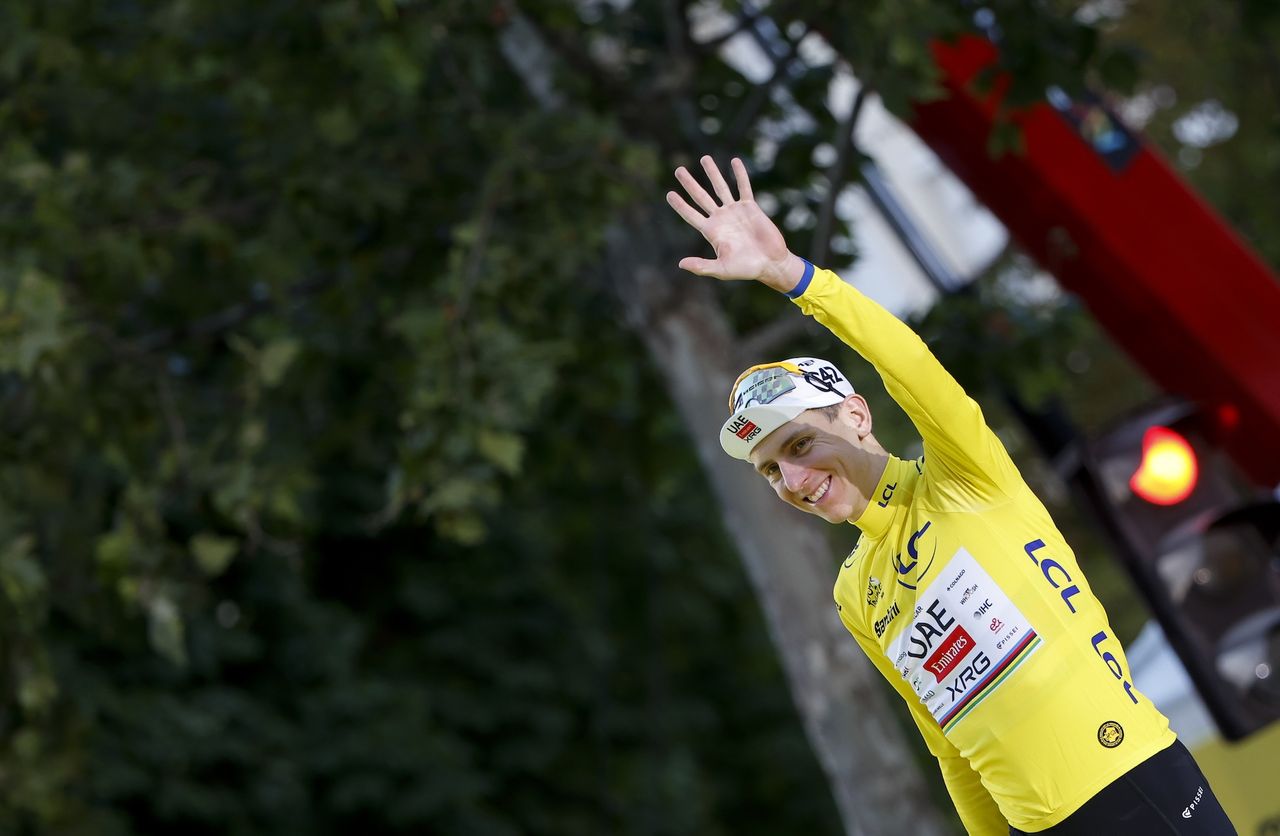
The speculation about Tadej Pogačar winning multiple future editions of the Tour de France is a story we tell ourselves. The numbers tell a different one.
The current conversation posits that Tadej Pogačar will dominate the Tour de France for years to come. This is treated not as a possibility, but as a probability. It is a failure of statistical reasoning.
The argument for this sustained dominance is simple: look at the rider, look at the current field, and draw a straight line into the future. It’s an appealingly simple model. It is also wrong.
Professional cycling is not a static environment. It is an accelerating system of adaptation and attrition. To project any rider’s dominance three or four years into the future is to ignore the fundamental forces that govern the sport. This isn’t about one rider’s talent; it is about the mathematical certainty of regression, disruption, and chance.
Follow the numbers, not the narrative
Conventional wisdom says that generational talents rewrite the rules, that their superiority is so vast it transcends the normal churn of the peloton. This is a romantic notion, but it doesn't hold up to scrutiny.
The performance level required to win the Tour de France does not remain constant. It rises every year. The watts-per-kilo on key climbs, the aerodynamic efficiency, the nutritional strategies — they are all subject to relentless optimisation.
The Pogačar of today would beat the Pogačar of three years ago. The winner in 2027 will need to be quantifiably better than the winner of the Tour de France 2026.
Sustaining an advantage requires not just maintaining your level, but improving at a rate faster than the entire elite sporting world. For one year, that’s plausible. For four or five, it becomes a statistical improbability.
The chasers have the advantage of a benchmark; they know the numbers they have to hit. The leader is pushing against a theoretical ceiling.
The arithmetic of attrition
To win a single Grand Tour requires talent, form, and a significant dose of good fortune: three weeks of avoiding illness, three weeks of avoiding the kind of crash that ends a campaign.
A 184-rider peloton, as we'll see at the Tour de France 2026, is a chaotic system. There are too many variables outside a rider's control.
Now, multiply that risk across multiple seasons. The probability of a major incident — a badly timed mechanical, a serious injury in a training crash, a bout of sickness — does not reset to zero each July. It is cumulative.
The more time you spend at the absolute limit, the more you expose yourself to the risk of a catastrophic failure. It is not a question of if a rider will have a bad Tour, but when.
The assumption that any rider can navigate four or five consecutive seasons, targeting the hardest race in the world without a single significant disruption, is a fantasy. The house always has an edge.
The challenger queue is always moving
Dominance creates its own destruction. When one rider becomes the benchmark, the entire machinery of professional cycling reorients to solve the problem they present.
Other teams don't try to replicate the champion; they build to negate them.
Somewhere right now, a 20-year-old is in a wind tunnel, on a training camp, or in a lab, being optimised for a single purpose: to beat the current top riders. He isn't carrying the burden of expectation or being asked to win every race he enters.
He has a single data point to aim for, and the entire structure of a WorldTour team behind him. This production line of new challengers is more efficient than ever.
The days of a single rider holding the sport in place for half a decade are over, because the system for identifying and developing talent has become too brutally effective. The next threat isn't the rival you know; it's the one you don't see coming.
This isn't pessimism. It is realism. The discussion of Pogačar's long-term dominance at the Tour de France is a symptom of narrative overreach. We are trying to write the end of a story that is still in its early chapters.
Forget history. The numbers are clear. The forces of attrition and evolution are relentless.
The question is not whether Pogačar can win another Tour. The question is whether anyone can in this era. The data suggests the answer is no.
The days of a single rider holding the sport in place for half a decade are over, because the system for identifying and developing talent has become too brutally effective.
It is not a question of *if* a rider will have a bad Tour, but *when*.
The question is not whether Pogačar can win a sixth Tour. The question is whether anyone can in this era. The data suggests the answer is no.