
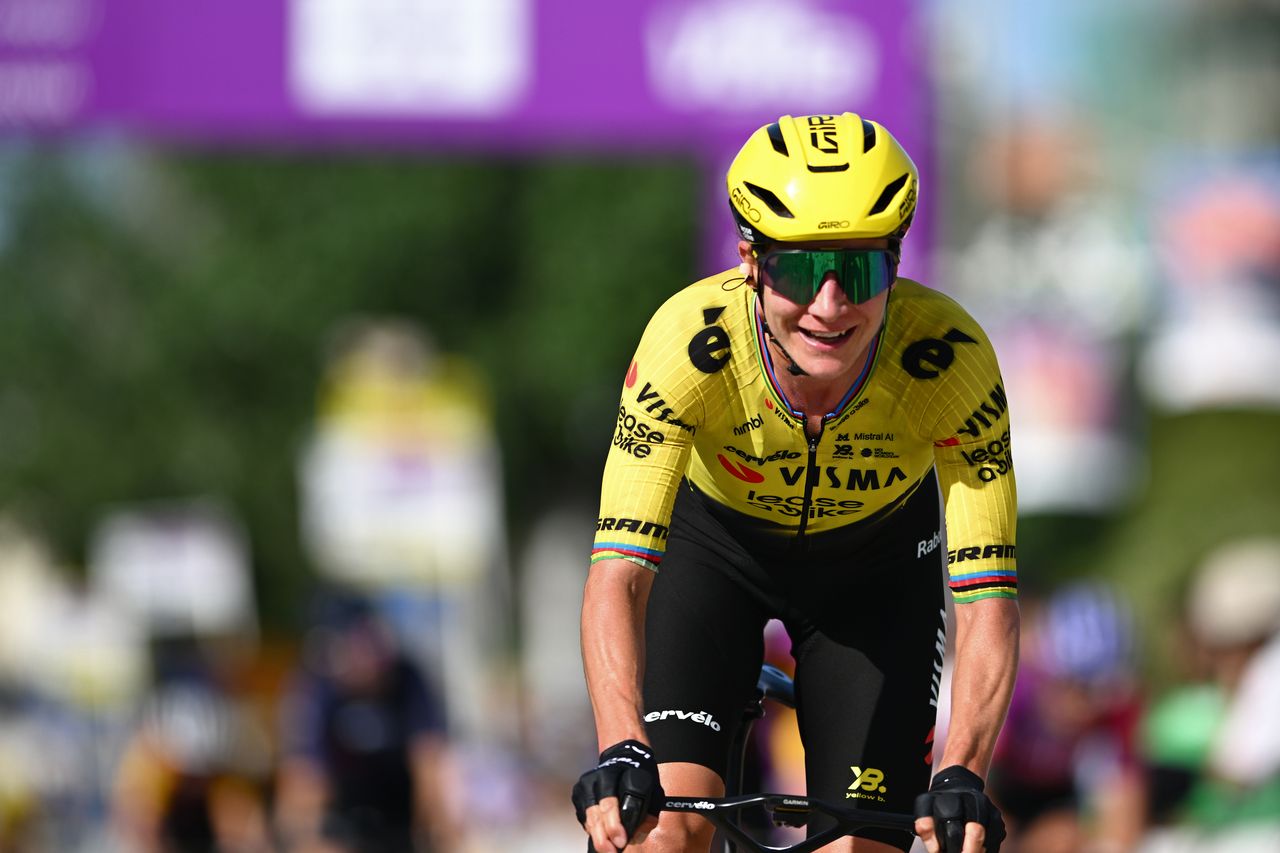
The Unquiet Rest: On Marianne Vos and the Gravity of the Road
A rider can leave the sport, but the sport does not always leave the rider. For the true champions, the road has a memory, and it always calls them home.
There is a story, perhaps apocryphal but true in spirit, of Jacques Anquetil late in his career. When asked why he continued to suffer on the bicycle when he had already won everything, he is said to have replied, simply, that it was what he did.
The sentiment is not one of resignation, but of definition. The road, for a certain kind of rider, is not a stage for performance but the very grammar of their existence. Without it, the world ceases to make sense.
We see this old truth play out once more in the impending return of Marianne Vos (Visma | Lease a Bike) to the Tour de France Femmes 2026. At this stage of her career, after a difficult year that would have permanently sidelined a lesser spirit, she returns.
Not to a local kermesse, not to a gentle re-entry, but to the Tour. Because of course she does. The Tour is the sport's great centre of gravity, and for its greatest champions, its pull is inescapable.
To understand this comeback is to understand something fundamental about the nature of this sport. The modern analysis will speak of team obligations, of legacy, of the simple, laudable desire to end a career on one's own terms. These are all true, and they are all insufficient.
They do not account for the solitary hours of rehabilitation, for the quiet courage required to face a peloton again after a fall, for the strength needed to pedal through grief. No contract can command that. It comes from a deeper place.
It comes from the same place that has driven countless champions back to the bike after terrible crashes or career-threatening injuries. For these figures, and for Vos, the bicycle is more than a tool and racing more than a job. It is a language. To be kept from it is to be rendered mute.
The Unavoidable Calling
The conventional wisdom of sport dictates a graceful exit. A rider is meant to feel the tide of their powers recede and step away just before they are left stranded on the shore. We applaud this as intelligence, as dignity.
But it misunderstands the champion's condition. For them, the silence of retirement is not peace; it is a void.
The rhythm of the season, the hum of the tyres, the familiar ache in the legs—this is the metronome of their lives. To stop is not to rest, but to become untethered.
Vos's career has been one of such sustained excellence that we can forget the human cost. But her return this year is not about adding another line to a palmarès. It is a testament to a force more powerful than ambition: compulsion – the compulsion to answer the call of the road, to find oneself again in the familiar pain of the effort, to impose order on a world made chaotic by loss and injury.
Her team, Visma | Lease a Bike, spoke of giving her the freedom and support she needed. What she has chosen to do with that freedom is telling. She has chosen to return to the hardest stage of all.
There is a quiet authority in this choice. It is a rejection of narrative convenience. It would have been easier, more understandable, to let this past year be the final chapter.
Instead, she chooses to write another. In doing so, she reminds us that the great stories of the sport are rarely tidy. They are stories of resilience, of stubbornness, of an almost irrational belief in the restorative power of the race.
So when Marianne Vos rolls to the start line of the Tour de France Femmes 2026, we will not merely be watching a celebrated athlete. We will be watching the embodiment of an old, deep law of cycling.
We will see the proof that for some, the finish line is never truly the end. The road always remembers its own, and sooner or later, it calls them back for one more lap.
The road, for a certain kind of rider, is not a stage for performance but the very grammar of their existence. Without it, the world ceases to make sense.
For them, the silence of retirement is not peace; it is a void.
The road always remembers its own, and sooner or later, it calls them back for one more lap.