
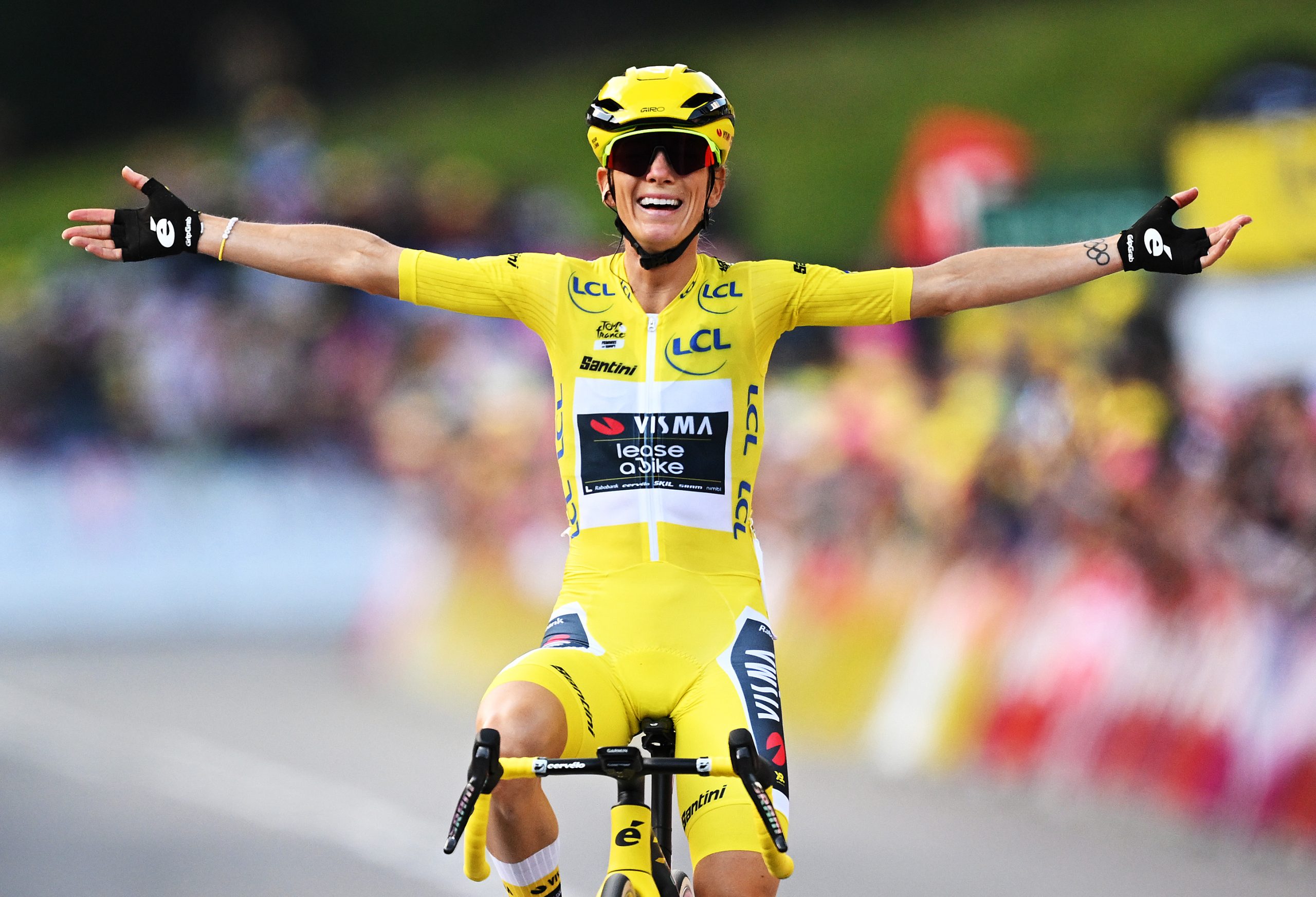
The old man and the maillot jaune
The Tour de France Femmes 2026 is not borrowing Mont Ventoux from the men's race. It is reclaiming a piece of cycling's shared, brutal, and essential history.
Cycling measures its champions against the constants. There are climbs that are steeper, longer, perhaps even more picturesque, but there are very few that carry the specific gravity of Mont Ventoux. For more than 70 years, it has served as the sport's great audit, a barren place where ambition is tested against a brutal, elemental truth.
The announcement that its pale, lunar summit will feature in the Tour de France Femmes 2026 is not, then, just a welcome addition to a route. It is a necessary reckoning.
To understand the Ventoux is to understand that it is more than a road. It is a character in the sport's long drama, a place of triumph and, famously, of tragedy. It is where the heat of Provence gives way to a howling, otherworldly wind.
It is where the forest falls away, leaving a rider entirely alone against the gradient and their own fragile resolve. This is the landscape where Eddy Merckx pushed himself to the edge of consciousness, where Chris Froome ran in cycling shoes, and where Tom Simpson paid the ultimate price. The mountain keeps its own counsel, and it keeps a record of all who dare to challenge it.
For the women’s peloton to face this climb is not a symbolic gesture, a simple mirroring of the men’s race. It is an overdue inheritance.
The conventional wisdom may suggest that the women’s Tour should forge its own identity, seeking out new climbs and new narratives, untethered to the past. This is a respectable argument, but a flawed one. The Ventoux does not belong to one gender’s history; it belongs to cycling’s history.
To deny the current generation of riders the chance to write their names on its slopes would be to suggest their story is somehow separate from the central canon of the sport. It is not. It is the vital, ascendant chapter.
A New Conversation with an Old Adversary
The inclusion of such a climb fundamentally alters the nature of the race it anchors. A grand tour with the Ventoux in its final weekend is a different creature entirely from one without. It demands a different kind of rider and a different tactical approach.
It looms over the preceding stages, a final examination for which every rider must prepare. The race becomes a conversation with that final ascent.
Consider the protagonists. For riders like Demi Vollering or Pauline Ferrand-Prévot, this is the sort of terrain upon which legacies are built. We have seen them battle on lesser gradients, on shorter, more explosive climbs.
But the Ventoux asks a different set of questions. It is a slow, grinding interrogation of will that lasts for more than an hour.
It rewards pure climbers, of course, but it also rewards patience, calculation, and an intimate knowledge of one's own limits. It is a place where a rival is not simply out-ridden, but comprehensively dismantled.
The challenge is not simply to defeat one another up its slopes, but to answer the question the mountain has always posed: what are you willing to endure? The race for the maillot jaune will not be won in a sudden acceleration in the final kilometre. It will be decided in the slow erosion of strength on the climb, in the ability to hold a rhythm as the wind whips across the exposed summit, in the courage to press on when every instinct screams for relief.
The Weight of History
There will be those who see this as a risk, a burden. They are not entirely wrong. To race on the Ventoux is to race against the ghosts of all who have suffered there before.
But that is precisely the point. The women’s peloton has more than earned the right to that history, to that weight. They have earned the right to a challenge so profound that it silences all debate.
In 2026, when the race begins its journey into the sky, it will carry with it the aspirations of a sport that is, at last, embracing its full story. The Tour de France Femmes is no longer an addendum or an afterthought; it is a grand tour in its own right, and it requires a final act worthy of the name.
When the victor crosses the line, she will have done more than win a bicycle race. She will have placed her name into the mountain's unforgiving ledger, alongside the legends.
The Tour de France Femmes will arrive at the summit not as a visitor, but as a rightful heir to the narrative. And the Giant of Provence will have a new set of names to remember.
The Ventoux does not belong to one gender’s history; it belongs to cycling’s history.
The Tour de France Femmes will arrive at the summit not as a visitor, but as a rightful heir to the narrative.